
A busy padel group can go from fun to chaotic surprisingly quickly: court times change, someone drops out, a fourth player is needed, and the group chat fills with half-answers. This Spond App review looks at whether it is genuinely useful for beginner-friendly padel club sessions, rather than just another app for your phone.
Quick verdict: Spond App is a strong fit for regular padel groups that need clearer attendance, simple session communication and less back-and-forth before club nights. It is less compelling if your club already has a polished booking system and only uses casual WhatsApp messages for occasional games.
Club administrators handling member details, junior groups or payments through Spond should follow their club’s safeguarding and data protection processes; compliance with UK GDPR and sport-specific requirements is typically handled by the club’s welfare, legal or administrative leads.
Main points
- Best use case: organising regular padel club sessions, ladders, socials, coaching groups or team nights.
- Biggest benefit: clearer yes/no attendance than a long group chat.
- Main limitation: it does not automatically replace your venue’s court-booking process.
- Beginner value: helpful reminders and session details can reduce first-match nerves.
- Organiser value: easier visibility of who is coming, who has not replied and what needs filling.
Product overview
Spond App is a group organisation app used across sport and community activities. For padel, its appeal is straightforward: it gives organisers a cleaner way to invite players to sessions, track replies, send updates and keep group communication in one place.
That matters in club play because padel depends on numbers. One missing player can disrupt a court, and one late reply can make an organiser chase several people at once. Spond gives the group a more structured alternative to scrolling through chat messages to work out who is actually playing.
For beginners, the useful part is not flashy technology. It is knowing where to be, when to arrive, who is expected, and whether the session is social, coached, competitive or mixed ability. If your first club event involves players at different standards, it also helps to read any notes from the organiser before you arrive; our guide to handling your first mixed-level padel match is a good companion if you are nervous about the playing side.
The important caveat is that Spond is not a padel-specific coaching platform, rules guide or guaranteed court-booking system. Clubs may use it in different ways, so always check how your own organiser wants members to respond, pay, cancel or message the group.
Key specs
- Product name: Spond App.
- Product type: group and sports team organisation app.
- Typical padel use: session invites, attendance responses, group updates, availability checks and organiser messages.
- Payment handling: may be available depending on the organiser’s setup and current Spond terms; verify before using it for court fees or coaching payments.
- Best environment: regular club sessions, recurring groups, social match nights, box leagues or coaching squads.
- Not a complete replacement for: your padel venue’s own court-booking process, club rules, coaching advice or safeguarding procedures.
- Availability and device support: check the current app store listing and Spond’s own information for your device and region.
Pros and cons
Pros
- Clear attendance replies make it easier to see who is coming without decoding a busy chat thread.
- Useful for recurring club sessions where the same group of players rotates in and out each week.
- Organisers can keep practical details together, such as time, venue notes, player lists and last-minute updates.
- Beginners get a clearer view of what they have signed up for, which can reduce uncertainty before a first club night.
- It can cut down on duplicated messages when several courts or groups are running at the same time.
Cons
- It only works well if the organiser keeps session details accurate and players actually respond.
- Some members may still prefer WhatsApp or email, so clubs may need a simple transition period.
- It may sit alongside a separate court-booking system rather than replacing it.
- Payment, privacy and notification settings need checking carefully before a club relies on them.
- For very small casual groups, it can feel more structured than necessary.
Performance in real use
In a padel setting, Spond App is at its best when a club has a repeatable rhythm: Monday beginner night, Thursday social matches, weekend mix-ins, team practice or a block of coaching sessions. Instead of asking “who’s in?” every week and then trying to build courts from scattered replies, organisers can send an event and see responses more cleanly.
For players, that means fewer awkward moments. You can see the session details, respond properly, and avoid leaving the organiser guessing. That is good etiquette in club play: if you cannot make it, decline early; if you are unsure, say so rather than staying silent; if you accept, treat it like a commitment unless something genuinely changes.
The app also helps with communication discipline. A general padel chat can quickly drift into jokes, kit talk and unrelated messages. Spond’s session-based structure makes practical details easier to find again. That is especially useful when a venue has several courts, staggered start times or a mix of coached and social groups.
Where it is weaker is court booking. Many UK venues still require bookings through their own website, reception process, club management system or a dedicated booking platform. Spond can help organise people around a session, but you should still confirm how the actual court is reserved. If you are still getting used to that side of things, read our guide to booking your first padel court in the UK.
Notifications are another practical point. They are helpful when used well, but annoying if every small update pings the whole group. Good organisers should keep messages brief, relevant and timely: court number, arrival time, cancellation deadline, payment note, weather update if outdoors, and any player-level guidance. Players should also check their own notification settings so they do not miss important changes.
For mixed-level sessions, Spond is useful but not magic. It can tell you who is attending, but it will not balance pairings, teach tactics or stop a stronger player from dominating a beginner court. The organiser still needs to set expectations clearly: whether players rotate, whether it is social or competitive, and how newcomers will be included.
Who it’s best for / who should skip it
Spond App is best for padel clubs, captains and social organisers who run sessions often enough that manual admin has become irritating. If you are arranging four or more players every week, managing reserves, or trying to keep a beginner group moving, the structure is genuinely useful.
It also suits beginners who like knowing the plan before they arrive. A clear event listing can remove a lot of small doubts: whether the session is confirmed, who has replied, what time to be there and whether there are any organiser notes.
You might skip it if your padel life is very informal. If the same four friends play every Sunday and everyone replies reliably in one chat, Spond may be more organisation than you need. It may also be unnecessary where a club already has a well-used booking and member communication system that players understand.
For organisers, the decision is less about whether Spond has enough features and more about whether your members will use it consistently. A simple tool used properly will beat a more detailed system that half the group ignores.
Alternatives
The simplest alternative is WhatsApp, which remains familiar and quick for small groups. It works well for casual games, but it becomes messy when replies, cancellations and payment notes are mixed with everyday chat.
A dedicated venue booking platform or your club’s own system is the better alternative when the main problem is reserving courts rather than organising people. Some venues use specialist sports booking tools, while others manage bookings directly. The key is to avoid assuming that accepting a Spond invite means the court itself is definitely booked.
For many padel groups, the strongest setup is a combination: use the venue’s official system to secure the court, then use Spond to manage attendance, reminders and group communication.
FAQ
Can Spond App replace a padel court booking system?
Usually, no. It can organise players around a session, but you should still confirm how your venue books and confirms courts.
Is Spond App useful for a beginner padel group?
Yes, if the group meets regularly. It helps beginners see session details, respond clearly and avoid missing important updates.
Should every player in the group use it?
Ideally, yes. The organiser gets the most value when replies are in one place rather than split between the app, texts and chat messages.
Can clubs collect court fees through Spond?
Some organisers may use payment features where available, but clubs should check the current terms, fees, records and internal processes before relying on them.
What should I do after accepting a session invite?
Check the time, venue, court details and organiser notes. If your plans change, update your response as early as possible.
Verdict + score
Spond App is a sensible, confidence-building tool for padel club sessions where attendance and communication need more structure than a busy group chat can provide. It is not a complete padel management system, and it should not be treated as proof that a court is booked, but it handles the everyday admin of regular sessions well. For beginner-friendly clubs and social organisers, this Spond App review lands on a strong recommendation, with the main condition that the whole group must commit to using it consistently. Score: 8.2/10.
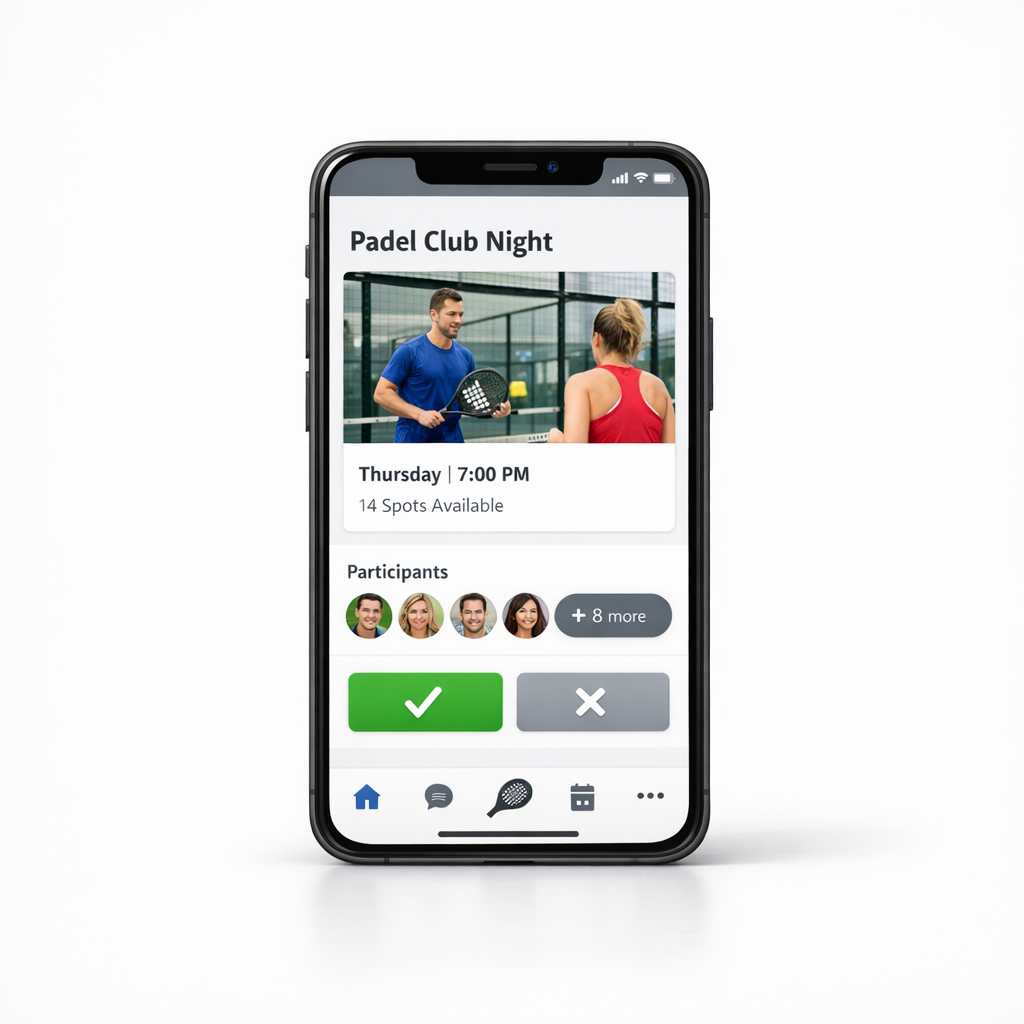
Spond App
Trusted resourcesH elpful external resources related to this topic.British Padel — associationPadel Magazine — mediaSport England — government agency You might also like: Padel Grip Guide: Sizes, Overgrips and Comfort.
You might also like: Padel Grip Guide: Sizes, Overgrips and Comfort.