A first racket should help you keep rallies alive, not make every shot feel like a test. For most new players in Britain, setting a sensible padel racket budget means spending enough for comfort and control while leaving room for balls, shoes, coaching or court time. The right figure depends less on prestige and more on how often you play, whether you can try before you buy, and how quickly you expect to progress.
The honest answer: many beginners do not need the most expensive racket in the shop. A well-chosen mid-entry or lower-mid racket will usually do more for your game than a powerful advanced model that feels harsh, heavy or unforgiving.
The short version
- Trying padel for the first few times: rent, borrow or use a club racket before buying.
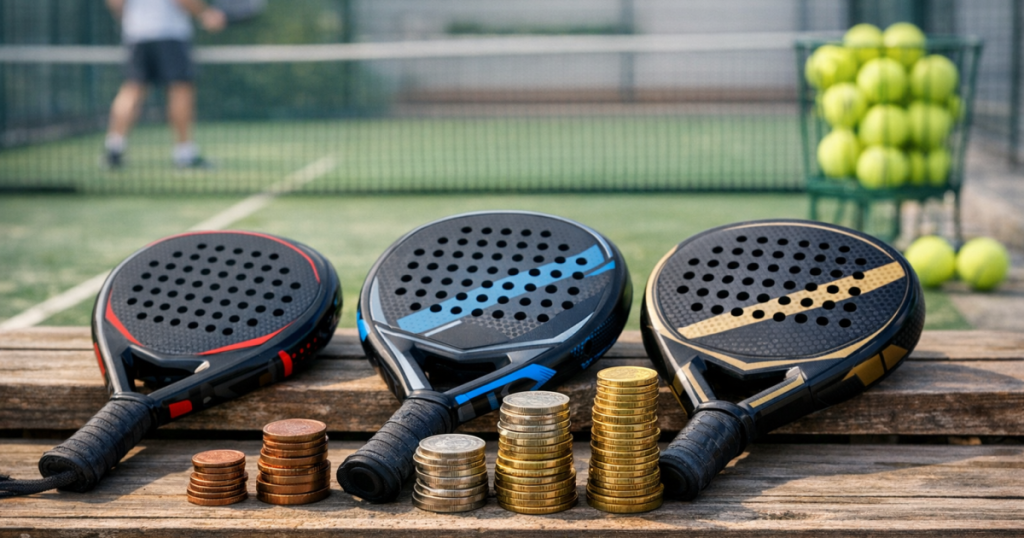
- Occasional beginner: around £60 to £100 can be enough if the racket feels comfortable and controllable.
- Regular first-season player: around £100 to £160 is often the sensible range for better feel, finish and durability without overspending.
- Committed improver: around £160 to £220 can make sense once you know your preferred weight, balance and shape.
- Above £220: usually only worth considering if you have tested the racket and know exactly why it suits your game.
Retail prices move quickly, especially during sales, so treat those bands as a starting point rather than a promise. Always check the current price, return terms and whether the racket is from a current or older range.
Why the cheapest racket is not always the cheapest choice
A very cheap racket can be tempting, especially if you are not sure how often you will play. The problem is not that low-cost rackets are automatically bad; it is that some feel dead, overly stiff, poorly balanced or uncomfortable after a few sessions. If that makes you tense up, mishit more often or avoid playing, the saving disappears quickly.
For a beginner, value usually comes from easy contact. A larger-feeling sweet spot, manageable weight and forgiving response help you learn the basics: blocking, lobbing, defending off the glass and placing the ball without overhitting. If you are still learning court positioning and shot selection, our guide to choosing a padel racket for your first season is a useful next step alongside this spending guide.
Why the most expensive racket can slow beginners down
Premium rackets are often designed for players who already strike the ball cleanly and know whether they want extra power, precision, stiffness or a higher balance. Those qualities can be useful later, but they can punish a new player who is still finding consistent contact.
A racket that is too demanding can make simple shots feel harder than they need to be. You may swing late, grip tighter, lose control on volleys or struggle to defend fast balls at the body. That is why beginners should usually spend for comfort and consistency before chasing headline performance.
What changes as you spend more?
Price does not guarantee a better match, but it can change what you get. As you move up from entry-level rackets, you may see improvements in materials, mould quality, surface finish, comfort, balance options and long-term feel. The important word is “may”: brands describe construction differently, and two rackets at the same price can feel completely different on court.
Common differences to check include:
- Shape: round rackets are usually easier for beginners to control, while teardrop and diamond shapes can feel more attack-minded depending on balance.
- Balance: lower-balance rackets can feel easier to manoeuvre; higher-balance rackets can feel more powerful but harder to control.
- Core feel: softer-feeling rackets can be more comfortable and helpful in defence; firmer-feeling rackets may reward cleaner hitting.
- Surface and frame materials: carbon, fibreglass and hybrid constructions all vary by model, not just by label.
- Weight: a few grams can change how quickly a racket moves in reaction shots and volleys.
If those terms are new, the plain-English explanation of racket materials and cores will help you understand what brands are actually talking about before you spend more.
A sensible padel racket budget by player type
You are still testing whether padel is for you
Spend as little as possible at first. Use hire rackets, borrow from friends or try club demo rackets. Your goal is to find out whether you enjoy the rhythm of the game, the glass rebounds and the social side of club play. Buying too early can leave you with a racket that does not match the style you develop after a few lessons.
You play once or twice a month
A budget of around £60 to £100 is usually reasonable. Look for comfort, a forgiving shape and a weight that does not feel tiring. At this stage, there is little point paying for a very specific advanced feel because your technique and preferences are still forming.
You play weekly and want your own kit
Around £100 to £160 is the sweet spot for many first-season players. You should be able to find rackets that feel more solid than basic starter models while still being friendly enough for learning. This is also where trying before buying becomes more useful, because small differences in feel can matter over a full match.
You play several times a week or take coaching
A budget of around £160 to £220 can be justified if you know what problem you are solving. Maybe you want easier manoeuvrability at the net, more comfort in defence, or a slightly firmer response because your contact is improving. Spend more only when the racket clearly helps your actual game, not because the model looks more advanced.
Real examples of the type of racket to consider
Specific models change by season, but it can help to recognise the kind of rackets that often appear in beginner-friendly searches. Entry and early-intermediate players may come across models such as Adidas Drive 3.3 Padel Racket, Nox X-One Evo Padel Racket or Babolat Reflex Padel Racket. Treat names like these as examples to test and compare, not automatic recommendations.
Before buying any named racket, verify the current version, weight range, shape, balance, return policy and whether the retailer is selling an older model. Older stock can be excellent value, but only if the racket still suits your level and arrives in new, undamaged condition.
Where beginners often overspend
The most common mistake is paying for power before control. Padel rewards patience, placement and court position, especially when you are learning. A racket that helps you reset the point and keep the ball low is usually more valuable than one that promises huge smashes.
Another mistake is ignoring total playing cost. Your first few months may also involve court fees, balls, overgrips, shoes and perhaps a group coaching session. Spending every spare pound on the racket can leave you short on the things that help you play more often. For many beginners, more court time will improve your level faster than a more expensive frame.
It is also easy to buy based on what stronger players use at the club. Their racket may suit faster swings, cleaner contact and a more aggressive style. Your first racket should fit your current game while giving you room to improve.
When it is worth paying more
Paying more can make sense when you have clear evidence from your own play. If you have tried a few rackets and consistently prefer one because it feels easier to control, more comfortable on off-centre hits or quicker in defensive reactions, that is useful information. If a coach has watched you play and can explain why a particular balance or shape suits you, that is also more reliable than guessing from product descriptions.
It can also be worth spending more if you play frequently enough to notice small differences. A weekly social player may be perfectly happy with a simple, forgiving racket. Someone playing three times a week may care more about feel, finish and how the racket behaves during long matches.
When spending less is the smarter move
Spending less is sensible if your schedule is uncertain, you are returning from a long break, or you have not yet tried enough racket types. It is also sensible if your main frustration is not racket-related. If you are losing points because of positioning, rule confusion or shot choice, a pricier racket will not fix that. Time on court and a few focused lessons may be the better use of money.
For comfort-led choices, explore our guide to forgiving padel rackets. It explains why sweet spot, balance and feel matter so much when you are still building consistency.
Quick buying checks before you pay
- Can you hold or demo it? Even five minutes of hitting can reveal whether it feels awkward.
- Does it feel easy to move? You should be able to react quickly at the net without fighting the racket.
- Is it comfortable on imperfect contact? Beginners hit plenty of off-centre balls, so forgiveness matters.
- Are you buying from a retailer with clear returns information? Check the terms before removing tags or protective wrapping.
- Is the price genuinely good? Compare a few UK retailers and check whether the discount is on current or older stock.
FAQ
Is £50 enough for a first padel racket?
It can be enough if you only play occasionally or find a genuine sale, but check comfort carefully. If the racket feels harsh, heavy or poorly balanced, spending a little more may be better value.
Should beginners buy a round racket?
Many beginners get on well with round rackets because they usually feel easier to control. That said, the exact model matters more than the label, so try the racket if you can.
Is a carbon racket worth it for a new player?
Not automatically. Carbon construction can feel great in the right racket, but beginners should focus on comfort, weight, balance and forgiveness before paying extra for material claims.
How long should a beginner racket last?
It depends on how often you play, how carefully you look after it and how many knocks it takes against glass, floor or fence. Regular players may notice wear sooner than occasional players.
Should I buy used?
Used rackets can save money, but inspect for cracks, soft spots, frame damage and loose sounds. If you cannot check it properly, a discounted new racket with clear returns may be safer.
Main lessons
For most new players, the best spending range is not the cheapest possible racket or the most expensive one on the wall. It is the lowest price that gives you a comfortable, forgiving racket you are happy to use regularly.
If you play occasionally, keep costs modest. If you are committing to weekly padel, a middle range budget is usually easier to justify. If you are tempted by a premium racket, make sure you have tested it and can explain what it improves for your game. A sensible first purchase should make padel feel simpler, not more complicated.