Choosing your first padel racket can feel surprisingly awkward because most models promise control, power and comfort at the same time. For a first season, the aim is not to buy the most advanced frame; it is to find a racket that helps you keep the ball in play, learn clean contact and enjoy regular club games.
The right choice should feel easy to swing, forgiving on off-centre hits and comfortable enough for a full session. If you are still learning the glass, basic positioning and when to attack, forgiveness matters more than headline power.
In brief
- Start with a control-friendly or all-round racket rather than a stiff, power-heavy model.
- Round and some teardrop shapes are usually easier for beginners than diamond-shaped rackets.
- Choose a comfortable weight you can swing repeatedly without rushing your technique.
- Do not overpay for advanced materials unless you understand how they change the feel.
- Demo, borrow or test a club racket if you can before spending more.
Why your first-season racket matters
Padel rewards timing, patience and placement. A racket that is too demanding can make early progress harder because it punishes small mistakes: late contact, cramped volleys, rushed bandejas and defensive shots from the back glass.
A more forgiving racket gives you a larger comfortable hitting area and a calmer response. That makes it easier to build good habits: preparing early, using a compact swing, keeping the ball low and playing with your partner instead of trying to win every point with one shot.
Your racket will not fix footwork, shot choice or scoring confusion. If you are still getting used to match structure, it helps to pair gear decisions with the basics of play; the beginner rules guide on padel rules and scoring is a useful next step alongside choosing kit.
Start with shape: round, teardrop or diamond
Racket shape is one of the easiest ways to narrow the field. It affects where the sweet spot sits and how the racket tends to behave when you are slightly late, stretched or off balance.
Round rackets
Round rackets usually place the sweet spot nearer the centre of the face and are commonly the most forgiving option. For many new players, this is the safest starting point because it supports control, defensive lobs and simple volleys.
Teardrop rackets
Teardrop rackets sit between control and power. Some are beginner-friendly, while others are aimed at improving or attacking players. If you like the idea of a little extra punch but still want forgiveness, a softer teardrop can be a sensible first-season choice.
Diamond rackets
Diamond rackets tend to be more power-focused, with a higher sweet spot. They can feel exciting on smashes but less forgiving during normal club rallies. Most beginners are better off waiting until their timing, contact point and overhead technique are more settled.
Control beats power early on
A sensible first padel racket should help you repeat shots, not tempt you into swinging harder. Beginners often lose points by overhitting, lifting the ball too high or trying to finish rallies before they have created the chance.
Control-focused rackets usually make it easier to guide the ball into corners, block at the net and defend from awkward positions. Power-focused rackets can be fun, but they often demand cleaner timing and more physical control.
If you are unsure which direction fits your game, the deeper guide to control or power padel rackets for beginners explains the trade-off in more detail.
Weight and balance: comfort over bravado
Two rackets can feel very different even when the listed weight looks similar. Balance changes how heavy a racket feels in your hand. A head-heavy model can feel slower at the net, while a more evenly balanced or lower-balance racket can feel easier to manoeuvre.
For a first season, prioritise a racket you can swing calmly for a full match or coaching session. If your wrist, forearm or shoulder feels overloaded during basic volleys and returns, the racket is probably making learning harder than it needs to be.
When checking a product page or shop label, look for the stated weight range and balance description, then handle the racket if possible. Do not choose purely from the number on the page; grip size, balance and frame feel all affect comfort.
Materials and core feel, without the jargon
Padel rackets combine a frame, hitting surface and inner core. The way these parts are built affects comfort, rebound and stiffness. You do not need to become a materials expert, but you should understand the basic feel before spending more.
- Softer-feeling rackets: often feel more comfortable and help the ball come off the face with less effort. Many beginners enjoy this because it reduces the need to force shots.
- Firmer-feeling rackets: can feel more direct and controlled for clean hitters, but may be less forgiving if your contact is inconsistent.
- Fibreglass surfaces: are common on accessible rackets and often associated with a softer, easier feel.
- Carbon surfaces: appear across many levels, but the exact feel depends on the construction. Do not assume carbon automatically means better for a beginner.
For a clearer breakdown of the terms you will see on product pages, read the beginner explainer on padel racket materials and cores.
Set a realistic first-season budget
You do not need to buy the most expensive racket for your first few months. A sensible approach is to set a spending ceiling, then look for comfort, shape and forgiveness within that range. For many new UK club players, a mid-priced beginner or intermediate model is more useful than a premium racket designed for advanced attacking play.
Be careful with heavy discounts on older or unfamiliar models. A reduced price can be good value, but only if the racket suits your level. A powerful diamond racket at a tempting price is still the wrong buy if it makes normal rallies harder.
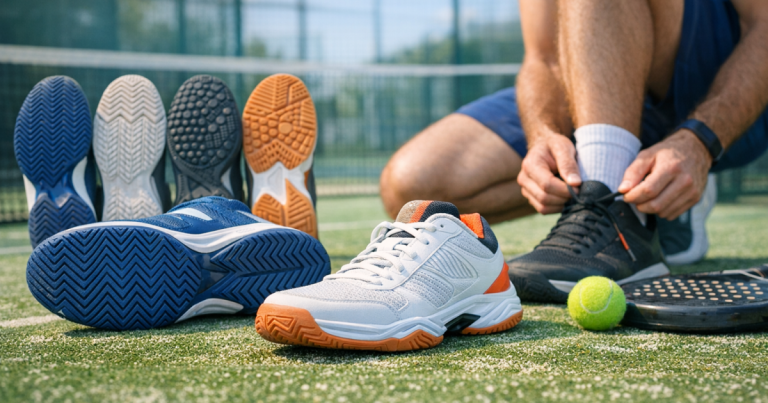
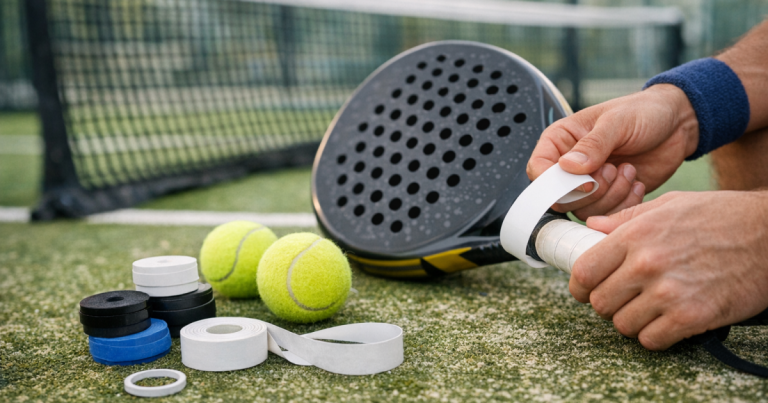
Also factor in the basics around the racket: overgrips, balls and suitable court shoes. Those items affect your first-season experience too, so avoid spending the whole budget on the frame alone.
Should you buy, borrow or demo first?
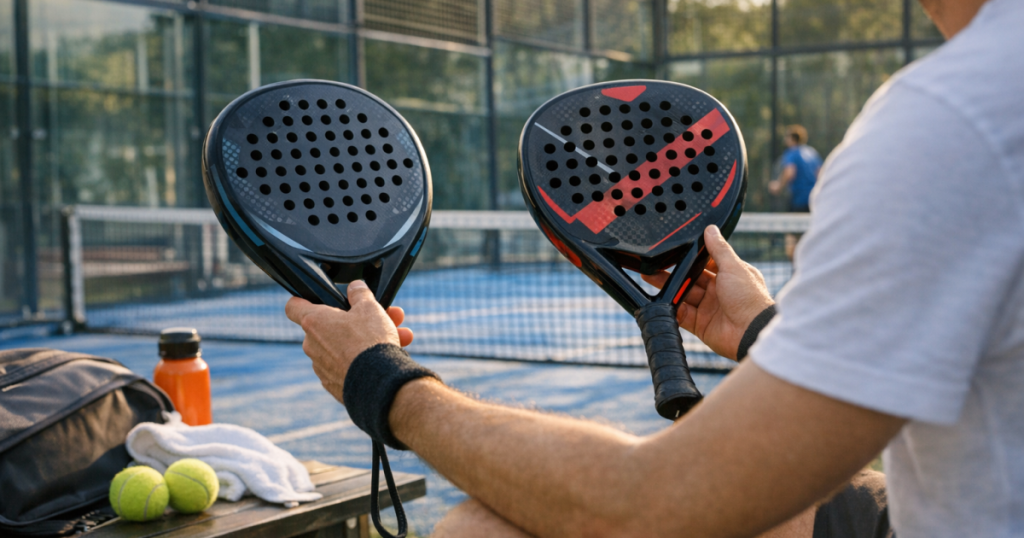
If your club offers demo rackets, use them. Ten minutes of hitting can tell you more than a long product description. Pay attention to how the racket behaves on easy shots, not just the one smash that feels brilliant.
Borrowing from friends can help, but compare carefully. An experienced player may use a racket that suits their timing and strength, not your current level. If you borrow, try several shapes and note which one makes your ordinary rally ball feel most controlled.
Buying immediately is fine if you want your own kit from the start, but keep the choice simple. Choose forgiveness first, then refine your preferences after a season of lessons, social games and match play.
Real racket examples, used sensibly
Specific models can help you understand the market, but they should not replace trying a racket where possible. A model such as the Head Evo Speed is a recognisable example of the kind of accessible all-round racket many newer players may come across. Before buying any version, check the current product details, shape, weight range and whether it suits your swing.
At the other end of the feel spectrum, a racket marketed around aggressive power, such as the Bullpadel Hack 02 2022 Padel Racket, is the sort of option a beginner should approach carefully. It may appeal if you love attacking shots, but most first-season players will progress faster with something more forgiving and easier to control.
The point is not that one named model is automatically right or wrong. The point is to read the design cues: shape, balance, stiffness, comfort and intended player level.
Common mistakes to avoid
- Buying for the player you want to be next year: choose for the shots you are learning now.
- Copying a coach or advanced friend: their racket may reward technique you have not built yet.
- Ignoring comfort: a racket that feels harsh or tiring will discourage relaxed practice.
- Choosing purely by brand: good brands make rackets for different levels, so check the actual model.
- Overvaluing power: early padel improvement usually comes from fewer errors, better positioning and smarter shot selection.
A simple decision path
If you feel stuck, use this order:
- Pick a round or forgiving teardrop shape.
- Choose a comfortable, manoeuvrable feel rather than the heaviest or most powerful option.
- Prefer a medium-soft or forgiving response while your timing develops.
- Set a budget that leaves room for shoes, balls and grips.
- Test or borrow if available, then buy the racket that makes ordinary shots feel easiest.
That decision path will not give every player the same answer, but it keeps you focused on what matters during the first season: repeatable contact, confidence and fewer avoidable errors.
Helpful questions
Is a round racket always best for beginners?
Not always, but it is often the safest starting point. Some teardrop rackets are beginner-friendly too, provided they feel comfortable and are not too head-heavy or stiff.
How much should I spend on my first racket?
Set a realistic ceiling before you browse and check current UK retailer prices. Avoid stretching your budget for advanced features you may not benefit from yet.
Can I use a tennis racket for padel?
No. Padel uses a solid-faced padel racket designed for the sport. Tennis rackets are not suitable for padel play.
When should I upgrade?
Upgrade when you know what your current racket is limiting. If you can explain whether you want more manoeuvrability, control, comfort or power, you are ready to choose more precisely.
Key takeaways
Your first season is about building a reliable base. Choose a racket that supports clean contact, calm defence and simple attacking choices rather than chasing maximum power too soon.
For most beginners, that means a forgiving round or teardrop racket, comfortable weight, manageable balance and a feel that encourages relaxed swings. Get that right and your racket becomes a quiet helper in the background, letting you focus on learning the game and enjoying more time on court.