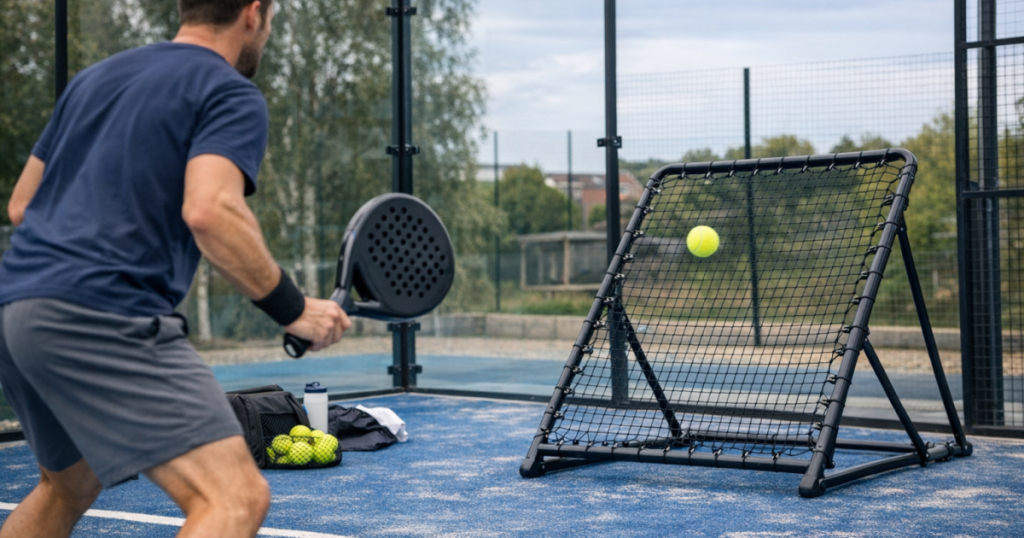
Solo practice can be frustrating when you know what you want to improve but cannot always find three other players. For early-stage players, padel rebound nets can be useful, but only when you treat them as a simple training aid rather than a replacement for real court time.
The main value is repetition: you can practise clean contact, compact swings, footwork rhythm and ball control without booking a court. The limitation is just as important: a net cannot recreate glass rebounds, tactical decisions, partner positioning or the pressure of a proper rally.
At a glance
- Worth it for: basic volleys, rhythm, hand-eye coordination, compact swing habits and short, focused practice blocks.
- Less useful for: learning wall rebounds, match tactics, lob defence, court positioning and communication with a partner.
- Best for beginners: players who already attend club sessions and want a low-friction way to practise between them.
- Biggest risk: grooving unrealistic shots if the net angle, distance or drill choice does not match padel movement.
- Good next step: combine solo drills with a simple weekly plan, such as building your first month of padel practice.
The short answer: yes, but not for everything
A rebound net is worth considering if you can use it regularly, have a safe flat space, and understand what it can and cannot train. It is not magic kit. It will not suddenly give you a better bandeja or make you read the back glass properly. What it can do is make your contact more consistent, your feet more active and your swings less rushed.
For a beginner club player, that matters. Many early mistakes come from arriving late to the ball, swinging too big, or panicking on routine volleys. A rebound net gives you a controlled place to slow the skill down. You can hit the same pattern 50 times without worrying about holding up a court or apologising to three other players.
That said, the best improvement still comes from mixing practice types. Use the net for touch and repetition, then test those habits in club play, coaching, matchplay or social sessions. Padel rebound nets are most useful as a bridge between real sessions, not as a standalone training plan.
What a rebound net actually helps you practise
The strongest use cases are simple, repeatable actions. If a drill needs a live opponent, a wall, a partner call or a tactical decision, the net will only give you part of the picture. Keep the work narrow and specific.
Volley control
For many beginners, volleys are the first big benefit. Stand close enough that you have to keep the swing short. Aim to block and guide the ball rather than slap it. This is useful because padel volleys are often about control, depth and placement, not a huge follow-through.
Try sets of 20 forehand volleys, then 20 backhand volleys. Keep your racket in front, recover to a ready position after every ball, and count only the hits where your balance stays steady. If your feet stop moving, the drill has become a hand drill rather than a padel drill.
Compact groundstrokes
A rebound net can also help you tidy up forehands and backhands. The goal is not power. The goal is repeatable contact in front of the body, a calm follow-through and quick recovery. If the ball keeps flying high, you are probably swinging too steeply or standing too close.
Beginners often bring habits from tennis or squash, where a bigger swing can feel natural. Padel rewards a shorter preparation more often, especially when you are reacting to fast balls at the net or taking balls after the glass. A net can encourage that compact shape if you set the drill properly.
Footwork rhythm
Good solo practice is not just about hitting. Add small adjustment steps before each contact and a recovery step afterwards. Say “split, move, hit, recover” quietly if it helps. It may feel basic, but it builds the routine you need when rallies get faster.
A simple pattern is: start in a ready stance, hit one controlled ball, recover to the centre of your practice area, then move again. Avoid standing still and feeding balls from the same spot unless you are deliberately isolating contact technique.
Where rebound nets fall short
The biggest weakness is realism. Padel is a court-positioning sport as much as a racket sport. A rebound net sends the ball back, but it does not make decisions, change height cleverly, attack your feet, lob over you, or force you to communicate.
It also cannot properly teach the walls. Reading the side glass and back glass is one of the key differences between padel and other racket sports. You can build general coordination at home, but you still need court time to understand angles, rebounds and when to let the ball pass.
Another limitation is feedback. If every shot comes back nicely, you may think your technique is better than it is. On court, a ball that looks fine in solo practice might sit up for an opponent, clip the side glass awkwardly or leave your partner exposed. That is why solo work should be checked against real rallies as soon as possible.
How to use one without building bad habits
The best approach is to keep sessions short and deliberate. Ten to 20 minutes of focused work is usually more useful than an hour of random hitting. Pick one theme, measure it simply, then stop before your technique gets scruffy.
- Set one aim: for example, “20 controlled backhand volleys with a short swing” rather than “hit for a while”.
- Stand at a realistic distance: close enough to practise quick reactions, but not so close that you jab at everything.
- Use a controlled pace: if you are smashing the ball to make the drill exciting, it is probably less useful for beginner padel.
- Move after every shot: recover your feet, reset your racket position and prepare again.
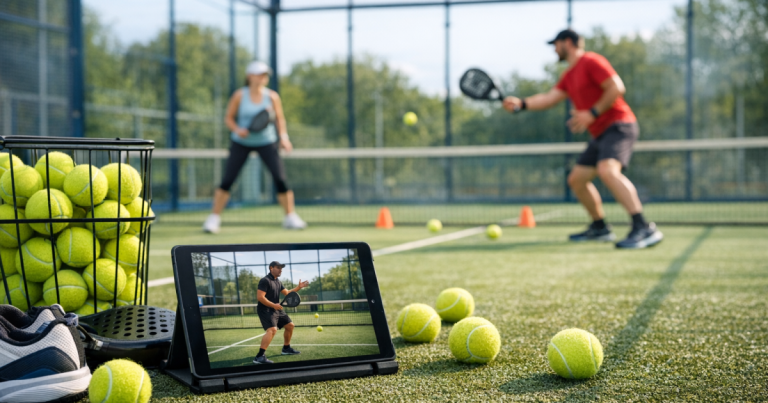
- Film a short clip occasionally: check whether your swing is compact and whether you are balanced at contact.
- Stop when quality drops: tired, rushed repetitions can reinforce the exact habits you are trying to remove.
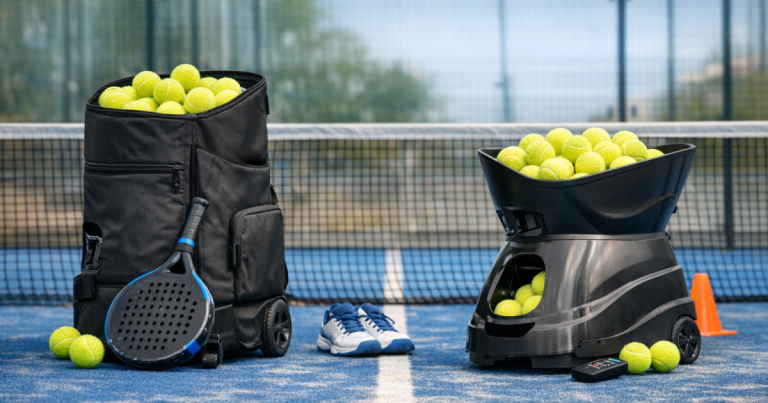
It also helps to practise with the same sort of basic kit you take to club sessions: proper padel shoes, comfortable clothing, water and enough balls to keep the session flowing. If you are still getting your setup together, the padel gear checklist for your first club session is a useful reminder of what genuinely matters and what can wait.
Simple solo drills to try
These drills are designed for beginners and improvers who want better control rather than showy power. Use a flat, clear area and leave enough room around you for safe movement.
1. Volley ladder
Hit 10 forehand volleys, 10 backhand volleys, then alternate forehand and backhand for 20 balls. Count only the shots where your racket starts in front of your body and your feet reset before the next contact. If you miss, restart the current block rather than the whole drill.
2. Soft hands challenge
Stand a little closer and aim to keep the ball coming back at a gentle pace. Your job is to absorb the ball, not punch it hard. This helps with touch around the net and reduces the beginner habit of over-hitting easy balls.
3. Two-step recovery
After every hit, take two small recovery steps back to your start position. This makes the drill more padel-like because you are training the reset, not just the strike. It is especially useful if you tend to admire your shot and then get caught late on the next one.
4. Target window
Choose a small visual target on the net, such as a central panel or a safe marked area. Aim for steady accuracy rather than pace. Do three rounds of 15 balls and note how many land near your target. The number is less important than whether your misses are becoming smaller.
5. Serve rhythm without the court
You cannot fully practise a legal padel serve without a court and service box, but you can rehearse the rhythm: bounce, controlled contact below waist height, smooth follow-through and quick recovery. Keep it gentle. The aim is a repeatable motion, not a fast serve.
Who will get the most value from one?
A rebound net makes most sense for players who already know they enjoy padel and are starting to play regularly. If you have only tried one taster session, you may be better off booking more club time before adding practice kit at home. Real play will tell you which skills actually need work.
It is also useful for players with awkward schedules. If you cannot always make evening club nights, a short session before work or at the weekend can keep your hands sharp. The key is consistency: a modest drill twice a week beats one long, unfocused session every few weeks.
Players who mainly need confidence may benefit too. Beginners sometimes freeze at the net because the ball feels quick. Repeated easy volleys can make the first contact feel less dramatic, which helps you stay calmer when you step back onto court.
When to skip it for now
You probably do not need a rebound net yet if your main barrier is finding games, learning the rules or getting comfortable in a club environment. In that case, the better investment of time is to join beginner sessions, ask about mix-ins, or find a regular hitting group.
Skip it if you do not have a sensible practice space. Cramped patios, uneven ground and nearby windows make it harder to focus and easier to rush. Solo training should feel controlled, not like you are trying to avoid breaking something with every shot.
It may also be unnecessary if you already have frequent access to coaching or practice partners. A coach or reliable partner can feed more realistic balls, correct your positioning and adjust drills to your actual level. The net is convenient, but it is not a better teacher than good feedback.
How to judge whether it is working
Do not judge progress by how hard you can hit into the net. Judge it by whether your club play feels cleaner. After two to four weeks of short sessions, look for practical signs.
- You make more first volleys in warm-ups and social rallies.
- Your racket preparation feels shorter and earlier.
- You recover your feet without having to think about it every time.
- You panic less when a ball comes quickly towards your body.
- You can hit a controlled ball rather than automatically trying to win the point.
If none of those things changes, adjust the drills. You may be hitting too hard, practising from an unrealistic position or spending too much time on shots that rarely appear in your games.
Helpful questions
Can a rebound net replace coaching?
No. It can support coaching by giving you repetitions between lessons, but it will not diagnose grip issues, movement problems or poor shot choices. If you are taking lessons, ask your coach which one or two drills are worth repeating at home.
Can it help if I am nervous at club sessions?
Yes, in a limited but useful way. Familiarity with basic contact can reduce nerves, especially at the net. It will not replace the social side of club play, though. If the challenge is meeting people to play with, read this guide on how to find a padel partner at your local club.
How often should a beginner use one?
Two or three short sessions a week is plenty for most beginners. Keep each session focused and stop while the movement still feels sharp. Quality matters more than volume.
Should juniors use a rebound net?
They can, provided the practice is supervised, gentle and kept fun. Short games and simple targets are better than long technical sessions. The priority should be coordination, confidence and enjoyment rather than heavy repetition.
Final thoughts
A rebound net is worth it if it helps you practise specific habits you can take back to the padel court: cleaner contact, calmer volleys, better recovery and more confidence under time pressure. It is not worth it if it becomes a substitute for playing with others or if you use it only for random power hitting.
For most beginner club players, the sweet spot is simple: play real padel whenever you can, use solo practice to tidy up one skill at a time, and keep checking whether the work shows up in rallies. If it does, the net is doing its job.