Your racket and shoes do most of the work, but the small items in your bag can make the difference between a relaxed session and a frustrating one. A few well-chosen UK padel accessories help with grip, comfort, ball quality, court conditions and the little practical moments that crop up at clubs.
The aim is not to turn your first few months into an expensive kit project. For most new club players, the right approach is simple: carry what solves real problems, ignore the gimmicks, and add extras only when you know how often you play and what your local courts are like. If you are still getting ready for your first booking, start with the basics in this first padel session guide before filling a bag with extras.
At a glance
- Most useful early extras: overgrips, a spare tube of balls, a small towel, water bottle, blister plasters and a simple bag.
- Worth considering soon: wristbands, cap or visor for outdoor courts, grip spray or rosin-style grip aid, spare socks and racket frame protection.
- Usually not urgent: large tournament bags, specialist training aids, ball pressurisers and multiple replacement straps.
- UK club reality: indoor courts can feel warm and humid, outdoor courts can be damp or windy, and evening sessions often mean condensation on grips and glass.
The small extras that matter most
Beginners often focus on the big purchases, then turn up with no way to manage sweaty hands, tired feet or tired balls. Accessories are not about looking like a touring player. They are there to keep you comfortable enough to learn, rally and enjoy the match.
Overgrips
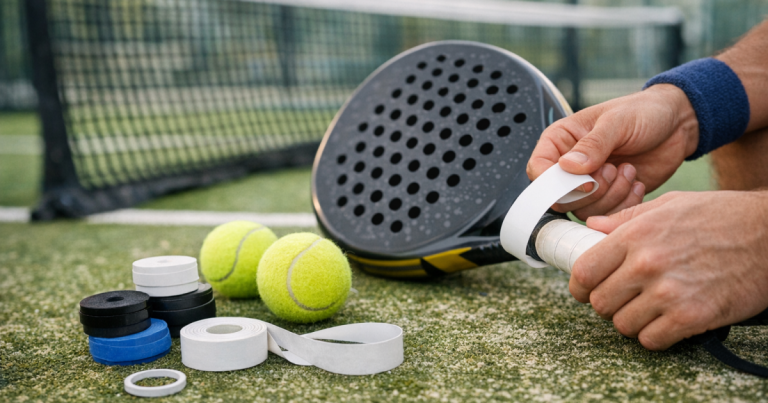
An overgrip wraps over the handle of your racket. It is one of the cheapest and most useful upgrades because it affects every shot you play. New rackets usually come with a base grip, but many club players add an overgrip for better feel, a slightly thicker handle or improved sweat control.
For most beginners, a tacky grip is easier than a very dry grip because it gives immediate reassurance on volleys, blocks and serves. If your hands sweat heavily, a drier or more absorbent option may feel steadier. Wilson Pro Overgrip is a familiar example used across racket sports, while Tourna Grip Original is known for a drier feel. You do not need to copy anyone else’s setup exactly; buy a small pack first and see what works in your hand.
Change your overgrip when it feels shiny, slippery, frayed or uncomfortable. Some players change it often, others stretch it across several sessions. The useful test is simple: if you are gripping tighter because you do not trust the handle, it is time to replace it.
Padel balls
Club matches are much better with a decent tube of balls. Flat or tired balls make padel feel slower, lower and less predictable, which can confuse beginners who are still learning bounce, glass rebounds and timing.
Many clubs provide balls for coaching sessions, but social games often rely on someone bringing a fresh or playable tube. Head Padel Pro is a common club-level example and is reviewed in more detail in our Head Padel Pro balls review. Other recognised padel balls are also suitable, but make sure you are buying padel balls rather than tennis balls. They are not identical in how they play.
Store balls in their tube with the lid on, keep them away from heat where practical, and retire them from proper matches once they stop bouncing consistently. Old balls can still be useful for solo wall practice or warm-ups, but they are not ideal for learning clean match timing.
Towel and wristbands
A small towel is easy to underestimate until you play under warm indoor lights or on a humid evening. Use it for hands, face and racket handle between games. Wristbands can also help stop sweat running down onto your palm, which is especially useful if your grip gets slippery halfway through a set.
You do not need a huge gym towel. A compact sports towel that fits in an outer pocket is enough. If you play straight after work, keeping a spare towel in your bag also saves you when the club changing area is busy or you have to head home in damp kit.
Water bottle
Padel points are short, but games can be intense because you move in repeated bursts. A bottle you can open quickly during changeovers is more useful than a bulky flask that stays in your bag. For most UK club sessions, one medium bottle is fine, but longer mix-ins, leagues or summer outdoor games may need more.
If you use electrolyte tablets or sports drinks, keep them as a comfort choice rather than a necessity. Water is enough for many short beginner sessions. The key is actually drinking between games, not waiting until you feel drained.
Comfort items for regular club play
Once you are playing weekly, small comfort items become more valuable. They do not improve your technique by themselves, but they remove distractions that make you rush, tense up or cut sessions short.
Blister plasters and spare socks
New players often move differently in padel than they expect. There are quick starts, small adjustment steps, lunges near the glass and repeated changes of direction. Even with good shoes, your feet may complain during the first few weeks.
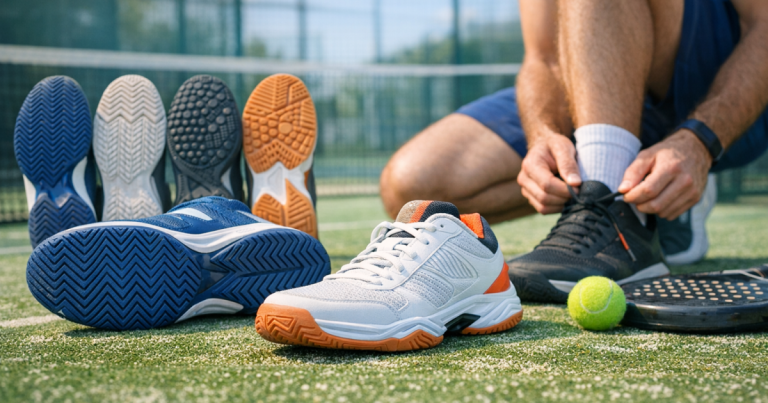
Keep a couple of blister plasters in your bag and consider a spare pair of sports socks. Damp socks increase rubbing, and outdoor courts can leave your feet colder or wetter than expected. If your feet are consistently sore, the issue may be shoe fit, court surface or support rather than accessories. Our guide to choosing your first padel shoes explains the grip and stability basics.
Cap, visor and sun protection
Outdoor padel is increasingly common in the UK, and low sun can be awkward on lobs and overheads. A cap or visor can help you track the ball without squinting through every high bounce. Sunscreen is worth keeping in your bag for daytime sessions, even when the forecast looks mild.
For winter evenings, the equivalent comfort item might be a light layer for warm-up and post-match. You will usually remove it once rallies start, but it helps during waiting periods, coaching explanations or social rotations where you sit out for a few games.
Grip aid for sweaty hands
Some players use a small amount of grip aid when overgrips alone are not enough. This can be useful in warm indoor centres or during long mix-ins. Use it sparingly because too much product can make the handle feel dirty or sticky and can transfer onto your bag.
Check your club’s expectations if you are using powders or sprays. You want better grip, not residue on benches, court entrances or shared facilities. A towel and fresh overgrip should still be your first solution.
Bags: what size makes sense?
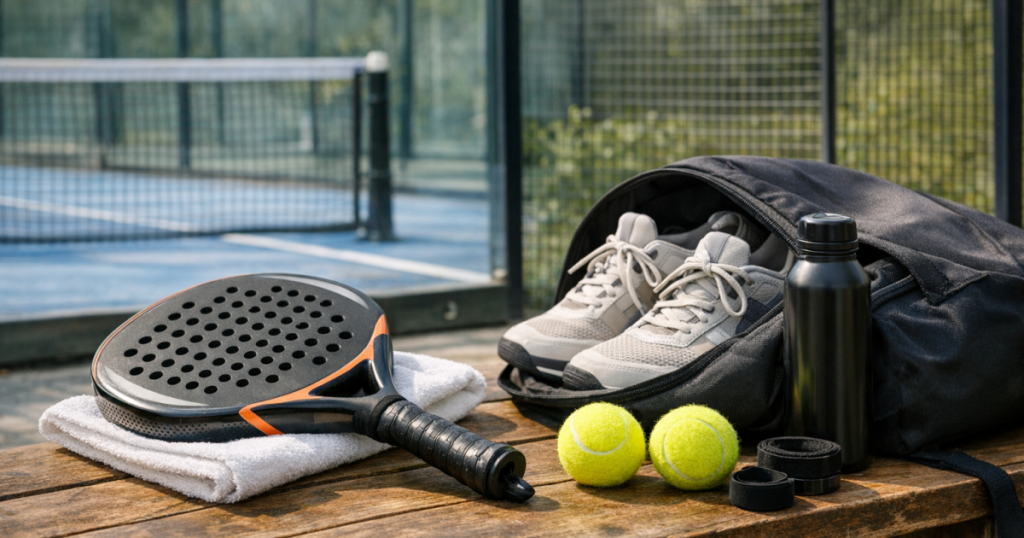
A beginner does not need a large tournament-style racket bag. For one racket, a tube of balls, water, towel and small extras, a compact backpack or small racket bag is usually enough. The main benefit is organisation: you know where your keys, phone, overgrips and plasters are when you are rushing from work to a booking.
A bigger bag starts to make sense when you carry multiple rackets, a change of clothes, shower items or outdoor layers. If you cycle, walk or use public transport to your club, comfort matters more than size. Look for straps that sit well and a shape that does not swing around awkwardly.
A separate shoe compartment is convenient but not essential. A simple drawstring shoe bag inside a normal backpack can do the same job, especially if your shoes pick up sand from artificial turf. The important habit is not leaving damp clothing, towels or socks sealed in the bag for days.
Racket protection and maintenance extras
Padel rackets take knocks from the glass, metal mesh, floor and your partner’s racket. Beginners tend to clip the frame more often because spacing and wall confidence are still developing. A clear protector strip on the top edge can reduce cosmetic wear, though it can slightly change the balance depending on the strip and racket.
If your racket already has a protector, you may not need another. If it does not, choose one designed for padel rackets and apply it carefully to a clean, dry frame. Do not keep layering tape until the racket feels head-heavy. Small changes can matter when you are learning control.
Other maintenance items are simple: a spare wrist strap if your racket uses a removable one, a cloth for wiping the frame, and a place to store balls properly. Avoid leaving your racket in a hot car or damp shed. Extreme conditions are not kind to foam cores, grips or adhesives.
Accessories that sound useful but can wait
Some extras are popular online but not urgent for new club players. Ball pressurisers can help extend ball life for frequent players, but they are less important if you are still playing occasionally or sharing tubes across a group. Training cones, targets and rebound aids can be useful for structured practice, but they are not necessary for normal social games.
Racket weights and balance modifications are also best left until you understand what you like. Adding weight to the head, bridge or handle changes how the racket moves. For a beginner, that can make technique harder to read. If the racket feels wrong, it is usually better to look at grip size, weight, shape and balance more broadly before customising it.
Vibration solutions are another area where marketing can get ahead of need. Padel rackets do not have strings like tennis rackets, so familiar tennis-style dampeners are not relevant in the same way. If your arm regularly hurts, do not try to fix it by adding random accessories. Consider racket weight, grip size, playing load and technique, and reduce play if pain persists.
What to pack for a typical UK club session
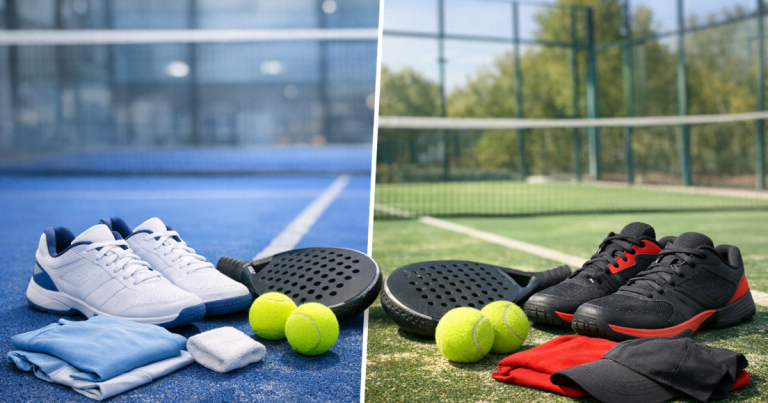
A sensible club bag does not need to be complicated. For a one-hour or ninety-minute session, this setup covers most situations without overpacking:
- Racket in a cover or padded section.
- Padel shoes, or wear them only once you reach the club if you want to keep the soles clean.
- One tube of playable padel balls.
- One or two spare overgrips.
- Small towel and, if needed, wristbands.
- Water bottle.
- Blister plasters and spare socks.
- Cap or visor for outdoor courts.
- Light layer for before and after play.
- Phone, booking details and any club access information.
If you play at different clubs, adapt the list. Some venues have excellent changing areas, lockers and water refill points. Others are more basic, especially at temporary or outdoor sites. After a few visits, you will know whether you need a bigger towel, extra layer, or simply a better pocket for your car keys.
How to build your kit without wasting money
Start with the problems you actually have. If the racket slips, buy overgrips. If balls are always tired, keep a tube in your bag. If your feet rub, sort socks and footwear. If outdoor glare bothers you, add a cap. This approach keeps spending connected to real play rather than guesswork.
It also helps to separate essentials from preferences. A water bottle is essential. A luxury bag is preference. A fresh overgrip can improve comfort immediately. A specialist training aid is only useful if you have a plan for using it. A protector strip may be sensible for a new racket, but it is not a substitute for learning court spacing and wall judgement.
As you build your UK padel accessories, aim for a bag that supports regular play rather than one that looks complete on day one. The best setup is the one that lets you arrive on time, feel comfortable, share decent balls, keep your grip secure and focus on learning the game.
Key takeaways
- For beginners, overgrips, balls, towel, water and foot-comfort items bring the biggest day-to-day benefit.
- UK conditions vary, so think about indoor humidity, outdoor glare, damp evenings and travel to the club.
- Do not rush into specialist extras until you know your playing routine and common frustrations.
- Keep your bag simple, clean and easy to repack, so you are ready for the next session without last-minute searching.