Padel asks more of your feet than it first appears: short sprints, split steps, sudden stops and plenty of sideways movement. Choosing padel shoes for beginners is mainly about grip, lateral support and comfort, not chasing the flashiest pair on the shelf.
If you already have foot, ankle or knee pain, footwear assessment for sport should be handled by a qualified podiatrist or physiotherapist in line with UK clinical standards and safety requirements.
The short version
Your first pair should keep you secure on sanded artificial turf, feel stable when you move sideways and fit well enough that you forget about them during a game. Most new players are better served by a proper padel shoe, or a tennis shoe with a clay-style sole, than by running trainers.
- Prioritise sideways stability: padel involves more lateral movement than steady forward running.
- Check the sole pattern: herringbone or mixed soles are usually the safest starting point for many sanded padel courts.
- Avoid overly soft running shoes: they can feel comfortable but unstable when you stop, twist or push off.
- Try them with your actual playing socks: fit changes once you add thicker sports socks.
- Check club rules: some venues ask for clean, non-marking court shoes.
If you are building your first setup from scratch, this footwear advice sits neatly alongside our beginner padel gear guide, which covers what is worth buying early and what can wait.
Why ordinary trainers are not ideal for padel
Running shoes are built mainly for repeated forward motion. Padel is different. You might move forwards for a volley, shuffle sideways to cover the middle, brake hard near the glass, then push back for a lob within a few seconds. That means your shoes need to resist rolling at the edges and hold your foot securely through changes of direction.
The problem with many gym or running trainers is not that they are low quality. It is that their design priorities are wrong for the court. A tall, soft midsole can feel cushioned but may make your foot sit higher from the ground, which can feel less stable. A road-running outsole may also grip unpredictably on artificial turf, especially where there is loose sand on the surface.
Good court shoes usually feel a little lower, firmer and more supportive around the sides. At first, that can feel less plush than a running shoe, but it often makes more sense once you start playing longer rallies.
Start with the surface you actually play on
Most UK padel courts use artificial turf, often with sand worked into the surface. Indoor courts may feel more consistent, while outdoor courts can play differently depending on weather, maintenance and how much sand is visible. This is why sole choice matters.
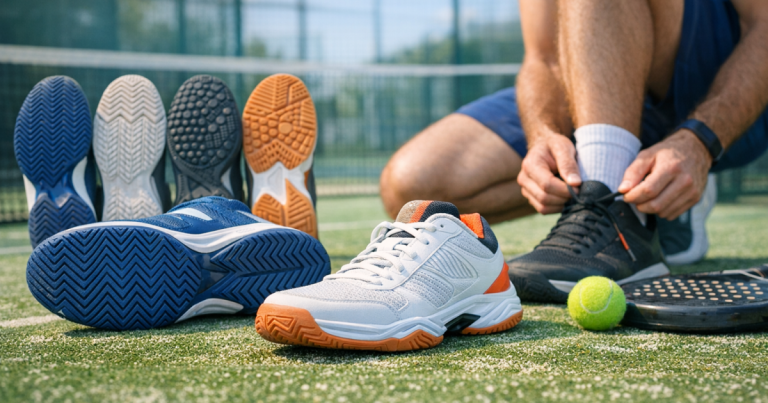
Herringbone soles
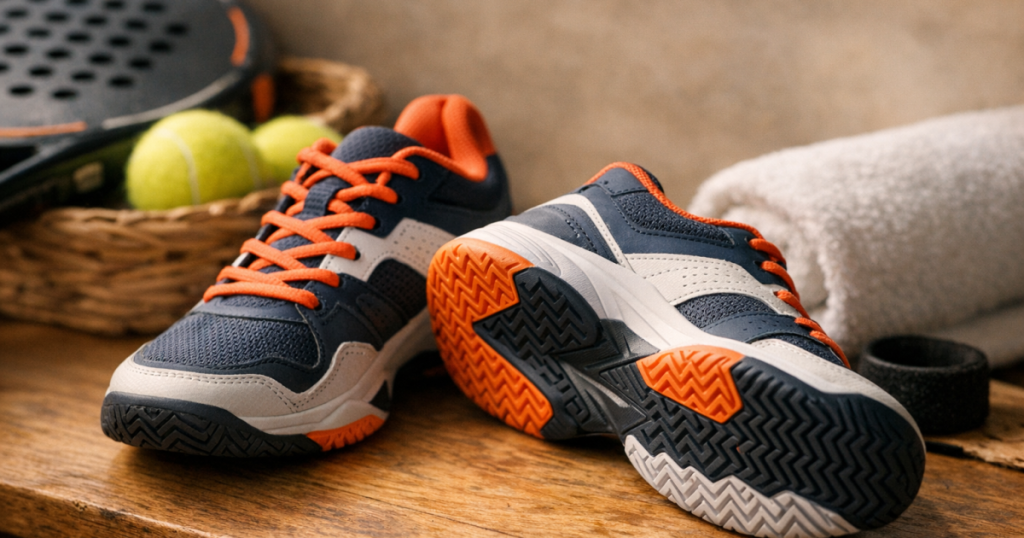
A herringbone pattern looks like repeated zigzags across the sole. It is common on clay tennis shoes and many padel shoes because it gives reliable grip while still allowing a controlled slide on sandy surfaces. For many beginners, it is the easiest sole type to trust because it is predictable rather than aggressively sticky.
Mixed or padel-specific soles
Some padel shoes use a mix of herringbone, circular pivot zones and other tread patterns. These are designed to support quick turns and short court movements. They can be a sensible option, but the exact feel varies by model, so it is worth checking whether the sole is intended for sanded artificial turf rather than hard tennis courts only.
Omni or dimple-style soles
Omni soles, with small studs or dimples, can work on some artificial grass courts. The trade-off is that they may feel either very grippy or a little less smooth when rotating, depending on the court and the shoe. If you only play at one club, ask regular players or the venue staff what tends to work on their surface.
Support matters more than you think
Beginner players often focus on cushioning first because comfort is easy to notice in the shop. Support is just as important, but it shows up during play. When you push sideways, your foot should feel held inside the shoe rather than sliding over the edge of the sole.
Look for a secure heel, a stable base and enough structure through the midfoot. You should be able to tighten the laces without creating painful pressure across the top of your foot. If the heel lifts when you walk, or your foot moves inside the shoe when you change direction, the fit is not right.
This does not mean you need the stiffest shoe available. Very rigid shoes can feel awkward for a new player who is still learning footwork. The sweet spot is a shoe that bends naturally at the forefoot but does not twist easily through the middle.
Fit: the part you should not rush
A padel shoe should feel snug, not cramped. Leave a little space in front of your longest toe, because your foot moves forward during stops and lunges. At the same time, there should not be so much extra length that your foot slides around.
Try shoes later in the day if you can, as feet often swell slightly after walking or exercise. Wear the socks you normally play in. If you use thicker sports socks, a shoe that felt perfect with thin everyday socks may suddenly feel tight. Players with wider feet should be particularly careful with narrow performance shoes, as pressure across the forefoot can become distracting during a full session.
A useful test is to lace the shoes properly and make a few gentle side steps at home or in the shop. Your heel should stay down, your toes should not hit the front, and the upper should hold your foot without pinching. If something feels wrong immediately, it is unlikely to improve enough after a few games.
Cushioning: enough comfort, not too much wobble
Padel involves repeated small impacts rather than long-distance pounding. You still want cushioning, especially if you play on firmer courts or have long club sessions, but excessive softness can make the shoe feel unstable when you brake or twist.
For most new players, moderate cushioning is a good place to start. The shoe should take the edge off impacts without making you feel disconnected from the court. If you are a heavier player, play several times a week or have a history of discomfort after sport, cushioning may deserve extra attention. Just balance it against support and court feel.
Real examples you may see in UK shops
You do not need a premium shoe to start playing, but looking at real padel models can help you understand the category. Examples that commonly appear in padel or racket-sport ranges include Adidas Crazyquick Padel, Babolat Jet Premura 2 Padel and HEAD Sprint Pro 4.0 Padel. Treat these as reference points rather than automatic choices: check the current sole type, width, size availability and returns policy before buying.
If you already own clay-court tennis shoes, you may be able to use them for your first few sessions, especially on sanded turf. That said, once you start playing regularly, padel-specific footwear can feel more natural because the shoe is shaped around shorter, sharper movements. If you are also choosing a racket, our guide to choosing your first padel racket can help you avoid another common beginner mistake: buying something too advanced too early.
Common mistakes new players make
- Buying for looks first: style is fine, but sole pattern and fit matter more on court.
- Using worn-out trainers: old soles lose grip and old uppers may no longer hold your foot securely.
- Choosing shoes that are too big: extra space can cause sliding, blisters and slower changes of direction.
- Ignoring the court surface: the right shoe for one venue may feel wrong on another if the surface is very different.
- Assuming more cushioning is always better: too much softness can reduce stability.
- Keeping outdoor shoes dirty: mud or grit on the sole can reduce grip and may not be welcome on indoor courts.
How to know when your shoes need replacing
Padel shoes do not need replacing after a fixed number of sessions, because wear depends on your movement, body weight, court surface and how often you play. Instead, watch for signs. If the tread is smooth in high-wear areas, the upper has stretched so your foot moves inside the shoe, or you notice slipping where you used to feel secure, it is time to think about a new pair.
Also pay attention to how your feet feel after play. New aches are not always caused by shoes, but footwear is one of the first things to check if comfort changes. Make sure the insole is still sitting properly, the laces are not damaged and the outsole has not worn unevenly.
What to remember
The best padel shoes for beginners are the ones that make movement feel safer, simpler and more confident. Look for a court-appropriate sole, a stable base, secure lockdown and a fit that works with your actual socks. Do not overcomplicate it: you are trying to remove distractions so you can focus on positioning, timing and enjoying the game.
If you are just moving from casual taster sessions into regular club play, footwear is one of the first upgrades that genuinely makes sense. For a wider view of getting started, including finding places to play and building confidence at your first sessions, read our guide to starting padel in the UK.