Most beginners do not need complicated training kit to improve at padel. A BlazePod review for beginner padel players should really ask one thing: does it help you react better on court, or does it just make training look more advanced than it is?
The short answer: BlazePod can be useful for reaction drills, footwork habits and making practice more engaging, but it is not a shortcut to better technique. For many newer players in the UK, coaching time, regular matches and simple movement drills will still give better value early on. Overall rating: 4 out of 5 for motivated beginners and improvers who already practise between games.
What to know first
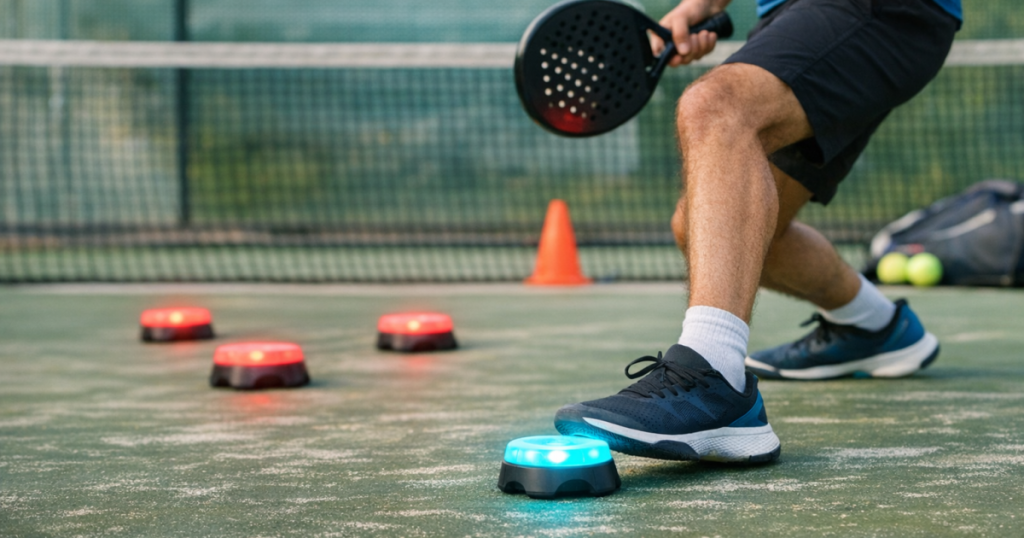
BlazePod is a set of light-up training pods used for reaction, speed and decision-making drills. A pod lights up, the player responds, taps it, moves, recovers and waits for the next cue. That sounds simple, but it can be surprisingly useful in padel because so many beginner mistakes happen before the shot: late split steps, flat feet at the net, slow recovery to the centre, and poor awareness when the ball comes off the glass.
It is most useful when you already have a basic idea of padel movement and want a structured way to practise. If you are preparing for your first lesson, the better starting point is understanding what to bring, how a session flows and what a coach may ask you to do. This guide to your first coaching session is a more sensible step before investing in extra training equipment.
For players who already book courts regularly, the appeal is different. The pods can turn spare court time into a focused 10-minute reaction block instead of vague hitting. They also make drills feel more game-like because you do not always know where the next cue will appear.
How BlazePod helps padel reaction training
The biggest benefit is that the cue is external. Instead of deciding when to move, you must react to something outside your own rhythm. That is much closer to padel than rehearsing the same footwork pattern again and again.
In a real rally, you are reading your opponent, the ball speed, the wall rebound and your partner’s position. A pod cannot recreate all of that, but it can help you practise the first part of the chain: notice, move, respond, recover.
- Split-step timing: Use a light cue to trigger a small split step before moving to the next position.
- Recovery habits: After tapping a pod or playing a shot, return to a neutral position rather than admiring the ball.
- Direction changes: Random cues encourage short, controlled movements rather than long, rushed strides.
- Net reactions: With safe placement away from feet and swing paths, pods can add urgency to volley-position drills.
- Focus under fatigue: Short rounds make it obvious when your footwork gets lazy near the end.
The important point is to keep the drill padel-shaped. If the activity becomes a pure fitness game with lots of frantic tapping, it may be fun, but it will not necessarily improve your decisions in a match.
Where it works best for beginners
BlazePod is strongest when used for short, clear tasks. Beginners should avoid building complicated circuits with too many rules. The cleaner the drill, the more likely it is to transfer to the court.
1. Centre recovery drill
Place one pod in a safe central recovery area and two wider cues away from the direct hitting zone. Start in a neutral position, react to the light, move with small steps, tap or reach the cue, then recover to the centre. Keep the round short enough that your movement stays controlled.
The purpose is not to sprint. It is to build the habit of moving, stopping, rebalancing and returning. That matters in padel because beginners often drift after a shot and leave gaps for the next ball.
2. Net readiness drill
Stand near the net in a realistic ready position. A partner feeds gentle balls while a pod cue tells you whether to reset, move laterally, or step in. The pod should not be placed where it can become a trip hazard or where a player might step on it during a volley.
This drill works well because beginners often stand too upright at the net. The light cue can remind you to stay active between shots rather than waiting flat-footed.
3. Back-glass reaction drill
For players who have started learning wall rebounds, use the pod as a timing cue before moving into position. The aim is to practise getting set early rather than chasing the ball after it has already dropped. Keep the feeds slow and predictable at first.
This is not a replacement for learning wall technique with a coach, but it can help you rehearse the habit of reacting early and staying balanced.
4. Partner movement drill
Padel is not just about your movement; it is about moving as a pair. A simple two-player drill can use a light cue to trigger which player covers space, while the other adjusts to maintain the team shape. If you are still unsure how that should look, it is worth reading about how to rotate positions with your partner before adding reaction equipment.
What it does not fix
The pods can make you faster to a cue, but they will not automatically make your bandeja cleaner, your serve legal, or your shot selection smarter. If your movement pattern is poor, a faster drill may simply make you repeat the same mistake at higher speed.
That is the main limitation for beginners. Reaction training is useful only when paired with sensible technique. A player who rushes forward off balance, reaches with the arm, or forgets to recover may enjoy the drill without improving much in matches.
It also does not teach the rules of padel. If you are still uncertain about serves, walls, faults or scoring, clear rules knowledge will help your matches more than reaction kit. Start with the basics in this explanation of padel rules, serves, walls and faults, then use drills to support what happens in real rallies.
Practical checks before using it on court
A BlazePod review should not just ask whether the product is clever. It should ask whether it fits a normal padel session at a busy club. Court time in the UK is often booked in fixed slots, so any setup that eats into playing time can become annoying.
- Set up before the booking starts: Decide the drill, positions and round length before you step on court.
- Keep pods out of footfall areas: Do not place them where a player may land, pivot or chase a ball.
- Use short blocks: Five to ten minutes is usually enough for reaction work before quality drops.
- Check visibility: Lighting and daylight can affect how easy it is to spot the cue, so test this before relying on it for a drill.
- Charge and organise beforehand: Electronic kit is only useful if it is ready when your session starts.
- Measure one thing: Track accuracy, recovery quality or consistency rather than trying to improve everything at once.
It is also worth checking what comes in the specific pack you are considering. The number of pods, carrying case, mounts, app access, warranty route and UK availability can vary by package or retailer, so verify the current details rather than assuming every listing is the same.
Best ways to use it between lessons
The most productive use is as a bridge between coaching and match play. After a coach gives you one movement focus, build a simple pod drill around that focus. For example, if you are working on recovering after volleys, do not create a full fitness circuit. Use a central recovery cue and repeat the pattern until it starts to feel automatic.
Beginner-friendly sessions might look like this:
- Warm-up: Gentle movement, mobility and easy rallies.
- Reaction block: One pod drill for five to eight minutes.
- Technique block: Practise one shot or movement pattern without rushing.
- Live rally block: Play points where you consciously apply the same habit.
- Review: Note what improved and what still broke down under pressure.
This structure stops the equipment becoming the main event. The pod drill supports your padel; it does not replace hitting, positioning, communication or learning to read opponents.
Pros and drawbacks
What works well
- It gives immediate visual cues that make drills more engaging.
- It can add structure to spare court time when you do not have a coach present.
- It suits short reaction, recovery and movement exercises.
- It can make partner sessions more purposeful and competitive.
- It is useful for players who enjoy tracking training tasks and repeating drills.
Where it falls short
- It can distract beginners from technique if used too early.
- It needs planning, setup and space to use well on a padel court.
- Simple cones, targets or a partner’s voice can achieve similar aims for many drills.
- It will not correct tactical mistakes by itself.
- It may be poor value if you only play occasional social matches and rarely practise.
Who will get the most from it?
BlazePod makes the most sense for committed beginners, improvers, coaches, small groups and players who already book practice time outside matches. If you like structured drills and want more variety than cones and verbal calls, it can be a fun and genuinely useful addition.
It makes less sense if you are still deciding whether you enjoy padel, only play once in a while, or have not yet had basic coaching. In that case, spend your time learning the court, the walls, safe movement, simple tactics and how to play with a partner.
The best alternative is not always another product. A coach calling colours, a partner pointing to targets, or simple marker cones can create many of the same reaction demands. The difference is that BlazePod adds randomness, scoring and a more game-like prompt, which some players find more motivating.
Helpful questions
Is BlazePod worth it for a complete padel beginner?
Usually not as a first priority. A complete beginner will normally improve faster by taking lessons, learning the rules, practising basic footwork and playing regular games. It becomes more useful once you have clear movement goals.
Can I use it during a normal club court booking?
Yes, if you keep the setup simple and safe. Plan the drill before the session, place pods away from landing areas and use short blocks so you still have time for rallies and points.
Does it improve reaction speed or just fitness?
It can help both, but only if the drill mirrors padel movement. Random tapping with no recovery or shot context is more of a fitness game than a padel improvement drill.
How many pods do I need for padel drills?
You do not need a large setup for beginner padel work. A small number can cover centre recovery, side-to-side movement and simple net-reaction drills. Check the current pack contents before deciding what fits your sessions.
Should I use it alone or with a partner?
Both can work, but partner drills are often more useful for padel because the sport is played in pairs. A partner can feed balls, watch your recovery and help keep the drill realistic.
Main lessons
BlazePod is useful for padel reaction drills when it supports a specific movement habit: recovering to the centre, staying lively at the net, reacting earlier to wall rebounds, or coordinating with a partner. It is engaging, flexible and motivating, but it is not essential for every beginner.
The safest verdict is this: buy it only if you already practise regularly and know what you want to improve. If you are still learning the basics, use coaching, simple drills and match experience first. Add reaction pods later when they help you train with more focus rather than simply adding more kit to your bag.