If you are a newer player trying to turn occasional games into confident club play, a Game4Padel coaching review is useful because the decision is less about a familiar name and more about whether your nearest venue, coach and lesson format match how you actually learn. Game4Padel is best viewed as a UK padel operator with coaching attached to local venues, so the experience can feel practical and accessible, but it is worth checking the details before booking.
Safety note: Technical correction for movement, injury rehabilitation and return-to-play decisions should be guided by a qualified padel coach or healthcare professional, with sessions run in line with UK venue safety rules, safeguarding requirements and coaching standards.
What to know first
Game4Padel is likely to suit beginners who want structured coaching at a recognised padel venue rather than informal tips from playing partners. The main appeal is convenience: if there is a participating venue near you, lessons can be a simple way to learn the basics, meet players at a similar level and build enough confidence for social matches.
The important catch is that coaching quality is local. A strong brand can help with organisation and access to courts, but your actual experience depends on the coach, group size, lesson level, court type and how well the session is matched to your current ability.
- Best fit: first-time and early-stage players who want a clear route into regular club play.
- Check carefully: coach availability, group size, lesson level, cancellation terms and what is included.
- Possible drawback: the experience can vary between venues, so do not assume every location runs coaching in exactly the same way.
- Good next step: speak to the venue before booking and ask which session is right for a complete beginner or improver.
How the lessons usually fit around a venue
At UK padel venues, coaching is usually shaped by court access. That means lesson times may sit around peak evening play, weekend availability and club events. For beginners, this can be helpful because coaching is often close to the social side of the venue: you can learn, practise and then start joining suitable games.
Before booking, check whether the venue offers true beginner sessions or whether the lowest group is really aimed at players who already know the scoring, serve and glass basics. A session labelled improver can be too fast if you have only played once or twice.
Group coaching
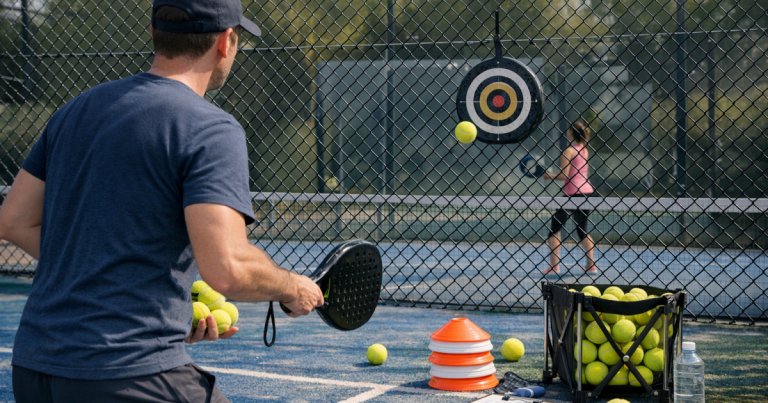
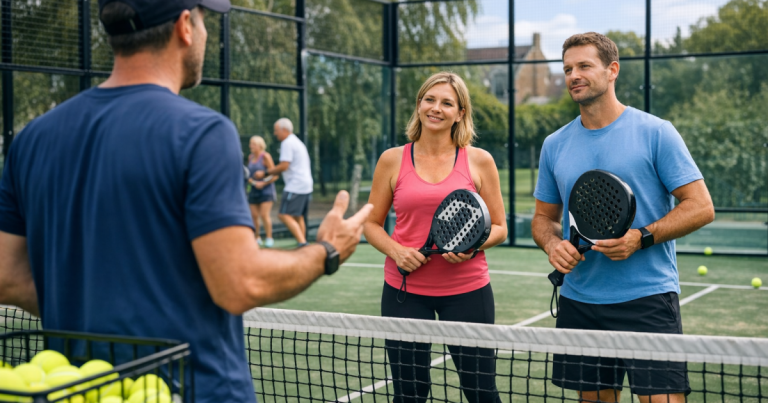
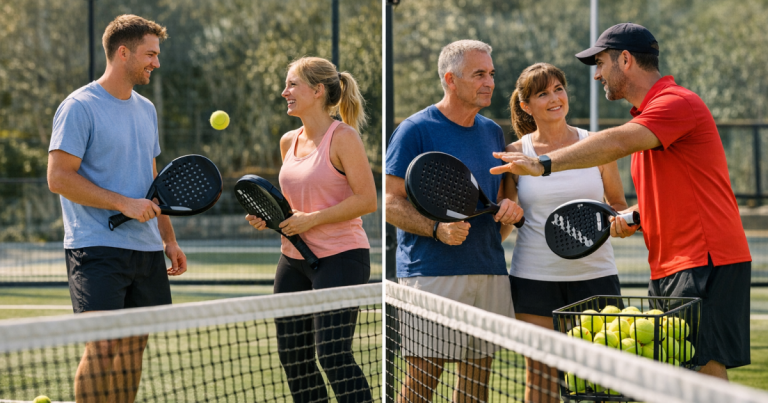
Group lessons are usually the most approachable way to start. They give you repetition, a coach watching the common mistakes and a chance to learn with people who are also finding their feet. The trade-off is individual attention. If the group is large, you may get less personalised feedback on your grip, swing path, positioning and decision-making.
Private or shared private coaching
Private lessons are more useful when you have a specific problem: serving inconsistently, rushing volleys, struggling with the back glass or not knowing where to stand. A shared private lesson with one or two friends can be a sensible middle ground because you get more feedback than a group session while still keeping the feel relaxed.
Coaching linked to social play
The best beginner coaching does not just teach isolated shots. It shows you how to play a point: when to lob, when to block, how to recover to the right position and how to communicate with a partner. If a Game4Padel venue can point you towards beginner socials after coaching, that is a real advantage because you can use what you have learned quickly.
Step 1: match the lesson to your current problem
A good first lesson should not feel like a performance test. It should give you one or two clear changes that make the next match easier. Before you book, decide what problem you want the session to solve.
- If you are completely new, look for a starter session covering rules, scoring, serving, court zones and safe movement.
- If you have played a few socials, ask for help with consistency rather than power.
- If you are losing position, choose coaching that includes tactics and partner movement, not only basket-fed hitting.
- If you are nervous joining club games, ask whether the venue runs beginner-friendly match play or levelled sessions.
This matters because padel improvement is not just about cleaner technique. Beginners often improve fastest when they understand where to stand, when to slow the ball down and how to keep a rally alive.
Step 2: check the venue, not just the brand
The venue can change the feel of a lesson more than beginners expect. Indoor courts are more predictable because wind and rain are removed from the equation. Outdoor courts can be brilliant for real-world match experience, but conditions may affect lobs, serves and timing. If you are unsure which setting will suit your first few sessions, our guide to indoor and outdoor padel explains the main differences.
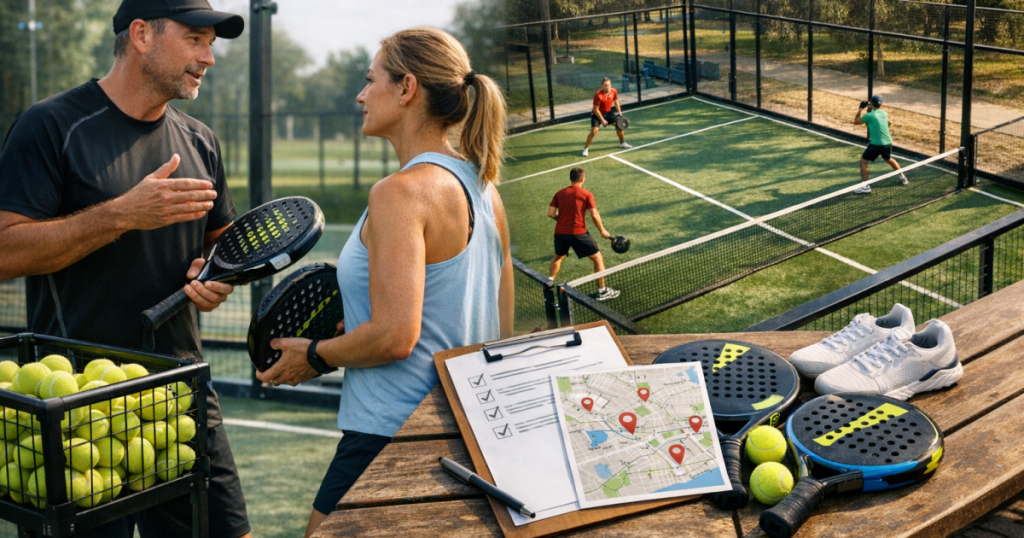
When assessing a Game4Padel location, ask practical questions rather than relying on broad impressions.
- Is the lesson on an indoor, covered or outdoor court?
- How many players are normally in the group?
- Are rackets available for new players, or should you bring your own?
- Is the session aimed at total beginners, improvers or regular club players?
- Can the venue help you find suitable games after you have had a few lessons?
For a first-timer, a friendly venue with clear level guidance is more valuable than a technically advanced session that moves too quickly.
Step 3: judge the coach by the feedback you receive
The best beginner coaches keep advice simple. They do not overload you with five technical fixes at once. They watch how you play, identify the biggest thing holding you back and give you a drill or cue you can remember in a match.
During or after a lesson, you should come away knowing what to practise next. Useful feedback might sound like: keep your preparation shorter on volleys, recover to the middle after lobbing, aim higher over the net when under pressure, or use the glass only when you have time. Vague praise is nice, but specific feedback is what helps you improve.
It is also worth noticing how the coach manages mixed-ability groups. In a beginner session, nobody should feel ignored because they are weaker, and nobody should be left bored because they pick things up quickly. Good coaching creates small adjustments for different players while keeping the group moving.
Step 4: look for structure across more than one session
One lesson can tidy up obvious mistakes, but a short run of sessions is usually better for beginners. Ideally, the coaching should build logically: serve and return, net position, lobs, using the glass, defending under pressure and playing points with a partner.
Ask whether the venue has a pathway from first lesson to regular games. This does not need to be complicated. A simple progression from beginner coaching to coached match play and then social club sessions is enough for most early-stage players.
You can also help yourself by arriving ready to move. A short warm-up makes coaching more productive and lowers the chance of starting stiff, especially if you have come straight from work. This simple warm-up before a social match is just as useful before many beginner lessons.
Where Game4Padel works well
Game4Padel’s main strength is that it connects coaching with actual padel venues. For beginners, that matters. You are not learning in isolation; you are learning in the same environment where you may later book courts, join socials or meet playing partners.
- It can be a straightforward entry point if you have a venue nearby.
- Coaching at a real club setting helps beginners understand match situations faster.
- Group formats can make lessons less intimidating for first-timers.
- Venue-based coaching can make it easier to progress into regular play.
The likely limitation is consistency between locations. One venue may have excellent beginner pathways and regular group sessions, while another may have fewer coaching slots or a stronger focus on players who already know the game. Treat the brand as a starting point, then judge the local setup on its own merits.
When another coaching option may fit better
Another provider may be better if you need very specific coaching times, one-to-one technical work, or a coach with a particular teaching style. Some players also prefer smaller independent clubs where they can speak directly to the same coach each week.
If you are comparing lesson providers in London, it is worth reading our Padium Padel Lessons Review for another example of how coaching quality, venue setup and player fit can differ. The right choice is not always the biggest name; it is the place that helps you keep playing with confidence.
Questions people ask
Is Game4Padel coaching suitable for complete beginners?
It can be, provided your local venue offers a genuine starter session. Ask whether the lesson covers scoring, serving, court positioning and basic rallying before you book.
Should I choose group coaching or a private lesson first?
Most beginners are fine starting with a group lesson. Choose a private lesson if you feel anxious, have a specific technical issue, or want faster personalised feedback.
Do I need my own racket for a first lesson?
Check with the venue. Many beginner-friendly sessions can advise on equipment or may have options for new players, but availability should be confirmed before turning up.
How many lessons do I need before joining social games?
Many players can join beginner socials after a few well-matched sessions, especially if they understand scoring, serving and basic court positions. The coach or venue should guide you on level.
What should I ask before booking?
Ask about group size, court type, coach experience, player level, what happens in the session and whether there is a route into beginner match play afterwards.
What stands out
Game4Padel is a sensible coaching option for beginners who want lessons connected to real club play, but the best decision is local. Check the venue, the coach, the session level and the pathway into games. If those pieces line up, it can be a confident first step from casual hitting to regular padel.