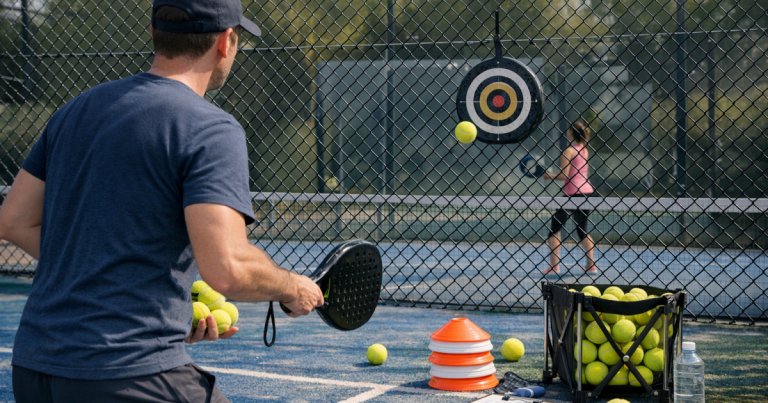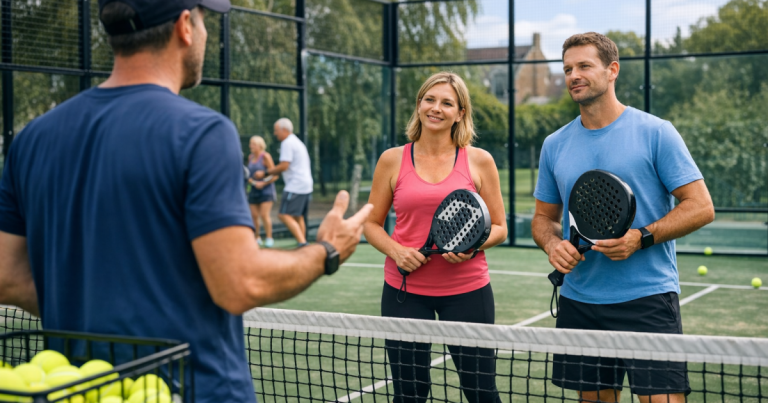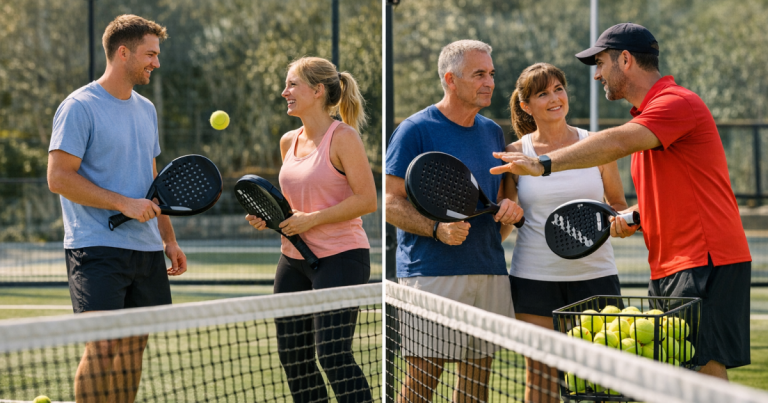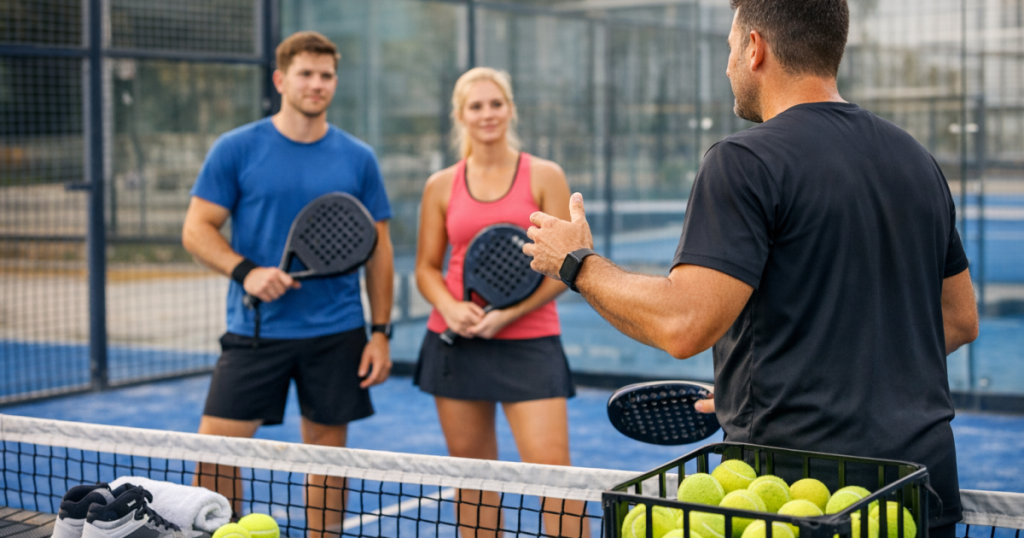
Booking coaching at a busy padel club can feel slightly intimidating when you are new, because you are not just choosing a court slot; you are choosing the learning environment that shapes your first habits. This Padium Padel Lessons Review looks at coaching quality, beginner suitability, and the questions worth asking before you commit.
Training through pain, returning after injury, or managing a medical condition during padel lessons should be handled with advice from a qualified healthcare professional and in line with UK health and safety expectations for sport and exercise.
At a glance
- Best fit: Beginners and early-stage players who want structured feedback rather than guessing their way through social games.
- Main strength: A club-based coaching environment can make it easier to move from isolated drills into realistic point situations.
- Main thing to check: Current lesson format, coach availability, group size, cancellation terms, and whether racket hire is included.
- Less ideal for: Players who only want the cheapest possible first hit, or who prefer very informal, no-commitment sessions.
What Padium lessons are really competing with
For a new player, the real decision is rarely “Padium or nothing”. It is usually a choice between private coaching, group lessons, social games, YouTube-style self-teaching, or asking a more experienced friend to explain the basics. Each route can work, but they produce different habits.
Lessons are most useful when you need a reliable technical base: how to hold the racket, how to move after the serve, how to let the glass help you rather than panic you, and how to avoid swinging too big on every ball. Social games are better for rhythm, confidence, and learning the flow of a match. If you are unsure which route to start with, the comparison of padel lessons versus social games is a helpful next read.
Padium’s appeal is that it sits in the structured club-coaching lane. That matters because beginner padel is not only about hitting cleaner shots. It is about learning where to stand, when to slow the ball down, how to communicate with a partner, and how to stop treating every shot like tennis or squash.
Coaching quality: what beginners should notice
Good beginner coaching is not measured by how advanced the drills look. It is measured by whether you leave the session understanding one or two specific improvements you can repeat next time. A strong lesson should have a clear theme, enough repetition to build confidence, and enough live-ball play to make the skill feel usable.
For Padium, the quality check starts with communication. A beginner-friendly coach should explain the “why” behind a correction without turning the session into a lecture. For example, if your volleys are floating long, the useful feedback is not simply “keep it lower”; it is about racket face, contact point, body position, and choosing a safer target. The best lessons simplify those moving parts.
The next sign is whether the coach can manage mixed levels. Group coaching can be excellent value, but only if the coach adapts feeds, targets, or scoring tasks so that the weakest player is not overwhelmed and the strongest player is not bored. If everyone receives the same generic drill at the same speed, beginners may enjoy the hour but progress more slowly.
Also look for match context. Padel technique makes more sense when it is tied to court positions. A bandeja drill, for instance, is not just an overhead practice exercise; it should teach you how to defend the net without trying to smash from a bad position. Even at beginner level, the coach should connect technique to decision-making.
What Padium should suit best
Padium is likely to suit players who want a more organised route into regular club play. If you have tried one or two matches and felt lost with the glass, unsure about serving, or unclear on where to stand, a lesson block can reduce that uncertainty quickly. It also helps if you are the kind of learner who responds well to direct correction rather than trial and error.
It can also work well for pairs. If you and a friend, partner, or regular teammate are starting together, shared coaching gives you a common language. You can learn simple patterns such as who takes the middle ball, when to lob, and how to recover after being pushed to the back glass. That is often more valuable than chasing spectacular shots early on.
First-time players should ask whether there is a true beginner option rather than booking into a session labelled “improver” too soon. Padel level labels vary a lot between clubs. A player who has had three casual hits may still be a beginner, while someone with racket-sport experience may progress faster but still need padel-specific movement coaching.
Where the experience may not be the best fit
No club lesson setup suits everyone. If your main goal is simply to try padel once with friends, a social booking or introductory session may feel more relaxed than formal coaching. If you already play several times a week and need advanced tactical work, you will want to check whether the available coaches, group levels, and session formats match that ambition.
Cost is another factor to weigh up, even without comparing specific prices here. Private coaching normally gives more individual feedback, while group coaching spreads the cost and adds partner-based practice. Neither is automatically better. A complete beginner with one major technical issue may benefit from one-to-one attention; a nervous new player may actually learn more comfortably in a small group.
Availability matters too. A lesson at a convenient time every week is often more useful than a perfect coaching slot you can only attend once. Consistency is where beginners make progress: one technical focus, repeated over several sessions, then tested in a friendly match.
Rules and habits that should be covered early
A good beginner lesson should not ignore the rules. You do not need a full rules seminar, but you do need the basics that affect every rally: legal serving, when the ball can hit the glass, when it is out, and how the second bounce works. These details remove hesitation, which makes rallies smoother and more enjoyable.
The serve is a good example. Many beginners start with an illegal or unreliable serve because they copy tennis habits or rush the action. A coach should help you build a simple, repeatable serve that gets the point started without giving away cheap faults. If you want to revise the basics before your first coached match, read the guide on how to serve legally in your first padel game.
Glass play is another early confidence marker. Beginners often back away from the glass or swing late because the rebound feels unpredictable. A useful lesson will slow this down: judge the ball, move early, let it come through, and use a compact swing. Once that clicks, padel starts to feel far less chaotic.
Questions to ask before booking
Before booking any Padium lesson, check the current details directly with the club. Lesson formats, coach rosters, prices, equipment arrangements, and booking rules can change, and those details affect whether the session is right for you.
- What level is the session for? Ask what “beginner”, “starter”, or “improver” means in practical terms.
- How many players are in the group? Smaller groups usually mean more feedback, while larger groups can feel more social.
- Is racket hire available? New players should not feel forced to buy a racket before understanding what weight and shape feel comfortable.
- What does the session focus on? Look for themes such as serve, glass, volleys, positioning, or match play rather than vague “general coaching”.
- Can you book a follow-up pathway? Progress is easier when lessons connect into future practice or suitable social games.
How it compares with online coaching
In-person coaching has one major advantage: the coach can see your timing, movement, spacing, and body shape in real time. That is hard to replace. However, online coaching can be useful between lessons, especially if you want to understand tactics, watch demonstrations, or review your own habits after a match.
The strongest setup for many beginners is a blend: use club lessons for live correction, then use online resources to reinforce the ideas during the week. If you are curious about that route, the Hello Padel Academy review explains where online coaching helps and where it has limits for beginners.
Overall judgement
Padium lessons make most sense for beginners who want structure, feedback, and a smoother route into regular play. The likely value is not just in learning individual shots; it is in reducing the confusion that makes early padel feel messy. If the coaching is well matched to your level, you should leave with clearer positioning, simpler shot choices, and a better sense of how points are built.
The main caution is to avoid booking blindly. A premium-feeling club environment does not automatically guarantee the right session for your exact stage. Ask about level, group size, coach experience with beginners, and what the lesson will cover. If those answers are clear, Padium is a strong option to consider for early padel development.
Things readers ask
Is Padium suitable for complete beginners?
It can be, provided you book a session specifically aimed at new players. Check that the lesson covers basics such as grip, serve, court position, and using the glass.
Should I choose a private or group lesson first?
Choose private coaching if you want concentrated technical feedback. Choose a group lesson if you prefer a more social pace and want to practise with different ball situations.
Do I need my own racket before a Padium lesson?
Not necessarily. Ask Padium whether racket hire is available before booking. Beginners often benefit from trying a few rackets before buying one.
How many lessons does a beginner need?
One lesson can fix obvious mistakes, but three to five sessions usually give a better foundation. Regular practice between lessons matters more than booking coaching and then not playing.
What should I practise after a lesson?
Pick one or two coach-led points only: for example, a safer serve, earlier movement to the glass, or holding the net position. Trying to change everything at once usually slows progress.