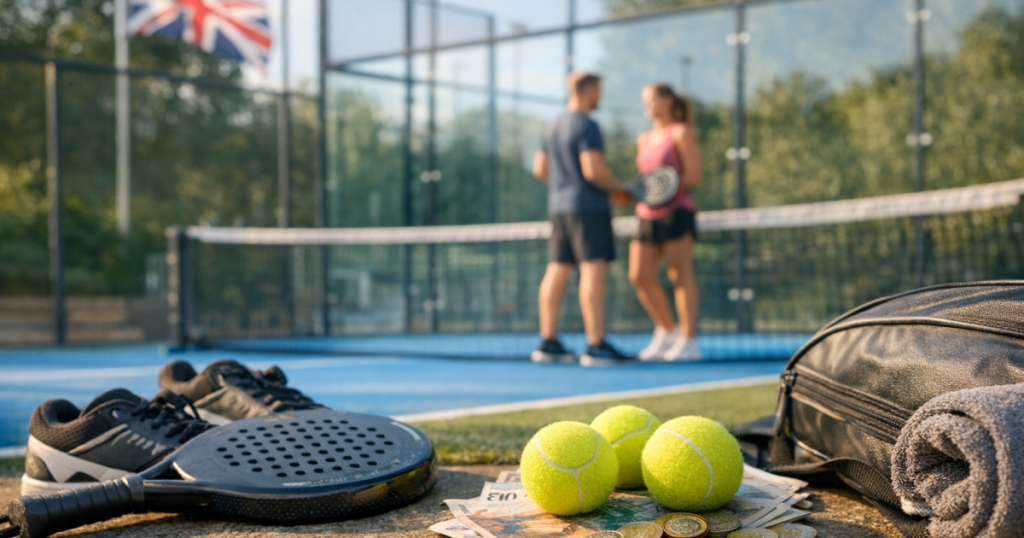
The cost to start playing padel is usually lower than many new players expect, especially if you hire a racket and join a beginner social session first. The main things to budget for are court time, racket hire or purchase, suitable footwear, balls, and any coaching you choose. You can keep the first few weeks fairly lean while you work out how often you want to play.
For most UK beginners in 2026, a first go at padel can be as little as the price of a shared court or organised taster session. The bigger spend only comes if you decide to play regularly and want your own racket, shoes and basic accessories.
Main points
- Trying padel once: budget roughly £10–£30 depending on court fees, session format and racket hire.
- Playing for a month: many beginners spend around £50–£150 if they play weekly and mostly hire equipment.
- Buying starter gear: a sensible basic setup can add around £90–£250+, depending on whether you buy padel shoes, a beginner racket, balls and a bag.
- Lessons are optional: group coaching is usually the better-value starting point, while individual coaching costs more.
- You do not need everything immediately: shoes matter sooner than a premium racket, especially if you are playing on sand-dressed artificial turf.
What you normally pay for at the start
Padel has a few separate costs, and they do not all arrive on day one. Your first session might only involve a court fee and racket hire, while your third or fourth session is when you may start thinking about shoes, balls and a racket of your own.
Court fees or beginner sessions
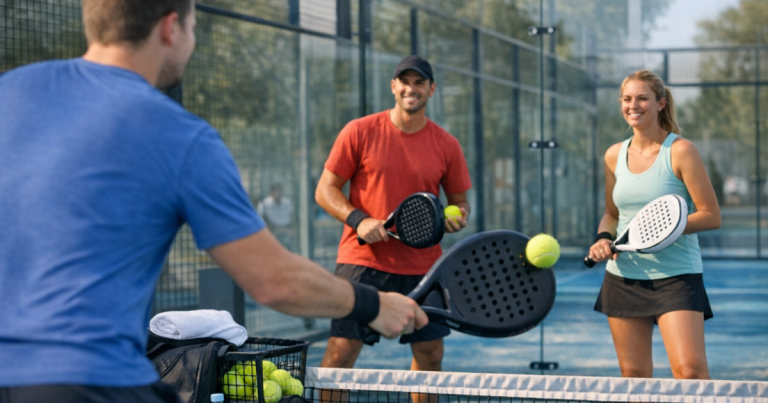
Most new players either book a court with three other people or join a club-run beginner session. If you split a court between four players, your share is usually much lower than booking alone. In many UK clubs, expect the per-person cost to vary depending on location, indoor or outdoor courts, peak times, and whether you are a member.
Organised beginner socials can be good value because they may include court time, player rotation and sometimes basic guidance. They are also less stressful than trying to organise four complete beginners yourself.
Racket hire
Racket hire is one of the easiest ways to keep your first few sessions cheap. Some venues include rackets in beginner sessions, while others charge a small hire fee. Check before you arrive, because a free-looking court booking can become less convenient if you need to sort equipment separately at reception.
If you are unsure whether to hire or buy, read club racket hire vs buying for your first padel sessions. For many beginners, hiring for two or three sessions is the sensible route before spending money on a racket.
Balls
If you join a coached group or club social, balls may be provided. If you book your own court, someone in the group will usually need to bring a tube. A tube of padel balls commonly sits in the low single-figure to high single-figure pound range, depending on brand and retailer. They lose pressure with use, so treat balls as a small recurring cost rather than a one-off purchase.
Gear costs: what is worth buying first?
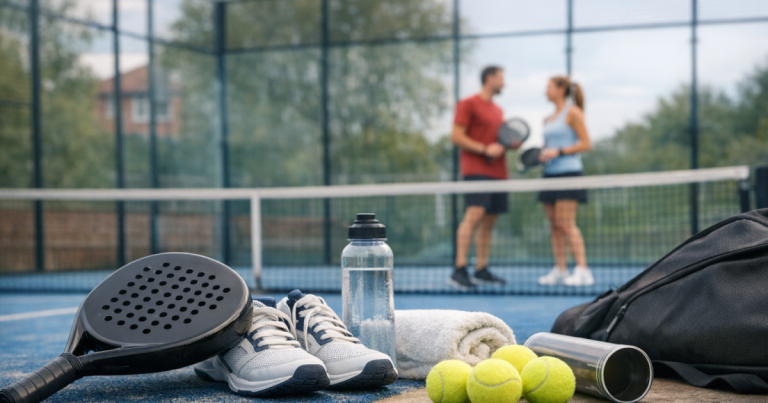
The biggest beginner mistake is buying too much before you know your playing routine. Padel gear can be simple at first: comfortable sports clothing, court-appropriate footwear, water, and access to a racket. A full bag of accessories can wait.
Padel shoes
Shoes are often the first proper purchase worth considering. Running shoes can feel comfortable, but they are not designed for the short side-to-side movements, turning and stopping that padel involves. On padel courts, you want grip and support that suit the surface used by your club.
Entry-level padel or tennis-style court shoes often start around £45–£70, with many better-built options sitting higher. You do not need the most expensive pair as a beginner, but you should avoid worn-out trainers with poor grip. If you are playing weekly, shoes are usually a better early spend than a powerful racket.
Beginner racket
A first padel racket can vary widely in price. A basic beginner-friendly racket may be enough if you are still learning control, positioning and timing. More expensive rackets are not automatically easier to use, and some power-focused models can make early mistakes feel worse.
As a rough starting point, many beginners look in the £50–£120 range for an entry-level racket, while more advanced or premium models can cost considerably more. Before buying, try to notice whether you prefer a lighter, more forgiving feel or something firmer. If you need a full equipment run-through, use the padel starter kit checklist for first-time players before spending.
Clothing, grips and small extras
You do not need special padel clothing to begin. A breathable sports top, shorts or leggings, and socks you can move in are enough for a first session. The small extras that do become useful are overgrips, a towel, a water bottle and perhaps a simple wristband if you sweat a lot during games.
Overgrips are inexpensive, but they are easy to forget. If a hire racket feels slippery, that is not always because you are holding it badly; the grip may simply be worn. Once you own a racket, replacing the overgrip regularly is a cheap comfort upgrade.
Lessons, socials and club nights
Coaching is not essential before your first game, but one or two beginner lessons can save frustration. Group lessons usually offer the best balance of cost and learning because you get instruction, repetition and other players at a similar level. Individual coaching costs more, but can be useful if you are struggling with a specific movement or want focused feedback.
A typical beginner pathway might look like this:
- Week 1: join a taster session and hire a racket.
- Week 2: book a beginner social or group coaching session.
- Week 3: play a shared court with people from the session.
- Week 4: decide whether regular play justifies buying shoes or a racket.
That approach keeps costs controlled while helping you build confidence. It also stops you from buying gear based on guesses rather than real court time.
Three realistic starter budgets
Lowest-cost first try: about £10–£30
This is the “I just want to see if I like it” budget. You book a beginner social, borrow or hire a racket, wear suitable sports clothes and avoid buying anything until after the session. It is the best route if you are curious but not yet committed.
Careful first month: about £50–£150
This covers a few sessions, occasional racket hire and possibly a tube of balls shared with friends. You still avoid buying a racket, but you start learning what kind of court, session and playing group suits you. If you already own suitable court shoes, your spend stays lower.
Regular beginner setup: about £140–£350+
This is for someone who has decided to play weekly. The total may include several court sessions, a pair of padel or court shoes, a beginner racket, balls and small accessories. The range is wide because clubs, brands and personal preferences vary. The key is not to spend the whole budget on a racket and then overlook shoes, court fees or coaching.
What makes padel more or less expensive?
- Peak-time bookings: evenings and weekends are often more popular, so availability and pricing can be less forgiving.
- Indoor courts: indoor venues may cost more, but they reduce weather-related cancellations.
- Membership: regular players may save through membership, but it only makes sense if you will actually use the courts enough.
- Private coaching: useful, but more expensive than group coaching or beginner clinics.
- Buying too early: purchasing a racket before you know your style can lead to a second purchase sooner than expected.
If you are planning your first few weeks, a simple progression works well: try one session, repeat with similar-level players, then add gear only when it solves a real problem. For a structured route into regular play, the first month plan for starting padel is a useful next step.
Where beginners can save money without making things harder
The easiest saving is to delay buying a racket until you have played enough to know what feels comfortable. Another good saving is to join organised sessions instead of paying for full-court bookings before you have a group. Sharing balls, travelling with friends and playing off-peak can also help.
Do not save money by using unsafe or unsuitable footwear. A cheap session becomes frustrating if you are slipping, stopping awkwardly or feeling unstable when turning. You do not need elite shoes, but you do need footwear that suits the court and gives you confidence to move.
FAQ
Can I start padel without buying a racket?
Yes. Many UK clubs offer racket hire, and some beginner sessions include rackets. Hiring first is a sensible way to keep early costs down.
Is padel expensive compared with other racket sports?
It can be affordable if you share courts and use group sessions. Costs rise when you play at peak times, take private lessons or buy premium gear early.
What is the one item I should buy first?
If you are playing more than once or twice, suitable court shoes are usually the most useful first purchase. A racket can wait until you understand what you like.
How often should I play before buying my own racket?
After three to five sessions, most beginners have a better feel for racket weight, control and comfort. That is usually enough experience to make a more informed choice.
What is the cost to start playing padel if I only want to try it once?
For a single taster session with hire equipment, a realistic UK budget is often around £10–£30, depending on the club, timing and what is included.
What stands out
You can start padel without a big upfront spend. The sensible beginner route is to pay for court time or a taster session first, hire a racket, and only buy gear once you know you want to keep playing. Budget for the ongoing costs as well as the shiny purchases: court fees, balls and occasional coaching are what shape your real monthly spend.
If you are trying to keep things simple, prioritise sessions and shoes before premium equipment. Good habits, regular play and comfortable movement will help your game far more than buying the most expensive racket on day one.