A padel backpack is handy for beginner club sessions because it keeps your racket, shoes, balls and spare layers in one easy carry. The risk is that a racket can be squeezed, scratched or overheated if it is packed like an ordinary gym bag. A few small habits make a big difference before and after you play.
The short version
Keep your racket in its own padded section or sleeve, place the face against something flat and soft, and avoid loading heavy kit on top of the frame. Do not leave the bag in a hot car, separate damp clothing from the racket, and check the zip line before closing the compartment.
- Use the dedicated racket compartment if your bag has one.
- Pack shoes, water bottles and balls away from the racket face.
- Keep the racket dry and out of direct heat between sessions.
- Do not force the zip closed if the handle or frame is catching.
- Empty and air the bag after play so moisture does not sit around the grip.
Step 1: Start with the racket compartment
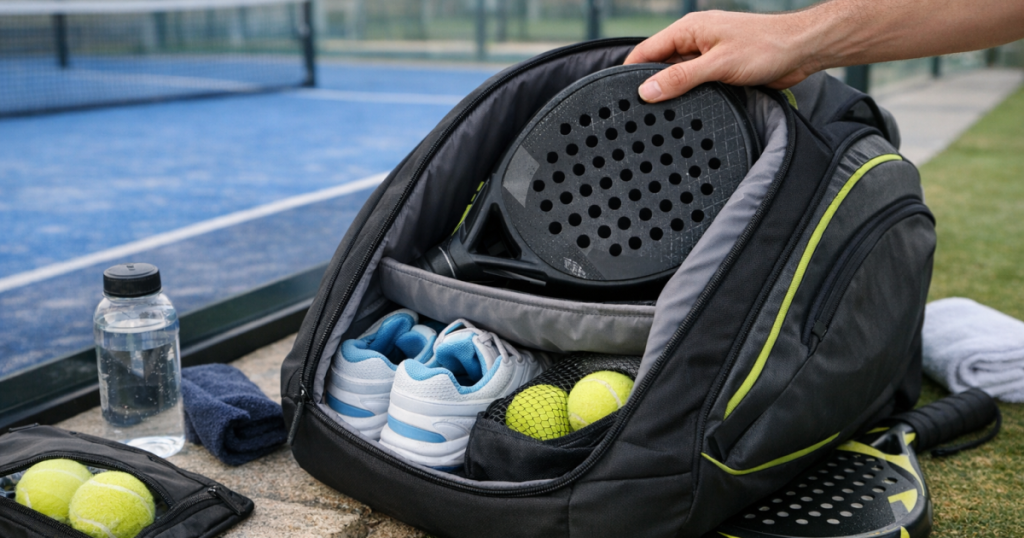
Most padel bags made in a rucksack style have either a rear racket pocket, a side-loading racket sleeve or an internal divider. Use that section first, before adding the rest of your kit. Slide the racket in gently, with the face sitting flat and the handle aligned with the opening, rather than twisted diagonally across the bag.
If the racket sticks out slightly at the handle, that is not automatically a problem, but the frame should still sit securely. What you want to avoid is the racket moving around every time you walk, cycle or put the bag down. If your current bag does not have a structured racket area, use a separate padded racket cover inside the main compartment.
If you are still borrowing gear or trying different bag styles before committing, it can be worth reading how to rent padel gear before buying your own. It is a simple way to work out what you actually carry to sessions.
Step 2: Put the racket against a flat, soft surface
The safest position is usually with one side of the racket facing the padded back panel of the bag. That gives the face a stable surface and reduces pressure from uneven items in the main pocket. If the bag has a divider, keep the racket on one side and your loose kit on the other.
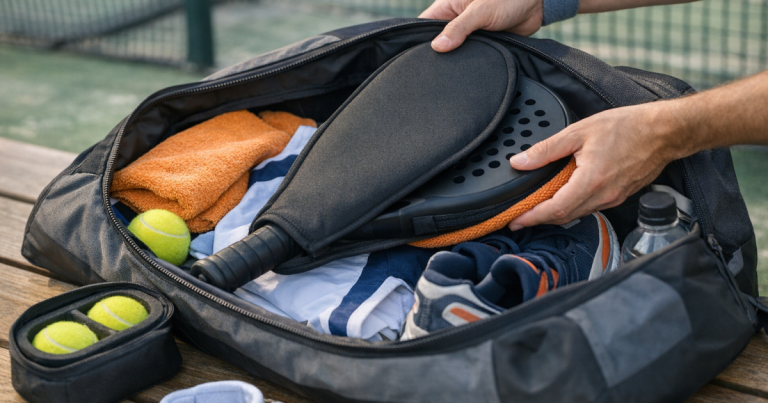
Avoid placing the racket face directly against hard objects such as a metal drinks bottle, padlock, keys or a ball tube. These are common causes of small marks, rattling pressure and dents inside a crowded bag. A towel, spare shirt or thin hoodie can act as a soft buffer if the divider is minimal.
Step 3: Pack heavy items low and away from the frame
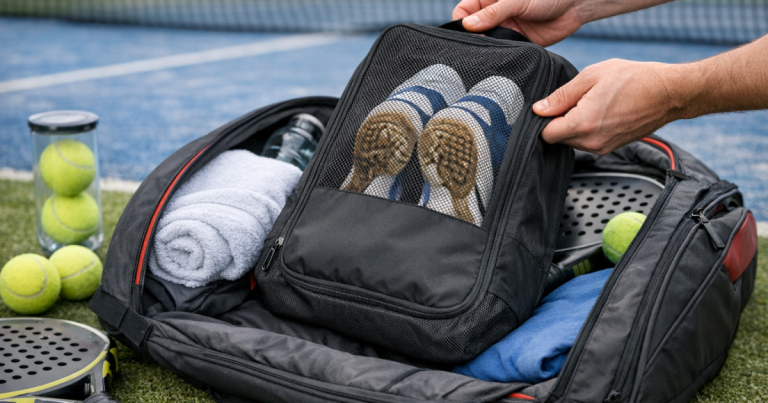
Shoes, bottles and full ball tubes should sit at the bottom of the bag or in their own outer pockets. This keeps the weight below the racket rather than pressing into it. If your bag falls over in the changing area or on the side of the court, heavier items are less likely to land across the racket face.
For beginners, the biggest packing mistake is treating every compartment as general storage. A racket is strong enough for play, but it is not designed to be clamped between trainers and a bottle on the way home. If space is tight, remove non-essential kit rather than forcing everything in.
Step 4: Keep sharp and small items contained
Loose keys, coins, grip tape packaging, padlock edges and zip pulls can all scratch a racket surface. They may seem harmless, but they move around inside the bag while you walk. Use a small internal pocket for valuables and keep anything with an edge away from the racket pocket.
Overgrips and wristbands are fine to carry, but do not leave open adhesive strips or torn packaging next to the racket. Sticky residue can mark the grip or frame, especially if the bag gets warm. A small pouch or zipped accessory pocket keeps the main section cleaner and easier to manage.
Step 5: Think about damp kit after play
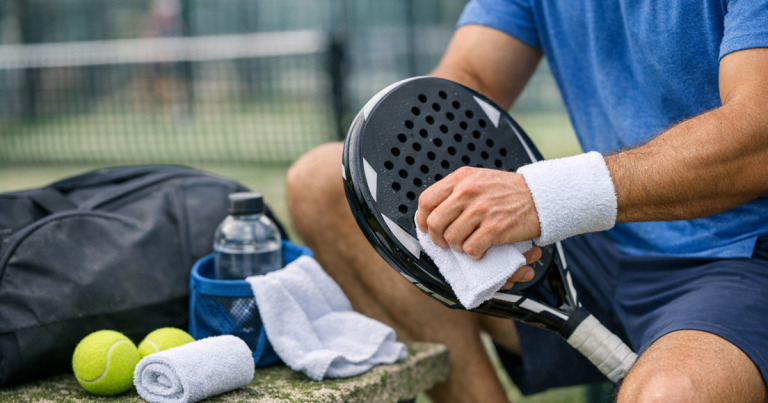
After a club session, your towel, shirt and socks may be damp even if the weather is cool. Do not push damp clothing against the racket grip or leave it sealed in the same compartment overnight. Moisture can make grips feel slippery, encourage odour in the bag and shorten the useful life of accessories.
If your bag has a separate shoe or laundry pocket, use it. If it does not, put damp kit in a simple washable drawstring bag until you get home. Then empty the bag, open the compartments and let everything air. This is especially useful after indoor sessions, where the court may feel dry but you still build up sweat during rallies.
Step 6: Protect the racket from heat and cold
Do not leave your racket bag in direct sun, against a radiator or in a parked car for long periods. Heat can be hard on grips, adhesives and racket materials, while sudden temperature changes are not ideal for any sports kit. In the UK, this is easy to overlook because many sessions involve short drives between work, home and the club.
On cold or wet days, avoid placing the bag on soaked ground by the court entrance. If you have to put it down outside, keep the racket side facing up and away from puddles. Once home, open the bag rather than storing it zipped shut in a cupboard.
Step 7: Do a quick zip check before leaving
Before you close the racket compartment, run a quick check along the zip line. Make sure the racket edge, handle strap or overgrip is not caught. If you feel resistance, stop and reposition the racket instead of pulling harder.
Forced zips can press into the frame or damage the bag, and a half-open pocket can let the racket slide out when you lift it. This is one of those boring little habits that prevents expensive mistakes. It takes only a few seconds and is worth doing every time.
Step 8: Carry the bag so the racket stays stable
Use both shoulder straps when walking any distance, especially if the bag is full. Carrying it by one strap can make the load swing and push the racket against other kit. If you cycle or use public transport, keep the bag upright where possible and avoid wedging it under heavier luggage.
When you arrive at the court, place the bag on its base rather than dropping it flat on the racket side. If the side area is busy, tuck it where people will not step on it during changeovers. Small habits around the bench area matter just as much as packing at home.
Extra packing checks for beginner club sessions
A tidy bag also helps you feel calmer before your first few matches. Keep the items you need before play near the top: overgrip, towel, water and any spare layer. That way, you are not digging through the racket compartment at the side of the court.
- Before leaving home: check the racket is flat, zipped in and not under pressure.
- Before warm-up: take out the racket carefully rather than pulling it by the handle if the bag is crowded.
- During play: keep the bag away from walkways and wet areas.
- After play: separate damp clothing, close the racket pocket and air the bag at home.
If you are building a simple routine for match days, pair your packing habits with a safe warm-up before your first padel game. It helps you arrive organised rather than rushed.
Do balls and accessories matter?
Yes, because loose accessories often cause the damage that players blame on the bag. A ball tube can press into the racket face, and stray balls can create awkward pressure points if the main compartment is overfilled. Keep balls in a side pocket, front pocket or separate tube where they cannot roll against the racket.
Ball care matters too. If you regularly carry opened tubes, make sure lids are secure before putting them in the bag. For simple habits that help your balls stay playable between sessions, see how to store padel balls so they last longer.
FAQ
Can I put two rackets in one backpack?
You can if the racket compartment is designed for two and both sit flat without pressure. If the zip strains or the frames rub together, use a separate sleeve or carry only one.
Should the racket handle stick out of the bag?
Some compact bags leave the handle visible. That is usually fine if the frame is protected, the zip closes naturally and the racket cannot slide out when you lift the bag.
Is it safe to carry shoes in the same bag?
Yes, but keep shoes in a separate compartment or at the bottom of the main pocket. Do not press soles, studs or dirty areas against the racket face or grip.
What should I do if my bag gets wet?
Take the racket out when you get home, wipe any moisture from the cover or frame, and leave the bag open to dry naturally. Avoid storing it sealed while damp.
Do I need a thermal racket pocket?
Not always. For normal beginner club play, careful packing and avoiding heat are more important. A thermal pocket can be useful if you often leave kit exposed between sessions.
Key takeaways
The safest way to use a padel backpack is to give the racket its own protected space, keep heavy and sharp items away from the frame, and empty damp kit after every session. You do not need an elaborate routine; you just need to stop the racket being squeezed, scratched or stored in poor conditions.
Pack the racket first, build the rest of your kit around it, and do one final zip check before you leave. That simple routine will help your racket stay in better condition as you move from occasional games into regular club play.