After a sweaty club session, the fastest way to ruin a tidy kit bag is to drop your footwear straight in beside a clean towel, spare top and racket. A simple routine helps you pack padel shoes without spreading grit, damp patches or court dust through everything else.
You do not need a specialist bag to keep things clean. The main idea is to remove loose dirt, separate the shoes from fabric items, and let everything breathe once you get home.
The short version
- Brush or tap off loose grit before your shoes go anywhere near your main bag.
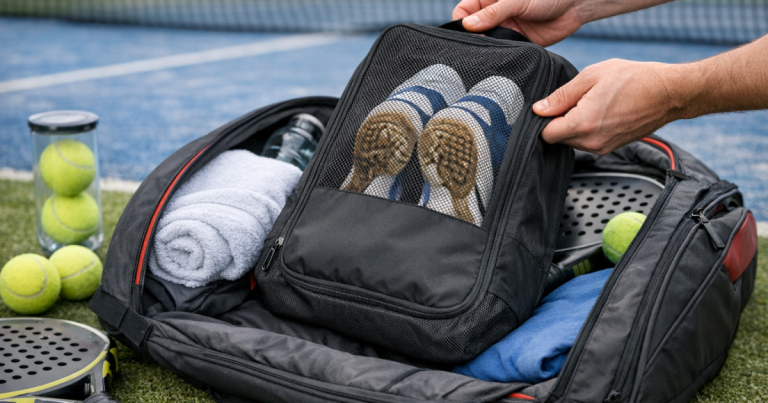
- Use a separate shoe sleeve, drawstring bag, dry bag or dedicated shoe compartment.
- Keep damp socks and towels away from your shoes rather than bundling all wet items together.
- Place shoes at the bottom or side of the bag, away from the racket face and clean clothing.
- Unpack as soon as you get home so odour and moisture do not build up.
Step 1: Deal with the soles before packing
The soles are usually the messiest part. Even on clean-looking indoor courts, grooves can hold fine grit, fibres and small bits of court debris. On outdoor courts in the UK, damp weather can make that dirt stick more easily.
Before you put the shoes into your bag, stand away from the court entrance and give each shoe a gentle tap sole-to-sole. Do not bash them against walls, benches or glass, as that can be noisy and unnecessary. A quick tap and a check of the tread is normally enough.
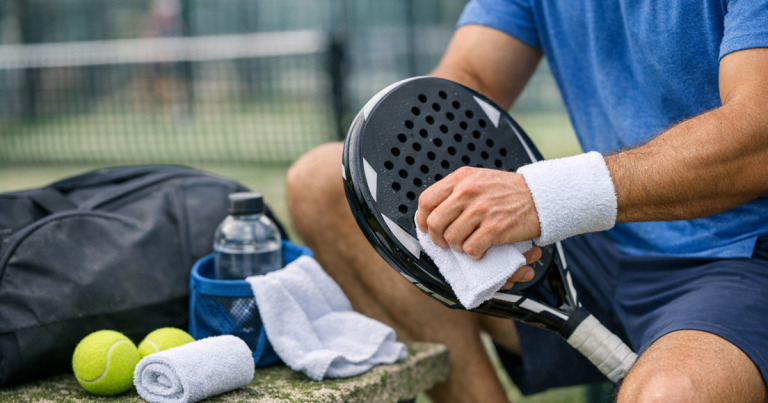
If the soles are still dusty, use a small brush, an old towel corner or a cloth kept only for shoes. Avoid using your clean match towel for this, because it defeats the point of separating your kit.
If you are new to club sessions and still deciding what footwear is suitable, it is worth reading whether padel shoes are required for club sessions. The right sole can help on court, but it also affects how much debris your shoes pick up and carry into your bag.
Step 2: Choose a simple barrier
A barrier is the difference between “slightly used shoes in a tidy bag” and “grit everywhere”. You have a few workable options, and the best one is usually the one you will actually use after every session.
Option one: a dedicated shoe compartment
Some padel and tennis-style bags include a separate shoe section. If yours has one, use it for shoes only. It is tempting to squeeze in balls, snacks or spare grips, but the compartment becomes less useful if clean accessories end up beside dirty soles.
Option two: a drawstring shoe bag
A drawstring shoe bag is light, cheap and easy to shake out. It works well for beginners using a normal sports bag or rucksack. Choose one that is large enough for both shoes without forcing them in, as cramming damp shoes together can trap moisture.
Option three: a wipe-clean pouch or dry bag
A wipe-clean pouch gives better separation if your shoes are wet, but it can also hold moisture in. Use it for the journey home, then open it when you unpack. If you leave damp shoes sealed overnight, the bag may stay clean, but the shoes will not.
Step 3: Pack the bag in the right order
Bag layout matters more than most beginners expect. If shoes go in last, they often sit on top of clean clothes, press into a towel or slide against your racket cover. A little order makes everything easier.
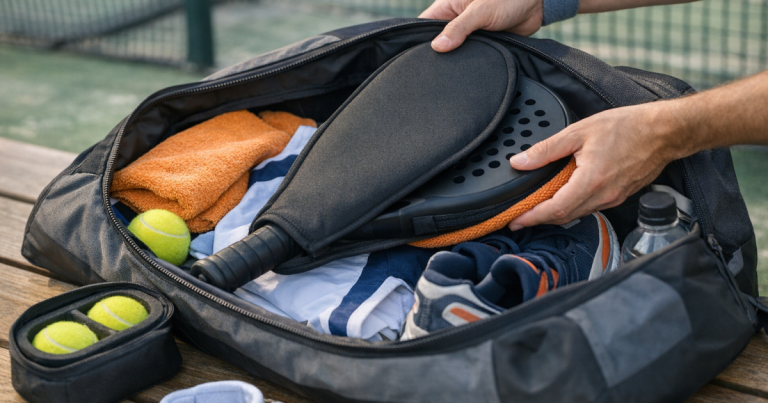
Start with the items that should stay clean: spare top, clean socks, towel, grips and snacks. Keep those in the upper part of the bag or in a separate pocket. Put your racket in its sleeve or main racket section if your bag has one.
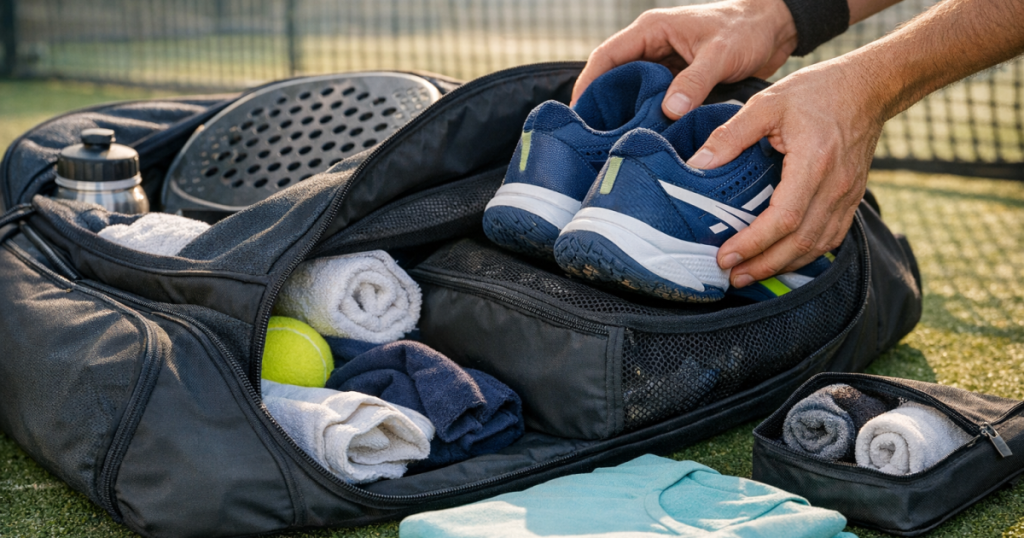
Then add the shoes in their barrier bag. The safest place is usually the bottom of the main compartment, one side pocket, or the dedicated shoe section. If the shoes are in the main compartment, position the soles facing away from clean clothing. If space is tight, place shoes heel-to-toe so they sit flatter.
Do not wedge shoes directly against the racket face. Padel rackets are built for play, not for having gritty soles pressed into them during a bus, train or car journey.
Step 4: Keep damp kit separate from dirty kit
After a match, it is easy to think “wet is wet” and throw socks, towel and shoes into the same section. That creates the exact mess you are trying to avoid. Damp fabric transfers odour quickly, while dirty soles spread grit. Treat them as two separate problems.
- Used towel: fold it damp side inward and keep it in a washable pouch or outer pocket.
- Sweaty socks: put them in a small laundry bag or separate carrier.
- Shoes: keep them in their own shoe bag or shoe compartment.
- Clean clothes: keep them zipped away from all used kit.
If you play after work, this matters even more because your padel bag may also contain office clothes, headphones, lunch boxes or other everyday items. A separate shoe barrier keeps the whole bag more usable, not just cleaner.
Step 5: Build a tiny post-match cleaning kit
You only need a few small items to make shoe packing easier. Keep them together so you are not hunting around after a busy social game or league match.
- A small brush for sole grooves and dry court dust.
- A microfibre cloth for quick upper and heel wipes.
- A lightweight shoe bag or wipe-clean pouch.
- A spare small laundry bag for socks.
- A folded carrier or emergency bag for very wet days.
This kit should be small enough to live in your padel bag without becoming clutter. If you are building your first match-day setup, the checklist in setting up a small accessories kit for padel matches is a useful next step.
Step 6: Unpack properly when you get home
The cleanest packing routine still needs a good unpacking habit. As soon as you get home, take the shoes out of the barrier bag, loosen the laces and let them air in a dry, ventilated place. Do not leave them sealed inside a pouch until your next session.
Shake out the shoe bag over a bin or outside area. If it is wipe-clean, give it a quick clean and leave it open to dry. If it is fabric, wash it occasionally according to its care label. The bag is doing the dirty work, so it needs attention too.
Check your main padel bag every few sessions. Fine grit collects in seams, corners and side pockets. Turn the bag upside down, shake it gently, and wipe the base if needed. This takes less than a minute and stops dirt building up over time.
Examples for common beginner situations
You use a normal gym rucksack
Put clean clothes and towel in the main compartment first, ideally inside a packing cube or separate pouch. Put shoes in a drawstring bag and place them at the bottom. Keep balls, grips and keys in small pockets so they do not end up underneath dirty footwear.
You go straight from work to padel
Use one bag section for work items and one for padel kit. If your bag does not have sections, use separate pouches. Shoes should never be loose beside a laptop sleeve, lunch container or clean shirt. A basic shoe bag is enough separation for most commutes.
You play on damp outdoor courts
Let the shoes drain for a moment before packing, then wipe the worst moisture from the outsole and sides. Use a more water-resistant barrier for the journey home, but open it later. The aim is to protect the bag temporarily, not store wet shoes long term.
Your club changing area is small
Practise a quick routine: tap soles, shoes into bag, socks into laundry pouch, towel folded away. The less you need to spread out on a bench, the easier it is to stay tidy. If club facilities are a big part of your routine, our guide to choosing your first padel club explains what to notice before committing to regular sessions.
Mistakes that make bags dirty faster
- Putting shoes in loose “just this once” after a late match.
- Using your clean towel to wipe the soles.
- Leaving damp shoes sealed in a plastic bag for days.
- Throwing used socks inside the shoes before packing.
- Keeping snacks or grips in the same pocket as footwear.
- Forgetting to shake out the shoe bag itself.
The biggest habit to avoid is mixing clean, damp and dirty items together. Once you separate those three categories, your bag stays fresher with much less effort.
A simple packing order to follow
- Before play: keep shoes in the barrier bag until you change.
- After play: tap off the soles and brush away obvious grit.
- Put socks and towel into separate used-kit pouches.
- Place shoes into their own bag, pouch or compartment.
- Keep the racket and clean clothing away from the shoe section.
- At home: remove shoes, air them, and shake out the barrier bag.
Once this becomes routine, it takes very little time. You will also notice your bag is easier to repack before the next session because you are not dealing with loose grit, stale socks or mystery damp patches.
Common questions
Can I put padel shoes in a plastic carrier bag?
Yes, for the journey home, especially if the shoes are wet or muddy. Do not leave them sealed in it afterwards, because trapped moisture can make odour worse.
Should shoes go at the top or bottom of the bag?
Usually the bottom or a side compartment is better. Shoes are heavier than small accessories and are less likely to press into clean kit if they are packed first.
Is a separate padel bag necessary?
No. A normal sports bag or rucksack can work if you use separate pouches for shoes, damp kit and clean items. A padel-specific bag is convenient, not essential.
How often should I clean the shoe bag?
Shake it out after most sessions and clean it properly whenever you notice grit, marks or odour. Fabric versions may need occasional washing according to the care label.
Can I store balls inside my shoes to save space?
It is better not to. Balls can pick up moisture and odour from used footwear, and they are easier to find if kept in a separate pocket or tube.
What to remember
Clean packing is less about having the perfect bag and more about having a repeatable routine. Remove loose grit, use a barrier, separate damp kit from dirty footwear, and unpack when you get home. Do that consistently and your padel bag will stay cleaner, fresher and easier to use for regular club play.