A tidy padel bag makes arriving at court feel calmer: you can find your racket, shoes, balls and towel without digging through spare layers you will never use. The trick is to treat padel bag compartments as jobs, not empty space to fill.
For beginners, that means packing around the session you are actually playing. A one-hour social match, a coaching session and a club night do not need the same amount of kit, even if your bag could technically carry it.
What to know first
Overpacking usually happens because every pocket feels useful. The better approach is to give each section one clear purpose, then stop adding items once that purpose is covered.
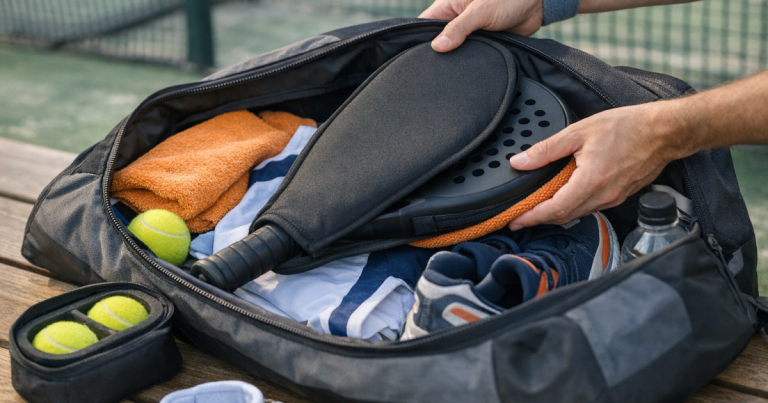
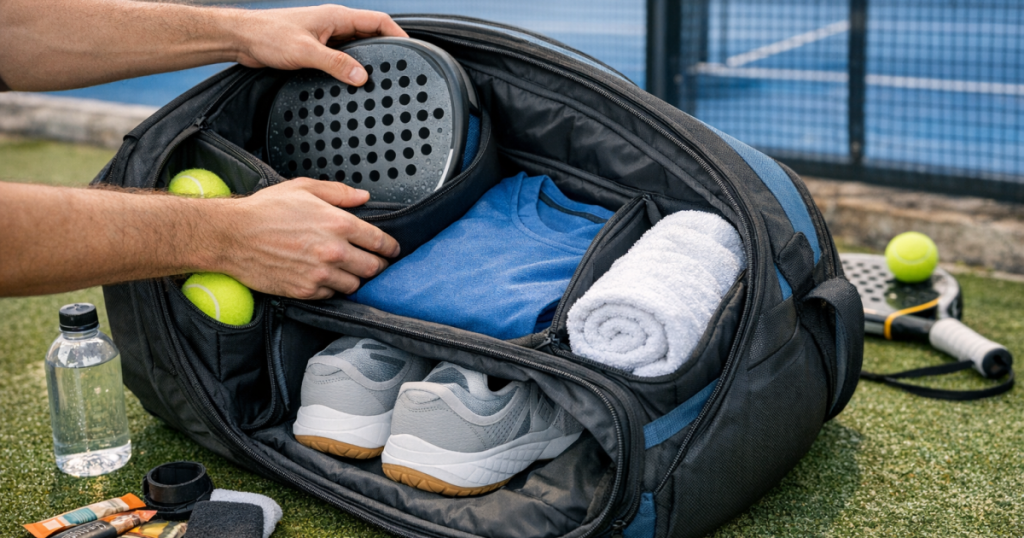
- Main section: racket, light clothing layer, towel or a small change of top.
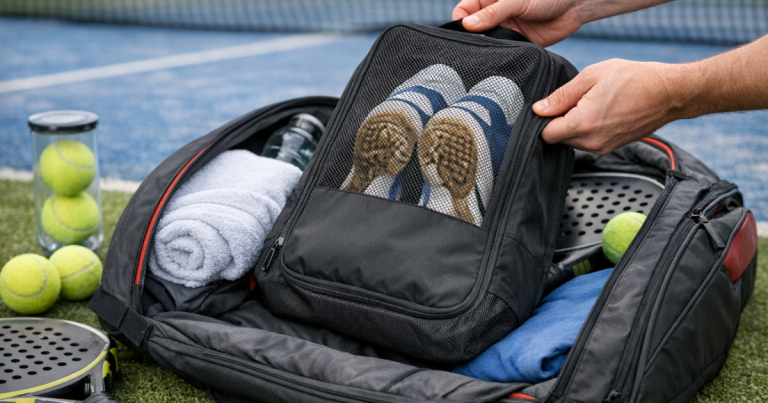
- Shoe area: padel shoes only, ideally kept away from clean clothing.
- Small pocket: keys, phone, wallet, grips, plasters and other small items you do not want loose.
- Side pocket or bottle sleeve: water bottle, if the bag has a sensible place for one.
- Wet or ventilated pocket: damp towel or sweaty top after play, if your bag includes one.
If you are packing for your very first court visit, it is worth checking what to pack for your first padel session before building a more permanent bag setup. The aim is not to carry everything you own; it is to avoid forgetting the few things that genuinely affect your session.
Step 1: Empty the bag before you organise it
Start with a completely empty bag. Beginners often keep adding fresh kit on top of old receipts, used overgrips, spare balls, snack wrappers and forgotten clothing. That turns even a decent padel bag into a rummage zone.
Put everything on the floor and sort it into three groups:
- Always needed: racket, shoes, water, balls if you are supplying them, towel and basic personal items.
- Sometimes useful: spare top, light layer, extra grip, cap, wristband or small snack.
- Rarely needed: extra outfits, multiple tins of balls, bulky toiletries, duplicate accessories and old kit you have stopped using.
The third group is where most of the unnecessary weight comes from. Keep it out unless you have a clear reason for that specific session.
Step 2: Build your bag around the session type
A padel bag should change slightly depending on what you are doing. Packing the same way for every session is convenient, but it can lead to carrying too much for short games and not enough for longer club blocks.
For a one-hour social match
Keep it simple. Take one racket, padel shoes, water, a towel, balls if your group expects you to bring them, and a small essentials pouch. A spare top is useful if you are travelling home by public transport or heading somewhere afterwards, but it is not always necessary.
For a coaching session
You may want a little more comfort because drills can be repetitive and sweaty. Add a spare top, an extra grip and perhaps a second towel if you know the session is intense. Do not fill the bag with extra rackets or clothing just because you are having a lesson; better movement and attention matter more than spare kit.
For a club night or longer block
Pack for the time you will actually be there. If you might play two matches and wait between games, a light layer, snack and dry top can make sense. Even then, keep extras compact. Club bags get messy quickly when players pack for every possible weather, court and social plan.
Step 3: Give each section a fixed job
Once you know what you are taking, map your padel bag compartments in a repeatable way. The less you change the system, the quicker you will be at the court and the less likely you are to leave something behind.
- Racket section: keep your racket here and avoid stuffing it with shoes, tins or loose accessories. This protects the racket from avoidable knocks inside the bag.
- Clothing section: use this for a towel, top or light layer. Fold items flat rather than rolling bulky bundles into the main space.
- Shoe section: put shoes in heel-first and remove old mud or court dust before packing them. If the bag has no separate shoe area, use a simple shoe bag.
- Small-items pocket: reserve this for things you need quickly, such as keys, wallet, phone, overgrip, lip balm or a small first-aid item.
- After-play pocket: if your bag has a ventilated or wet section, use it only after the match for damp kit. Do not let it become a permanent laundry pocket.
This fixed system also helps when you are tired. After a match, you can pack without thinking too hard and still keep clean, damp and valuable items separate.
Step 4: Use a one-in, one-out rule for extras
Extras are not the enemy. The problem is carrying every extra all the time. A simple one-in, one-out rule keeps the bag practical.
If you add a spare hoodie because you are playing outdoors on a cool evening, remove the second towel or spare top you do not need. If you add a fresh tin of balls for a group session, take out the half-used tin that has been sitting in the side pocket for weeks. If you add a snack for a longer club night, do not also pack a full wash bag unless you are genuinely showering afterwards.
For most beginner sessions, the useful extras are small: an overgrip, a compact towel, a dry top, a light layer and a water bottle. Once you go beyond that, ask whether the item solves a likely problem or just fills available space.
Step 5: Keep weight and balance in mind
A bag that is awkward to carry is usually a sign it is too full or badly loaded. Heavy items should sit close to your back or low in the main section, not swinging in the outer pockets. Loose tins, bottles and shoes can make the bag feel heavier than it really is because the weight shifts as you walk.
If you cycle to the court, avoid strapping on a bulky, overfilled bag as an afterthought. Keep the load compact, secure loose straps and check that the bag does not affect your balance or wheel clearance. For more detail, read how to attach a padel bag to a bike safely before making it part of your regular routine.
Public transport and walking matter too. If your club is a ten-minute walk from the station, a heavy bag may feel fine at home but annoying after a match. Pack for the full journey, not just the court.
Step 6: Separate clean, dirty and damp kit
Padel bags start to smell when damp clothing, shoes and towels sit together after play. You do not need a complicated system, but you do need separation.
- Before play: keep clean clothing and towel away from shoes.
- During play: return valuables to the same zipped pocket each time.
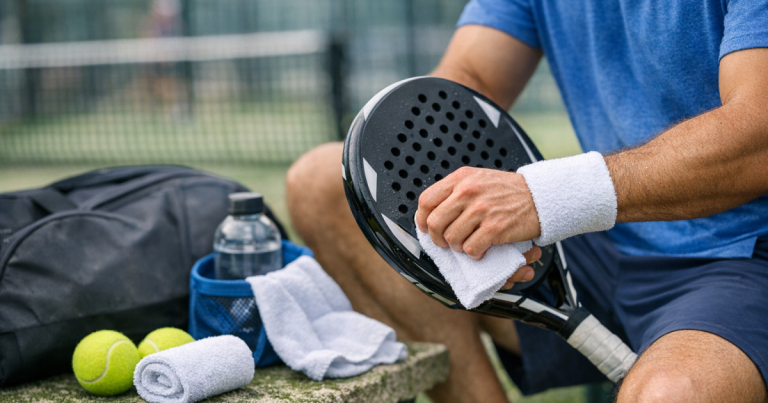
- After play: put damp items in the wet section, a small laundry bag or a separate carrier.
- At home: empty damp kit straight away and leave the bag open to air.
Do not use every pocket for sweaty clothing. If damp items spread through the bag, your clean top, grips and towel can all pick up odour. A small routine after each match saves more effort than a big clean-out once the bag already smells stale.
Step 7: Do a 30-second court-side reset
Before you leave the court, take half a minute to reset the bag. This is the easiest way to stop clutter building up across the week.
- Racket back in its usual section.
- Balls back in the same pocket or returned to the player who brought them.
- Phone, keys and wallet checked before you leave the bench.
- Damp towel or top separated from clean kit.
- Empty bottle removed or refilled before the next session.
This habit is especially useful at busy clubs where benches, glass walls and court entrances can become crowded between bookings. A consistent reset makes it less likely that you leave accessories behind or accidentally take someone else’s balls.
Common overpacking mistakes
Most beginners overpack for understandable reasons: they want to feel prepared, they are still learning what matters, and padel kit can be oddly satisfying to organise. These are the mistakes that cause the most clutter.
Carrying too many rackets
Unless you are testing rackets or playing a long event, one racket is enough for most early-stage players. A spare can be useful later, but it adds bulk and can make the racket section messy if you are not using it.
Keeping old balls in every pocket
Loose balls seem harmless until they fill corners, roll under clothing and make the bag lumpy. Keep one clear place for balls and remove dead or unneeded ones regularly.
Packing full-size toiletries for every session
If you shower at the venue, decanting into small containers or keeping a separate wash pouch can help. If you usually go straight home, leave bulky bottles out.
Taking too many clothing options
A spare top and light layer can be sensible. Three tops, spare shorts, two hoodies and an extra towel are usually too much for a normal beginner match.
A simple packing routine to copy
Here is a straightforward setup for a typical evening social match:
- Main section: racket, compact towel and one spare top.
- Shoe area: padel shoes, with outdoor dirt brushed off before packing.
- Small zipped pocket: keys, phone, wallet, overgrip and any small personal essentials.
- Side pocket: balls if you are bringing them for the group.
- Bottle space: one water bottle, ideally around 500 ml to 750 ml for a standard session, adjusted for heat and how much you normally drink.
- After-play storage: damp towel or top separated before travelling home.
Before leaving, add anything specific to that day: a cap for bright outdoor courts, a warmer layer for an evening booking, or an extra towel for a longer coaching block. If it is not linked to the actual session, leave it out.
Helpful questions
Do I need a large padel bag as a beginner?
Not necessarily. A compact padel bag or racket backpack is usually enough for one racket, shoes, water, towel and small accessories. Bigger bags are useful if you play often, travel after work or carry kit for longer club sessions.
Should padel shoes go in the main section?
Only if your bag has no shoe area. If shoes must share the main space, use a shoe bag or separate carrier so dust, grit and damp do not spread to clothing and towel.
How many balls should I keep in my bag?
For most casual games, one tin or one clearly grouped set is enough if you are responsible for bringing balls. Remove old, flat or loose balls so they do not clutter the pockets.
What should stay in the small zipped pocket?
Use it for valuables and small essentials: keys, phone, wallet, overgrip, plasters and perhaps a small snack. Avoid filling it with old receipts, loose change and used grips.
How often should I empty my bag?
Do a quick reset after every session and a full empty-out every week if you play regularly. Damp kit should come out as soon as you get home.
Why it matters
Good bag organisation is not about being fussy. It makes the start of a match smoother, keeps your kit fresher and helps you focus on playing rather than searching for things at the side of the court.
Once your packing is under control, the next useful habit is preparing your body before the first point. A short routine like this guide to warming up before a social padel match pairs well with a lighter, better-organised bag.
The simplest rule is this: every item in your bag should have a job for today’s session. If it does not, it can stay at home until you actually need it.