A padel racket can look simple from the outside, but the layers inside change how it feels on a busy club court. Understanding padel racket materials helps you make sense of labels such as fibreglass, carbon fibre, EVA foam and soft core without getting lost in marketing language. The useful question is not which material sounds most advanced; it is how the racket responds when you block a fast volley, defend off the glass or try to keep a gentle lob in play.
Main points
- Fibreglass faces usually feel softer and more forgiving, which can help newer players keep the ball in court.
- Carbon fibre faces usually feel firmer and more direct, but they can punish late contact and tense technique.
- The foam core matters as much as the outer face because it affects rebound, comfort and control.
- Stiffness is not automatically better. A racket that is too demanding can slow your progress in social games.
- Material is only one part of the racket. Shape, weight and balance also change how it plays.
How a padel racket is put together
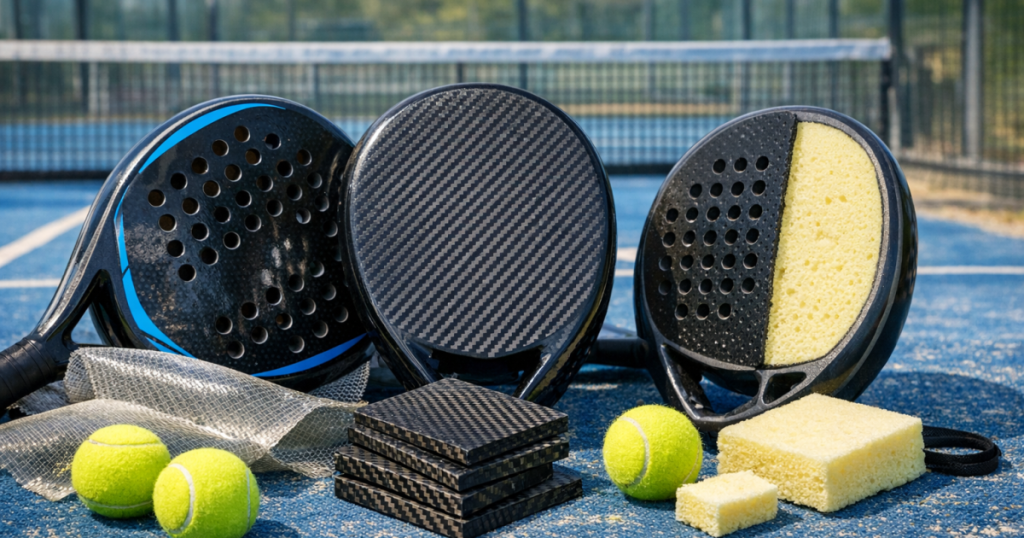
Most modern padel rackets are not strung like tennis rackets. They are solid-looking but layered, with a frame, hitting faces and an internal core. The hitting faces are the front and back surfaces you strike the ball with. These are commonly made with fibreglass, carbon fibre or a mix of materials. The core inside is usually a foam-type material, often described by brands as EVA, soft EVA, multi-EVA, polyethylene or a similar trade name.
The frame around the edge is also important because it gives the racket structure. Many rackets use carbon or carbon-like tubular frames, even when the face itself is fibreglass. That can make product pages confusing: a racket may mention carbon in the frame but still play like a softer fibreglass-faced model. For beginners, the face and core normally tell you more about day-to-day feel than a single headline material claim.
It also helps to separate material from shape. A round racket with a forgiving sweet spot will feel very different from a diamond-shaped racket, even if both use similar fibres. If you are still getting comfortable with basic volleys, bandejas and wall rebounds, read material claims alongside racket weight and shape rather than treating the face material as the whole story.
Fibreglass: soft feel and easy depth
Fibreglass, sometimes called glass fibre, is common in beginner and improver rackets because it tends to flex more than carbon fibre. On court, that can feel like the ball stays on the racket face for a fraction longer. The result is often a more cushioned, friendly response, especially on slower swings or defensive blocks.
That softer response can be useful in early club play. If you are late to the ball, reaching low near the side glass or simply trying to guide a volley back deep, a forgiving face gives you a bit more help. Many beginners also find fibreglass less harsh on mishits, though comfort still depends on technique, grip pressure, racket weight and the core.
The trade-off is that fibreglass can feel less crisp when you swing harder. Players who hit with compact control may like the extra give, while players who attack overheads aggressively might feel that the racket absorbs too much energy. That does not make fibreglass low quality. It simply means the material prioritises accessibility and comfort over a very sharp, rigid response.
Carbon fibre: firmer response and cleaner feedback
Carbon fibre is often presented as the premium option, and it can be excellent, but the word “carbon” on its own does not tell the whole story. Carbon-faced rackets usually feel firmer and more precise than fibreglass-faced rackets. When you contact the ball cleanly, the response can be direct and stable, which is why many experienced players like it.
For a newer player, that firmness can be a mixed blessing. A carbon face may give clearer feedback on where you have hit the ball, but it may also feel less forgiving when you catch the ball near the edge of the sweet spot. If your timing is still developing, a very stiff racket can make simple defensive shots feel harder than they need to be.
You may see terms such as 3K, 12K or 18K carbon in product descriptions. These refer to the weave or fibre construction used by the manufacturer, but they should not be read as a simple beginner ranking. A higher number is not automatically easier, more powerful or more comfortable. The lay-up, resin, core, mould and overall design all affect the final feel.
Carbon can make sense for beginners who are already strong, accurate ball strikers, perhaps from tennis, squash or badminton. Even then, it is sensible to avoid assuming that the stiffest option will help you improve fastest. In padel, controlled depth, patient defence and soft hands often matter more than raw punch.
Foam cores: where much of the feel comes from
The core is the part many beginners overlook. It sits between the two faces and has a big influence on rebound, vibration and comfort. Most rackets use some form of foam, with EVA-type cores especially common. Brands describe these in different ways, so you will often see words such as soft, medium, hard, hybrid or multi-density.
A softer core usually gives a livelier, more cushioned feel at lower swing speeds. That can help when you are blocking returns, playing from the back of the court or trying to lift the ball over the net without forcing the shot. The racket may feel easier to use in relaxed social games because it gives you some depth without needing a big swing.
A harder core usually feels more solid and controlled when you strike the ball firmly. It may reward decisive contact, but it can feel dead or demanding if your swing is short, tense or off-centre. Harder cores can also feel less comfortable for some players, although comfort is personal and depends on more than the material label.
Temperature can change perception too. On colder outdoor sessions in Britain, balls and rackets can feel less lively than they do in warmer indoor conditions. That does not mean the racket has suddenly changed category, but it can explain why the same setup feels different from one club night to another.
What different combinations feel like
Instead of judging each material in isolation, think about common combinations. These are general tendencies rather than strict rules, because every brand tunes its rackets differently.
Fibreglass face with a soft or medium core
This is one of the most approachable combinations for newer players. It usually gives a comfortable, forgiving feel and helps with defensive shots. It can be a good fit for players who are still learning court positioning, wall timing and controlled lobs. The main limitation is that it may feel less sharp if you start hitting faster volleys and overheads regularly.
Carbon face with a soft core
This can be a useful middle ground. The carbon face adds a firmer strike, while the softer core takes some harshness out of the contact. It may suit improvers who want a more defined feel but do not want a racket that feels too rigid in longer rallies.
Carbon face with a hard core
This tends to be more demanding. It can feel stable and precise for clean hitters, but it is often less forgiving when your timing slips. A beginner who is still learning to relax the hand and use the glass may find this combination tiring or inconsistent, even if it looks impressive on paper.
Mixed or hybrid faces
Some rackets use a blend of materials, such as fibreglass plus carbon layers. These designs try to combine comfort, durability and responsiveness. The important point is to judge the whole racket, not one material term. A hybrid racket can still feel soft, firm, powerful or controlled depending on how it is built.
The myths that confuse new players
The most common myth is that carbon is always better. Carbon fibre can be excellent, but better for whom? A player who has lessons every week, strikes cleanly and wants sharper feedback may appreciate it. A player in their first few months of social padel may improve faster with something more forgiving.
Another myth is that soft rackets are only for weak hitters. Soft does not mean poor. Many padel points are won through placement, angle, patience and defending one more ball than your opponents expect. A racket that helps you absorb pace and keep the rally alive can be more useful than one that only feels good when you swing perfectly.
There is also a tendency to blame the face material for every shot. If the racket feels slow in your hand, the issue may be balance rather than carbon or fibreglass. Head-heavy rackets can add weight through the swing, while head-light rackets can feel easier to manoeuvre at the net. For a clearer explanation, see this guide to head-heavy, even and head-light balance.
How beginners should read material labels
When you read a racket description, look for a few practical clues. First, identify the face material. Is it mainly fibreglass, carbon fibre or a blend? Second, check the core description. Does the brand describe it as soft, medium, hard or multi-density? Third, connect those details with the racket’s shape and balance.
For most first-time and early-stage players, the safer starting point is a racket that sounds forgiving rather than extreme. Words such as soft feel, medium balance, round shape and accessible sweet spot usually matter more than the most advanced fibre label. If the description is full of power-focused language and the racket is aimed at advanced attacking players, it may be harder work than you need.
Also be realistic about feel during a test hit. A stiffer racket can feel exciting for a few clean smashes, but padel is full of awkward blocks, half-volleys, lobs and rebounds. Try to notice how the racket behaves on normal rally balls, not just the one shot that feels brilliant.
Comfort, control and confidence
The right material choice should support relaxed technique. If you grip too tightly because the racket feels harsh, your touch shots and volleys can suffer. If the racket feels too springy, you may struggle to keep the ball low and controlled. The aim is not to find the most powerful construction; it is to find a response that lets you swing calmly and repeat shots under pressure.
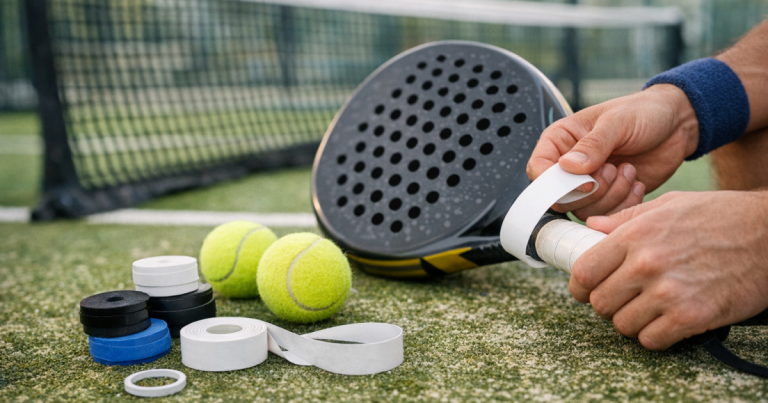
Small setup details can change feel as well. A fresh overgrip can make the handle easier to hold without squeezing, which may improve comfort more than changing racket material straight away. If your main problem is slipping or hand tension, this beginner-friendly overgrip review is a useful next read.
Helpful questions
Is fibreglass better than carbon for beginners?
Often, yes, because fibreglass usually feels softer and more forgiving. It is not automatically better, but many beginners benefit from the easier depth and comfort.
Does a carbon racket give more power?
It can, but only if the player can strike the ball cleanly and use the racket well. For many beginners, a stiff carbon racket may feel harder to control rather than more powerful.
What does a soft foam core do?
A soft foam core usually gives a more cushioned response and helps the ball rebound at lower swing speeds. It can make defensive shots and relaxed rallies feel easier.
Should I avoid hard foam as a new player?
Not always, but be cautious. Hard foam can feel stable and controlled for clean hitters, while newer players may find it less forgiving on mishits and slower defensive shots.
Can material reduce arm discomfort?
A softer racket may feel more comfortable, but technique, grip size, overgrip condition, racket weight and playing load also matter. Do not rely on material alone to solve discomfort.
Why it matters
Materials matter because they shape how confident you feel during ordinary points. Fibreglass tends to make the game feel more forgiving. Carbon fibre tends to make contact feel firmer and more direct. Foam changes how much cushioning, rebound and control you feel between those two surfaces.
For a beginner, the best lesson is simple: do not chase the most technical-sounding construction. Choose a racket feel that helps you defend, rally, volley and learn without fighting the equipment. Once your timing, footwork and shot choices improve, you will have a much clearer sense of whether you want a firmer face, a harder core or a more advanced setup.