Choosing your first racket is easier when you understand how padel racket weight and shape affect comfort, control and timing. New players often blame technique when the racket is simply too demanding: it feels late on volleys, awkward on lobs, or tiring after a few games. The aim is not to find the most powerful racket on the wall. It is to choose something you can swing cleanly, recover quickly and trust while you learn the basics.
The short version
Most new players are better served by a racket that feels easy to manoeuvre, forgiving on off-centre contact and stable enough not to twist in the hand. That usually points towards a lighter or mid-weight racket, a round or soft teardrop shape, and a balance that does not feel too head-heavy.
There is no single perfect number because rackets vary in feel, grip size, materials and balance. Two rackets with similar listed weights can feel very different once you swing them. Still, the broad beginner logic is simple:
- Lighter rackets are usually easier to move quickly and less tiring during longer sessions.
- Heavier rackets can feel more solid, but may be harder to control if your timing is still developing.
- Round rackets normally give the most forgiving feel and make clean contact easier.
- Teardrop rackets sit between control and power, but some are still too demanding for early-stage players.
- Diamond rackets are usually aimed at more advanced players who can control a smaller sweet spot and higher balance.
If you are still getting used to serves, walls and rallies, your racket should help you keep the ball in play rather than reward only perfect technique. For the rules side of those early games, it is worth keeping a simple reference open to the padel rules for beginners so your gear choices and court decisions improve together.
Why racket weight matters
Padel rackets are usually described by their listed weight in grams, but the number on its own does not tell the whole story. A racket can be relatively light yet feel sluggish if the balance is high towards the head. Another can be a little heavier on paper but feel calmer and easier because the weight sits closer to your hand.
For beginners, weight affects three things most clearly: reaction speed, comfort and repeatability. Reaction speed matters at the net, where you often have very little time to block volleys or defend a quick ball at your body. Comfort matters because padel involves lots of short swings, changes of direction and compact defensive shots. Repeatability matters because you need a racket that lets you make the same simple swing again and again while your technique settles.
A racket that is too heavy for you can make common beginner errors worse. You may be late on volleys, jab at the ball instead of guiding it, or overuse your wrist because the racket does not come through the shot comfortably. Over a session, that can turn into tired shoulders, rushed decisions and poorer contact.
A racket that is extremely light can also have trade-offs. It may feel easy to move, but some players find it less stable when blocking firmer shots or returning faster balls. The sweet spot, construction and balance all influence that feeling, so do not judge by weight alone.
How shape changes the way the racket plays
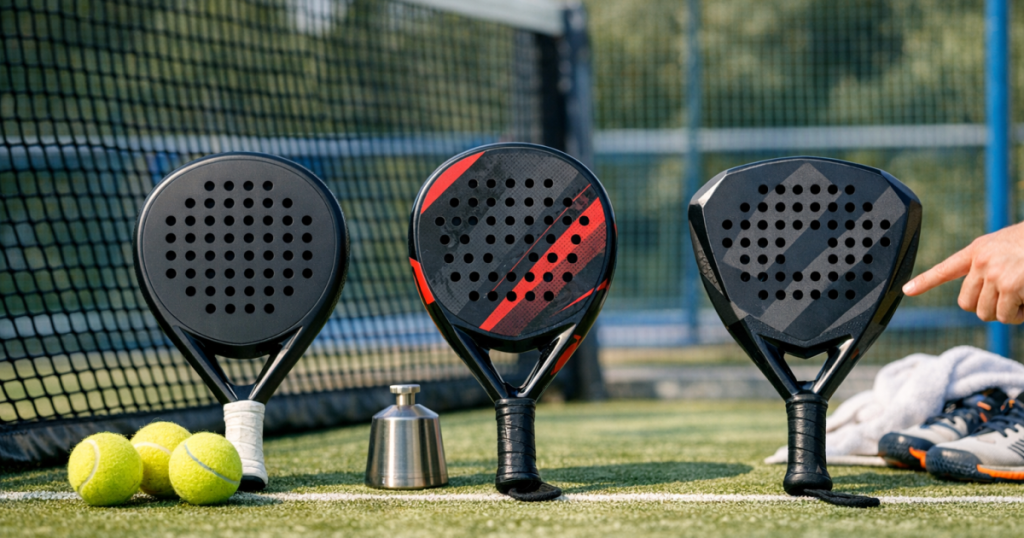
Shape is one of the easiest labels to notice in a shop or club pro area, but it is also one of the most misunderstood. Rackets are usually grouped as round, teardrop or diamond. These names describe the outline and, broadly, where the sweet spot and balance tend to sit.
Round rackets
Round rackets are usually the safest starting point for new players. The sweet spot tends to sit more centrally and the balance often feels easier to manage. That makes them more forgiving when you do not strike the ball perfectly, which is normal while you are learning volleys, bandejas, lobs and wall rebounds.
The main benefit is confidence. You can concentrate on preparation, footwork and simple placement instead of fighting the racket. A round racket will not automatically fix technique, but it gives you a wider margin for everyday beginner mistakes.
Teardrop rackets
Teardrop rackets are often described as all-round options. They can suit improving players who want a little more help when attacking without moving straight into an unforgiving power racket. For a beginner, a softer and manageable teardrop can be fine, but it needs to feel easy in the hand rather than impressive for two practice swings.
The key is not the label; it is how the racket behaves under pressure. If a teardrop model makes your volleys late, your defensive blocks float up, or your lobs feel rushed, it is probably more racket than you need right now.
Diamond rackets
Diamond rackets usually place more mass and sweet spot higher up the face. This can help experienced players generate attacking power, but it also reduces forgiveness if timing and contact point are inconsistent. For most new players, a diamond racket is an unnecessary shortcut towards harder control.
That does not mean diamond rackets are bad. They are simply designed around a different player profile: someone who already reads the game well, prepares early and can strike the ball cleanly under pressure.
Balance is the missing link
Weight and shape are easier to talk about, but balance often explains why one racket feels friendly and another feels awkward. Balance describes where the weight feels concentrated. In simple terms, a racket can feel head-light, even-balanced or head-heavy.
A head-light or evenly balanced racket is usually easier for beginners because it responds quickly. You can get the face into position on volleys, adjust on returns and recover between shots. A head-heavy racket can add punch, but it may feel slower during quick exchanges and harder to control when defending.
This is why two rackets with the same listed weight can feel completely different. A mid-weight round racket with a low balance may feel calmer than a lighter teardrop racket with more weight towards the head. When trying rackets, pay attention to what happens after ten minutes, not just the first swing. Early excitement can hide late-session fatigue.
Real beginner situations where the wrong racket shows up
The best test is not whether the racket feels powerful in a warm-up. It is whether it helps you solve the situations you actually face as a new player.
- Fast volleys at the net: if the racket feels slow to lift or turn, it may be too heavy or too head-heavy.
- Defending after the glass: if you keep stabbing at the ball, a more forgiving round shape may help you slow the shot down.
- Lobs from the back corner: if you struggle to get under the ball cleanly, the racket may be tiring your hand and shoulder.
- Serve consistency: if your contact varies wildly, a calmer control racket is usually more useful than extra power.
- Long club sessions: if the racket feels fine for one set but clumsy later, the total swing weight may be too much.
These signs are not always caused by equipment. Technique, spacing and footwork matter more in the long run. But if several of these problems appear with one racket and ease with another, the racket is probably part of the story.
What to check before you commit
New players often make the mistake of choosing a racket based on a wall label, a discount, or what a stronger player uses. A better approach is to handle the racket in realistic conditions and ask a few simple questions.
- Can you move it quickly at the net? Shadow a few short volleys and check whether the face gets into position without effort.
- Does the face twist on off-centre contact? Some forgiveness is important while you are learning.
- Can you play soft shots as well as hard ones? Beginners need touch for blocks, lobs and controlled returns.
- Does it still feel comfortable after a proper hit? A racket that feels good for two minutes may not feel good after a full match.
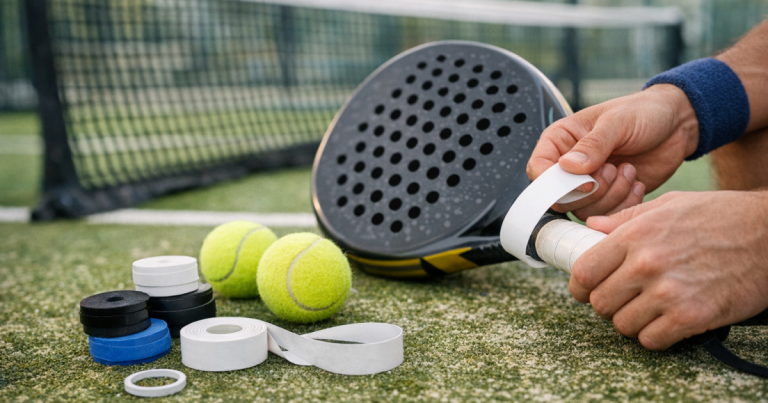
- Is the grip comfortable? A poor grip setup can make a suitable racket feel wrong, so check how it sits in your hand.
If you have access to demo rackets, use them. A short hit can tell you more than a long product description, especially when you are deciding between round and teardrop shapes. The most useful next step is to try a padel racket before you buy and compare how each one behaves during the same simple drills.
Examples of sensible starter directions
You do not need to chase a specific professional-style model as a new player. Instead, look for the type of racket that matches your current game. These examples show the kind of direction to consider, not a guaranteed fit for every player.
- Control-first beginner: a round racket with an easy balance is usually the most sensible route. Models such as the Nox X-One Evo Padel Racket are often discussed in beginner conversations, but you should still check the current version, feel and listed details before deciding.
- Improving casual player: a manageable teardrop racket can work if you already rally consistently and want a little more attacking help without losing control.
- Physically strong beginner: do not assume you need a heavy power racket. Strength helps, but padel rewards timing, angles and fast preparation more than raw force.
- Tennis or squash crossover player: you may like a racket with a firmer, more direct feel, but avoid jumping straight to a demanding head-heavy shape until you understand padel movement and wall play.
- Junior or smaller adult player: comfort and manoeuvrability matter more than power. A lighter-feeling racket may make learning far more enjoyable.
Another commonly seen beginner-friendly route is an accessible round or hybrid model such as the Bullpadel Indiga CTR Padel Racket. As always, do not rely only on the name. Check the current model information, hold it if possible, and pay attention to whether the balance feels manageable during volleys and defensive shots.
Common mistakes when choosing by weight or shape
The first mistake is choosing the racket that produces the hardest smash in a short test. New players rarely lose points because their smash is not powerful enough. They lose points because they are late, off-balance, or unable to place the ball under pressure.
The second mistake is assuming lighter always means easier. A light racket with an awkward balance or small sweet spot can still feel difficult. Likewise, a slightly heavier racket with a forgiving face can feel composed and comfortable.
The third mistake is copying a regular player without considering level. A club player who attacks well at the net may enjoy a racket that would make a beginner’s defensive game much harder. Your first racket should match the game you are building, not the game you hope to have in a year.
The fourth mistake is ignoring your body’s feedback. If your forearm, shoulder or hand feels unusually tired after normal play, the racket setup may be too demanding, the grip may be wrong, or your warm-up may be too rushed. Simple preparation can help, and these padel warm-up drills are a useful starting point before club games.
A simple on-court test
When you test a racket, keep the session boring on purpose. Flashy shots make it harder to judge. Use the same small routine with each racket so the comparison is fair.
- Hit ten controlled forehands from the back of the court.
- Hit ten backhands without trying to overhit.
- Play a few lobs and check whether the racket helps you lift the ball cleanly.
- Stand at the net and block medium-paced volleys.
- Defend a few balls after the glass if the court setup allows it.
- Finish by playing points and noticing whether you trust the racket when rushed.
Afterwards, ask one question: did the racket make ordinary shots easier? If the answer is yes, it is probably closer to what you need. If it only felt good when you had time to swing hard, it may not be the best first choice.
Helpful questions
Is a lighter padel racket always better for beginners?
No. Lighter rackets are often easier to move, but balance and forgiveness matter too. A slightly heavier racket can still suit a beginner if it feels stable, comfortable and easy to control.
Should my first racket be round or teardrop?
Most new players should start with round unless they have already developed consistent timing. A soft, manageable teardrop can work for improving players, but it should not feel slow or tiring.
Why does a racket feel heavier than its listed weight?
Balance is usually the reason. If more weight sits towards the head, the racket can feel harder to swing even when the listed weight looks reasonable.
Can the wrong racket slow my progress?
Yes, if it makes you late, tense or inconsistent. A forgiving racket gives you more room to learn spacing, wall rebounds and shot selection without fighting the equipment.
How long should I test a racket before deciding?
Try to use it for more than a few warm-up shots. A proper session with volleys, lobs, returns and points gives a much clearer picture than swinging it in a shop or hitting only smashes.
What stands out
For new players, the best racket is usually the one that disappears in your hand. It should let you prepare early, control simple shots and stay relaxed during longer rallies. Weight, shape and balance all matter, but they only matter because they change how confidently you can play.
Start with forgiveness, not ego. A round or easy teardrop racket with manageable balance will help most beginners enjoy rallies, learn the walls and build better habits. Once your timing, positioning and shot choices improve, you will have a much clearer sense of whether you need more weight, more power or a different shape.