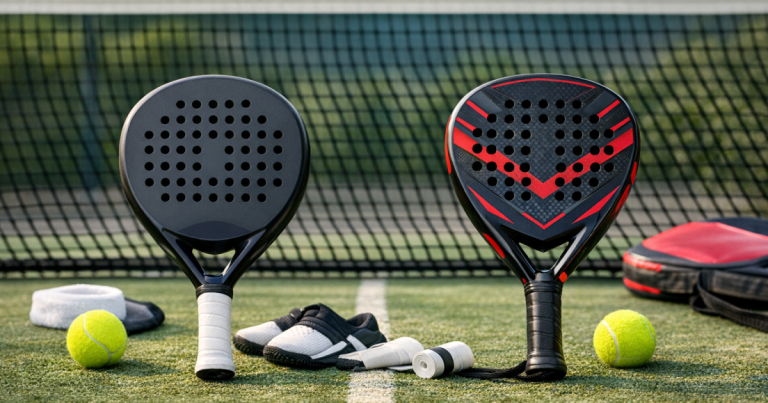
A clean contact can make a beginner’s shot feel instantly calmer: the ball leaves the face with less wobble, less vibration, and more predictable depth. The padel racket sweet spot is the area of the hitting surface where that clean contact is easiest to produce. It matters because most new players do not lose points through lack of strength; they lose them through slightly off-centre contact, rushed preparation, and using a frame that gives them very little help.
Understanding this idea makes racket choice less mysterious. Instead of only asking whether a racket is powerful or advanced, you can ask a more useful question: how easy will it be to strike the ball cleanly during real club rallies?
The short version
- A larger effective hitting area is usually more forgiving for beginners.
- Round rackets generally place the easiest contact zone lower and more centrally, which helps control.
- Teardrop rackets can offer a useful middle ground, but not all of them feel equally forgiving.
- Diamond-shaped rackets tend to reward cleaner timing and can feel less helpful on off-centre hits.
- Forgiveness is not just about shape; balance, weight, face feel, drilling pattern, and your own swing all matter.
What the sweet spot actually does
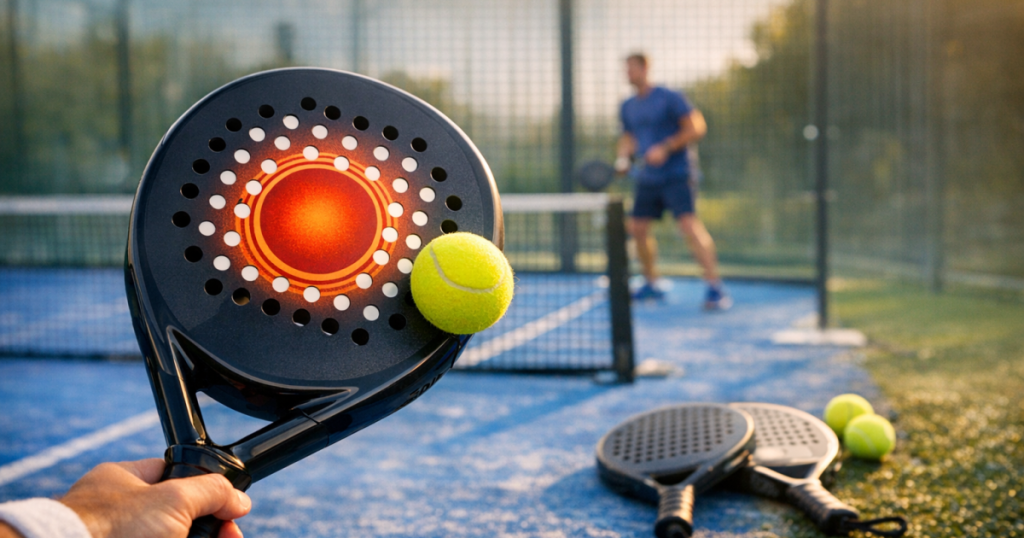
The sweet spot is not a visible mark on the racket. It is the part of the face where the frame, core, and balance work together most efficiently. When you hit there, the racket feels stable in your hand, the ball comes off the face cleanly, and you do not need to force the shot.
When you miss it, the shot may still go over, but it often feels different. The racket can twist slightly, the ball may sit up too short, or you may feel vibration through the handle. For beginners, that feedback can be confusing because it can seem like a technique problem, a strength problem, or a racket problem all at once.
The truth is usually a mix. Better preparation helps, but a more forgiving racket gives you a wider margin while you are learning to judge glass rebounds, volley pace, and awkward balls near your body.
Why sweet spot size is not as simple as “bigger is better”
A bigger contact-friendly area can make padel feel easier, but it does not automatically make a racket right for every player. If the frame is too heavy, too head-heavy, or too reactive for your timing, you may still struggle to find the middle consistently.
Think of the hitting area as a useful starting point rather than the whole answer. A racket can have a generous sweet zone but still feel difficult if it is tiring to manoeuvre at the net. Another racket may have a slightly smaller zone but feel predictable because the balance suits your hand speed.
For early club play, the aim is not to find the most powerful frame. It is to find one that lets you repeat calm, compact swings. That is why many newer players do well with a stable, control-leaning racket before moving towards more demanding shapes. If you are still working out your first setup, the wider decision is covered in how to choose your first padel racket for club play.
How racket shape changes the hitting zone
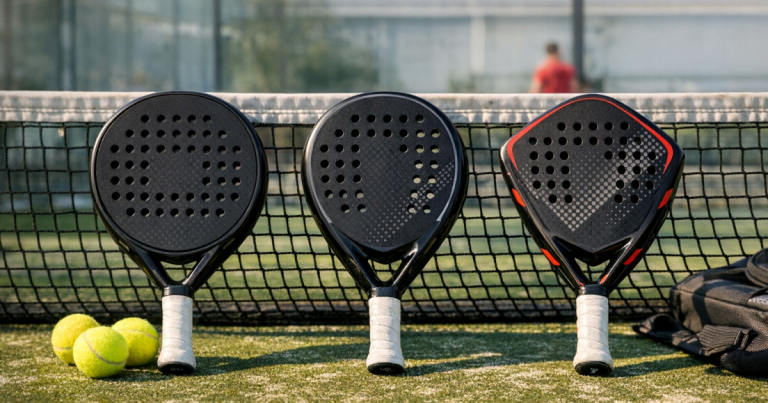
Round rackets
Round rackets are usually the most beginner-friendly shape because the easiest contact area tends to sit closer to the centre of the face and slightly lower than on more attacking designs. That helps when your swing is still compact, your preparation is late, or you are blocking quick volleys rather than taking full cuts at the ball.
The practical benefit is simple: you get more useful feedback from normal club shots. Returns, controlled lobs, and defensive blocks are often easier to manage because the racket is less likely to punish a small timing error.
Teardrop rackets
Teardrop rackets sit between round and diamond shapes. The contact-friendly area is often a little higher than on a round racket, and the frame may feel more lively when you strike through the ball well.
For improving players, that can be appealing. You may get a bit more help when attacking from the middle of the court or playing a firmer bandeja. The trade-off is that some teardrop rackets demand better timing than their shape suggests. A soft-feeling teardrop can still be forgiving; a stiffer, more top-heavy version may not feel as kind during a busy match.
Diamond rackets
Diamond-shaped rackets generally place the most effective contact zone higher on the face. That can suit players who already strike confidently and want more attacking weight through overheads and aggressive volleys.
For many beginners, though, this shape can feel less forgiving. If you contact the ball low on the face, the frame may twist more, and you may start compensating by swinging harder. That is rarely helpful when you are trying to build control, especially in doubles where placement often matters more than raw pace.
Forgiveness is more than the visible outline
Shape is easy to spot, which is why it gets so much attention. But forgiveness also comes from details you feel rather than see.
- Balance: A head-light or evenly balanced racket can feel easier to move quickly, especially at the net.
- Weight: A heavier racket may feel stable when you have time, but harder to adjust when the rally speeds up.
- Core feel: A softer-feeling core can give some players more comfort and easier depth, while a firmer feel may reward cleaner contact.
- Face response: Some rackets feel muted and controlled; others feel springier. Neither is automatically better, but beginners usually benefit from predictability.
- Handle comfort: If the grip feels wrong for your hand, you may squeeze too tightly and lose touch even with a forgiving head shape.
This is why two rackets with the same outline can behave differently. The padel racket sweet spot is partly about geometry, but it is also about how the whole racket reacts when the ball lands away from perfect centre.
How off-centre hits show up during real rallies
You notice forgiveness most clearly when the ball is awkward. In warm-up, with gentle feeds, many rackets feel fine. In a match, the difference appears when you are late, stretched, or trying to control pace from an uncomfortable position.
- Return of serve: A forgiving racket helps you block the ball back without over-hitting when the serve skids low.
- Fast volley exchanges: A stable face gives you a better chance of redirecting the ball even when contact is not perfect.
- Defensive lobs: Cleaner contact helps you lift the ball with height rather than leaving it short for an easy smash.
- Shots near the glass: When your footwork is rushed, a larger usable area can reduce the damage from a slightly late swing.
- Overheads: A less forgiving racket may feel great on perfect contact but harsh when you catch the ball too low or too close to the frame.
If a racket only feels good when everything is perfectly lined up, it may slow your progress. A forgiving frame gives you more playable outcomes while your judgement and movement catch up.
A simple way to test forgiveness before committing
The best test is not one huge smash in a shop hitting bay. It is a normal session with the shots you actually play. If possible, borrow or demo a racket during drills, then use it in a few points when the pace is less predictable.
Pay attention to three things. First, does the racket stay stable when you block volleys? Second, can you lift defensive lobs without straining? Third, do mishits still land deep enough to keep you in the rally? Those answers tell you more than a single powerful shot.
It also helps to compare rackets when you are fresh and again after 45 minutes. A frame that feels exciting for ten minutes can become awkward once your arm slows down. For a more structured approach, use these ideas alongside how to test padel gear before you buy.
The power argument: why some players accept a smaller target
Not every player wants maximum forgiveness. Some prefer a racket that feels more direct, powerful, or precise when contact is perfect. Advanced players may accept a smaller effective hitting area because their timing is consistent enough to benefit from the extra response.
That does not make forgiving rackets “beginner only” or attacking rackets “better”. It simply means different rackets reward different skills. If you are still building reliable contact, a demanding frame can make you swing harder to solve problems that are really about timing. If you already contact the ball cleanly under pressure, a more attacking shape may feel natural.
For most early-stage players, the smarter route is to earn power gradually. Better contact creates easier depth. Easier depth creates more time. More time gives you space to choose better targets. That chain is more useful than chasing a racket that only performs when you strike the ball perfectly.
What stands out
The most useful way to think about the padel racket sweet spot is as your margin for imperfect rallies. Beginners do not need a racket that makes every shot explosive; they need one that keeps normal mistakes manageable while technique develops.
If you play once or twice a week, favour a racket that feels stable, easy to manoeuvre, and calm on off-centre contact. Round shapes are often the safest starting point, teardrops can work well for improving players, and diamonds usually make more sense once your timing is already reliable.
Once your contact becomes more consistent, you can pay more attention to tactical choices as well as equipment. Understanding padel doubles rules for serving order, rotation, and receiver choice will help you use that cleaner contact in proper match situations.
Common questions
Is a bigger sweet spot always better for beginners?
Usually it helps, but not on its own. The racket still needs to feel manageable in your hand. A forgiving face with awkward balance can still be hard to use in quick exchanges.
Can a beginner use a teardrop racket?
Yes, especially if it feels stable and not too demanding. A gentle teardrop can be a good step for players who want a little more attacking feel without moving straight to a diamond shape.
Why do my shots vibrate even with a forgiving racket?
Vibration often comes from off-centre contact, gripping too tightly, or meeting the ball late. The racket can help, but better preparation and a relaxed grip make a big difference.
Does the sweet spot affect volleys more than groundstrokes?
It can feel more obvious at the net because you have less time to adjust. A stable, forgiving racket helps block and redirect volleys when the ball arrives quickly.
When should I move to a less forgiving racket?
Consider it when you consistently find the middle of the face in matches, not just in warm-up. If mishits are still common under pressure, forgiveness is still your friend.