Coming off court tired is exactly when most beginner kit mistakes happen: the racket goes back in the bag, damp clothes stay bundled up, and shoes collect sand until the next match. A little padel gear care between games keeps your equipment cleaner, more comfortable and less likely to let you down at the club. You do not need a complicated routine; you just need a few habits that take minutes.
The aim is not to make every item look brand new forever. It is to stop avoidable damage, keep sweaty kit from becoming unpleasant, and make sure your racket, grip, shoes and balls are ready when you next play.
The short version
- Open your bag when you get home so damp kit can air properly.
- Wipe the racket face, frame and handle with a dry or slightly damp cloth after play.
- Let shoes dry naturally, then brush off sand, grit and court debris.
- Replace overgrips when they feel slippery, shiny, frayed or permanently damp.
- Keep balls dry, separate newer balls from older practice balls, and avoid leaving them in a hot car.
- Store everything in a cool, dry place rather than in a boot, shed or direct sunlight.
Your five-minute post-match routine
The best routine is the one you will actually do. After a social match or coaching session, start with the items that hold moisture: clothes, towel, shoes and grip. If you leave them sealed inside a bag overnight, odour builds quickly and the moisture can affect nearby kit too.
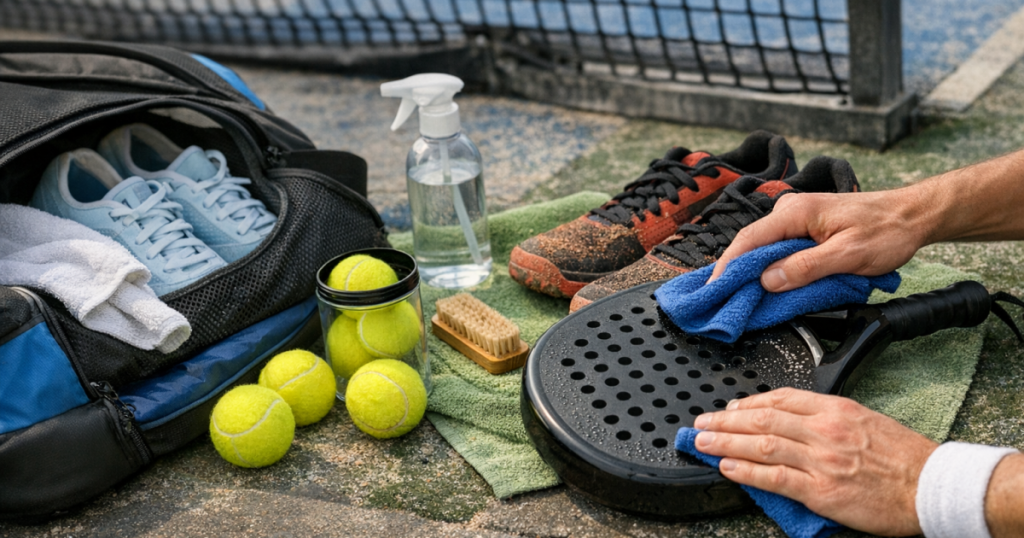
When you get home, empty the main compartment of your bag. Put sweaty clothing and towels straight into the wash basket, leave the bag open, and take out your shoes if they are damp. If the court was sandy or wet, give the inside of the bag a quick shake outside or wipe it with a cloth.
Good padel gear care is mostly about moisture, heat and impact. Those three things cause many of the problems beginners notice: slippery handles, smelly shoes, flattened-looking balls, scuffed frames and bags that never quite dry out.
Looking after your padel racket
Your racket is the item most players worry about, and rightly so. It takes repeated impact, gets scraped against glass, fence or turf, and is often carried around with shoes, balls and bottles in the same bag.
After a match, wipe the racket face and frame with a soft cloth. A dry microfibre cloth is usually enough for dust, ball fluff and light court dirt. If there is visible grime, use a cloth that is only slightly damp, then dry the racket before storing it. Avoid soaking the surface or using harsh household cleaners, as the racket is made from layered materials that should not be treated like a kitchen worktop.
Check the edges as you wipe. Small cosmetic marks are common in club padel, but deeper cracks, soft spots, rattling sounds or a frame that looks split are signs to take more seriously. If you are unsure whether a mark is normal wear or a real problem, the detailed guide to padel racket care, damage and replacement explains what to inspect before you keep playing with it.
Storage matters too. Do not leave a racket in a car boot for days, especially through warm spells or cold nights. Temperature swings and moisture are not friendly to racket materials. Use a racket cover if you have one, and place the racket in your bag so it is not pressed hard against shoes, water bottles or sharp zips.
Grips and overgrips need more attention than beginners expect
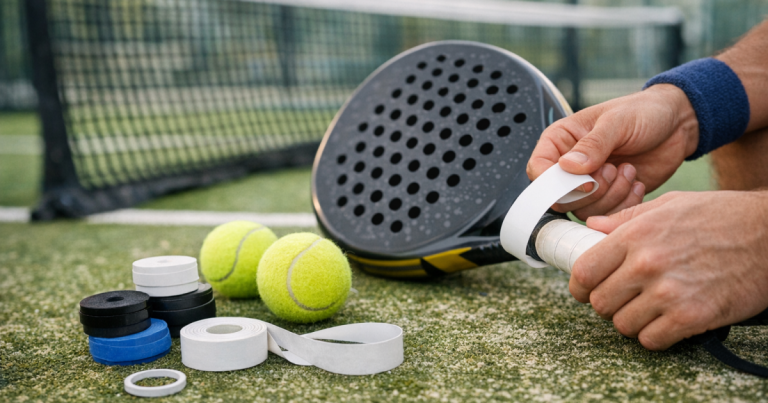
The handle is where sweat, sunscreen and dirt collect fastest. Even if the racket face looks fine, a tired grip can make the whole racket feel unstable. That leads beginners to squeeze harder, which can make shots feel tense and less controlled.
After play, wipe the handle lightly and let it air. If you use an overgrip, do not wrap it in a plastic bag or bury it under wet clothing. A damp overgrip needs air, not compression. Once it feels slick, shiny, thin, frayed or unpleasant even after drying, change it.
There is no perfect replacement schedule because players sweat differently and play in different conditions. Someone playing twice a week indoors may get a different lifespan from someone playing long outdoor sessions in warm weather. The useful test is simple: if your racket twists in your hand or you feel yourself gripping harder to keep control, the overgrip is probably past its best. For more detail on thickness, tackiness and wrapping choices, see the guide to padel racket grip and overgrips.
Keep padel balls useful for longer
Padel balls are not designed to last indefinitely once opened. They gradually lose pressure and feel less lively, which affects bounce, timing and rallies. Still, simple handling helps you get fair use from them.
Keep balls dry between matches. If they pick up moisture from a damp court or wet bag, take them out when you get home and let them dry at room temperature before storing. Do not put wet balls into a sealed compartment with your racket or clothing.
It also helps to separate newer match balls from older practice balls. Older balls can still be useful for warm-ups, basket drills or casual hitting, but mixing them with fresh balls can make a beginner session feel inconsistent. If one ball in a set bounces noticeably differently from the others, keep it for practice rather than important points.
Avoid storing balls in direct sun, near radiators or in a hot car. Heat will not improve them, and it can make your overall kit bag smell worse if damp items are trapped with the balls.
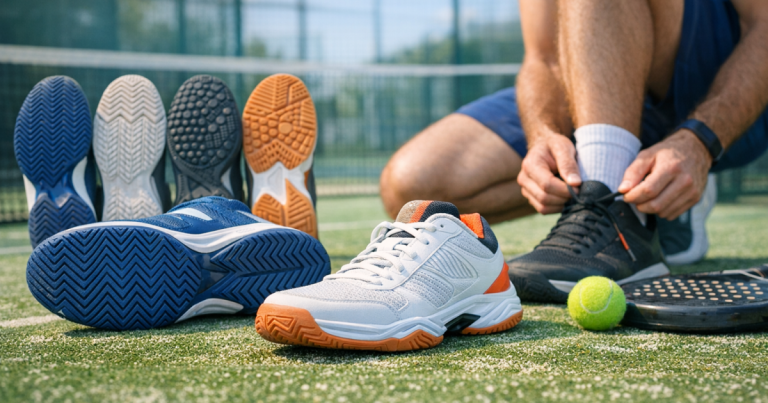
Shoes: dry them, brush them, check the sole
Padel shoes do a lot of quiet work. They help you move on artificial turf, cope with small direction changes, and stop loose grit from building up underfoot. They also take in sweat quickly, especially during indoor club sessions.
When you finish playing, loosen the laces and open the tongue so air can circulate. At home, remove insoles if they are very damp and let everything dry naturally. Avoid putting shoes on a radiator or using high heat, as that can affect materials and shape.
Once dry, use a soft brush or cloth to remove sand, fluff and grit from the outsole and upper. Pay attention to the grooves in the sole, because packed-in debris can reduce grip and make the shoe feel less secure next time. If the tread is heavily worn, the shoe feels unstable, or you are sliding more than usual on the same court surface, it may be time to think about replacement.
Do not machine wash padel shoes unless the manufacturer’s care instructions clearly allow it. Even then, hand cleaning is usually gentler. A damp cloth, mild soap where appropriate, and proper air drying will cover most normal club use.
Clothing and towels: do not let damp kit sit
Beginner players often focus on rackets and forget that clothing affects comfort too. A heavy, sweat-soaked top left in a zipped bag can make the whole bag smell and may transfer moisture to grips, towels and accessories.
After a match, separate wet clothing from dry items as soon as practical. A small laundry bag or reusable wet bag inside your padel bag can help, but do not treat it as long-term storage. Empty it when you get home.
Follow the care label on shirts, shorts, socks and towels. Sports fabrics generally benefit from prompt washing and proper drying. Avoid using too much detergent, because residue can make technical fabrics feel less breathable over time. If you play after work and cannot get home straight away, at least open the bag when possible rather than leaving everything sealed until the next morning.
Your bag should help, not trap the problem
A padel bag is not just a way to carry things to court. It can either protect your kit or trap dampness and grit around it. The difference is usually how you pack it.
Try to keep wet and dry items apart. Shoes are best in a separate compartment if your bag has one. Water bottles should be upright and properly closed. The racket should sit where it will not be bent, crushed or scraped by keys, bottles or hard accessories.
Once a week, empty the bag completely. Shake out sand and fluff, wipe the base, and check side pockets for old grips, snack wrappers or damp socks. Leave the bag open for a few hours so the lining can air. This is especially useful during colder months in the UK, when kit can stay damp for longer after evening sessions.
Where to store kit between matches
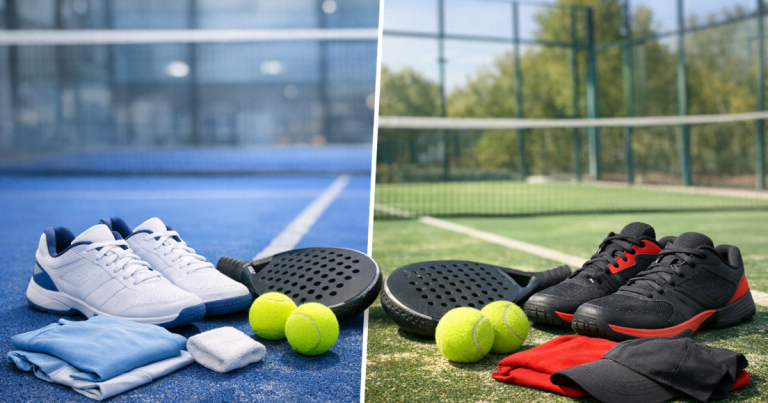
The best storage place is boring: cool, dry and out of direct sunlight. A hallway cupboard, spare room or ventilated utility space is usually better than a car boot, garage, shed or conservatory.
Avoid stacking heavy items on top of your racket bag. Rackets are strong during play, but they are not meant to sit under weight for days. Keep liquids away from the racket compartment, and make sure bottle lids are fully closed before travel.
If you rent kit at the club while deciding whether to buy your own, the same habits still matter. Return borrowed rackets clean, do not leave club balls wet in your bag, and treat loan equipment as carefully as your own. If you are still weighing up what is worth owning, the guide to renting vs buying padel gear can help you decide what makes sense for your first few matches.
What not to overdo
Caring for kit does not mean polishing every item or buying lots of accessories. In fact, overdoing it can create different problems. Avoid soaking rackets, scrubbing shoes aggressively, spraying strong cleaners into bags, or drying items with direct heat.
Do not chase perfection with balls either. Once they lose bounce, they are practice balls. No storage habit will make an old ball feel truly fresh again. Equally, an overgrip that has gone slick is not worth trying to rescue for weeks; replacing it is usually the cleaner and more comfortable answer.
The most useful mindset is prevention. Dry items early, keep grit away from delicate surfaces, and check wear before it becomes annoying on court.
A simple between-match checklist
- Racket wiped, checked and stored away from heat.
- Grip aired and replaced if it feels slippery or worn.
- Balls dry, sorted into match and practice sets.
- Shoes opened, dried naturally and brushed once dry.
- Clothing and towels removed from the bag promptly.
- Bag emptied, aired and cleared of sand or damp items.
- Water bottles closed, cleaned and kept away from the racket compartment.
Things readers ask
Should I leave my racket in its cover between matches?
Yes, if the racket is dry first. A cover helps protect it from knocks and scratches, but do not seal away a damp racket or sweaty grip immediately after play.
How often should beginners change an overgrip?
Change it when it affects comfort or control. If it feels slippery, shiny, rough, frayed or permanently damp, it is time for a fresh one rather than waiting for a fixed number of matches.
Can I keep padel shoes in my main bag compartment?
You can, but it is better to separate them if possible. Shoes carry sand, sweat and grit, so a shoe compartment or separate pouch helps keep clothing, grips and your racket cleaner.
Is it bad to store padel kit in the car?
For short journeys, no. For regular storage, yes. Cars can get hot, cold and damp, and those conditions are not ideal for rackets, balls, shoes or clothing.
Do I need special cleaning products?
Usually not. A soft cloth, gentle brushing, fresh air and sensible storage cover most beginner needs. Use manufacturer care instructions for anything more specific.
What to remember
Between-match care is about small, repeatable habits rather than a perfect cleaning routine. Empty the bag, dry damp items, protect the racket, refresh the grip when needed, and keep shoes and balls away from unnecessary heat and moisture.
Do that consistently and your kit will feel better on court, smell fresher off court, and be easier to trust as you move from first matches into regular club play.