A padel bag can be the difference between arriving organised and digging through a damp gym holdall for your racket grip. The right padel bag size depends on how often you play, whether you carry shoes, and how you travel to the club.
For most beginners, a compact racket bag or medium padel bag is enough. You only need a large tour-style bag if you regularly carry several rackets, separate shoes, a change of clothes, towel, water bottle and accessories.
At a glance
- Choose a backpack if you play casually and carry one racket with light extras.
- Choose a compact racket bag if you want better protection for one or two rackets without much bulk.
- Choose a medium padel bag if you carry shoes, balls, towel and spare clothing.
- Choose a large bag if you play multiple times a week, compete, coach, or travel to matches.
- Before buying, check actual dimensions, racket compartment length, strap comfort and whether your shoes fit in a separate area.
The main padel bag types
Padel backpack
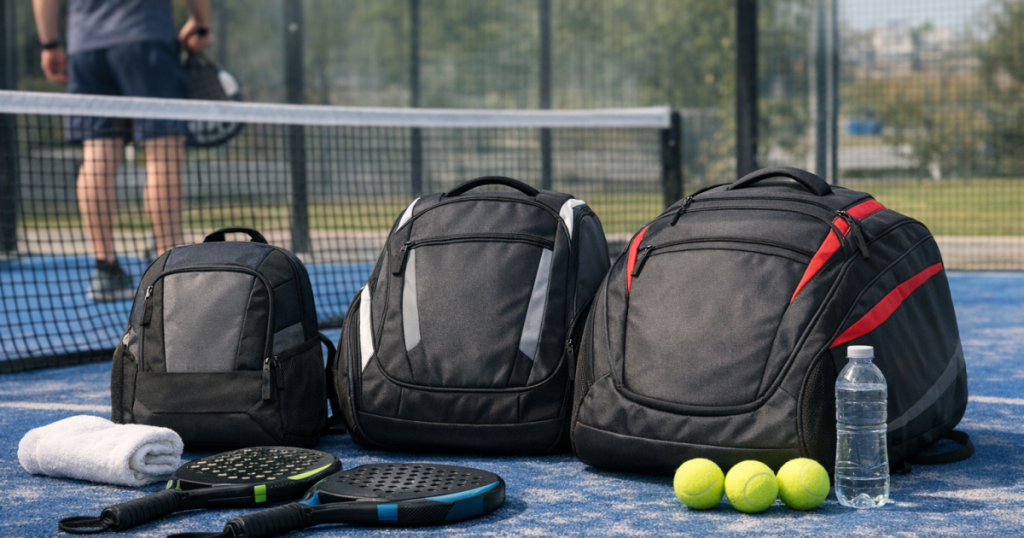
A padel backpack suits players who want something easy to carry on public transport, a bike, or a short walk from the car park. It is usually best for one racket, a water bottle, balls, keys, phone and perhaps a thin layer.
The trade-off is space. Some backpacks leave the racket handle exposed, while others have a dedicated racket sleeve. That is fine for casual sessions, but less ideal if your racket gets knocked around in a boot or locker. If your current setup is one racket and a small tube of balls, a backpack can be the neatest option.
Compact racket bag
A compact racket bag is a step up from a backpack. It is shaped more like padel kit, usually with a longer main compartment and better racket coverage. It works well for beginners who want to protect their first racket properly but do not want to carry a bulky tour bag.
This is often the sweet spot if you play once a week after work and take the same basic kit each time: one racket, balls, overgrip, towel, water bottle and a light top. If you are still deciding what to play with, it is worth reading how to choose a padel racket for your first season, because racket shape and thickness can affect how snugly it fits in a smaller bag.
Medium padel bag
A medium bag is the safest choice for many early-stage players who are starting to play regularly. It gives you room for one or two rackets plus the extra items that quickly appear once padel becomes part of your weekly routine: clean socks, a spare shirt, a small towel, grip tape, snacks and a water bottle.
The biggest advantage is separation. If the bag has separate compartments, you can keep damp clothing away from your racket and avoid putting dirty shoes next to clean kit. Do not assume every medium bag has the same layout, though. Check retailer photos carefully and look for clear information about shoe storage, internal pockets and racket protection.
Large or tour-style bag
Large padel bags are useful, but they are not automatically better for beginners. They make sense if you carry two or more rackets, play matches away from your usual club, coach, or like keeping all your padel kit packed and ready.
Examples in this bigger category include the HEAD Tour Padel Bag L and Wilson Bela Super Tour Padel Bag. Product ranges and features can change, so treat names like these as examples of the type of bag rather than a promise about current compartments, capacity or stock. Always check the latest product details before choosing.
Match the bag to your actual playing routine
The easiest way to choose is to pack your usual padel kit on the floor and be honest about what you carry. Beginners often overestimate the need for a huge bag, then find it annoying in changing rooms, cafés and club corridors. Others start with a general gym bag and quickly realise their racket is not well protected.
- If you play once a month: a backpack or compact racket bag is usually enough.
- If you play weekly: a compact or medium bag gives you more breathing room without becoming awkward.
- If you play straight after work: choose enough space for work clothes, padel clothing and basic wash kit.
- If you drive to the club: a larger bag is less annoying, but check it fits comfortably in your boot with other items.
- If you use public transport: prioritise backpack straps, weight and a slimmer shape over maximum capacity.
Think about the full journey, not just the court. A bag that feels fine in a shop can feel clumsy when you are squeezing into a busy train or walking through a wet car park in winter.
What needs to fit inside?
Rackets
Most beginners carry one racket. Some carry a second as a spare, especially if they play leagues or have moved beyond casual sessions. If you only own one racket, do not buy a large bag just because it can hold several. Extra racket space is useful only if you will use it.
Check whether the racket compartment is padded and whether the zip closes comfortably around the racket. A tight fit can put pressure on the frame or make the bag annoying to use. A loose general compartment is not the end of the world, but it may allow your racket to slide around with harder items such as a water bottle.
Shoes
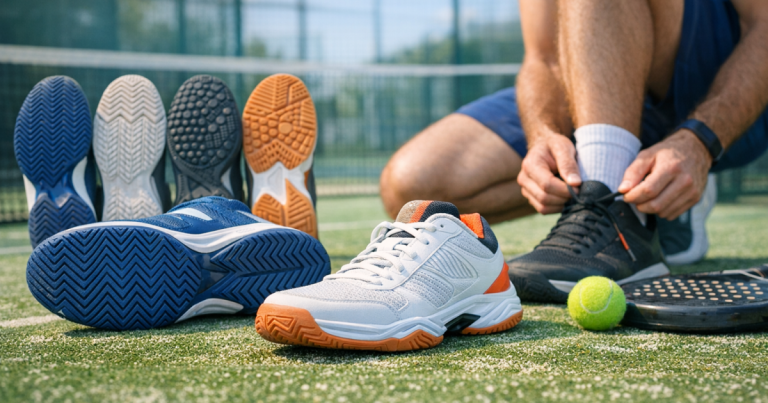
Separate shoe storage is one of the most useful upgrades once you play regularly. Padel shoes pick up grit from outdoor courts and moisture from indoor sessions, and they can make the rest of your kit smell stale if everything sits together after a match.
If your shoes have a chunky sole or you wear a larger size, do not rely on photos alone. Look for a clearly described shoe compartment and check returns information if you are ordering online. If you are unsure why dedicated court footwear matters, the Asics Gel-Padel Pro 3 shoes review explains the comfort and court-use angle for newer players.
Balls, grips and small items
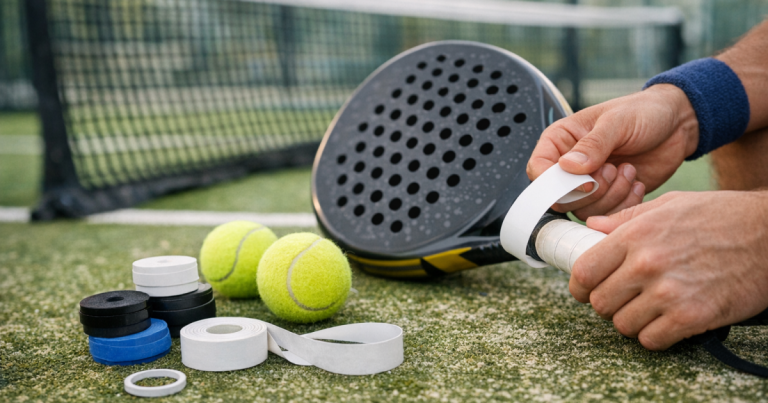
Small pockets matter more than they seem. A tube of balls, spare overgrip, keys, wallet, phone, lip balm and wristbands can turn a clean main compartment into a messy search every time you arrive. A bag with one or two zipped accessory pockets is much easier to live with.
Padel balls also need replacing more often than many beginners expect, so it helps to have a regular place for a fresh tube and any used balls. For a simple explanation of bounce, types and replacement timing, see the padel balls guide.
Useful checks before you choose
- Dimensions: Check the stated length, width and depth against where you will store or carry the bag.
- Racket coverage: Make sure the racket head is protected and the handle position suits how you travel.
- Compartments: Look for a layout that separates rackets, shoes, clothing and valuables.
- Straps: Padded backpack straps are useful if you walk or use public transport.
- Material: Look for a durable outer fabric and zips that appear suitable for repeated club use.
- Ventilation: A vented shoe or clothing area can help after sweaty sessions, but check the exact design.
- Weight when full: A bigger empty bag can feel fine until you add shoes, drinks and clothing.
- Club storage: Some clubs have tight benches or small lockers, so a slimmer bag can be easier to manage.
Some retailers list capacity in litres, but many padel bags are easier to judge by compartments and dimensions. If a capacity figure is shown, use it as a rough guide rather than the whole decision. Shape matters: a narrow bag with good sections can be more useful than a larger holdall with one open space.
Common beginner mistakes
The first mistake is buying for a future version of yourself that does not exist yet. If you are playing occasional social games, you probably do not need a bag built for tournament weekends. Start with what makes current sessions easier.
The second mistake is ignoring shoes. Once you carry court shoes separately from your day shoes, the bag suddenly needs more structure. A simple backpack may still work, but only if you are happy using a shoe bag or keeping footwear in a separate carrier.
The third mistake is forgetting wet-weather realities. In GB, you may move between damp car parks, indoor centres, outdoor courts and changing rooms. A bag that can handle a towel, spare layer and damp clothing is more practical than one that only looks tidy when empty.
The fourth mistake is chasing maximum storage without thinking about comfort. If the straps dig in or the bag swings awkwardly, you will be tempted to leave half your kit behind.
Things readers ask
What padel bag size is best for a beginner?
For most beginners, a compact racket bag or medium bag is best. Choose compact if you carry one racket and light extras; choose medium if you also take shoes, towel and spare clothing.
Can I use a normal gym bag for padel?
Yes, for the first few sessions. The drawback is racket protection and organisation. Once you play regularly, a shaped padel bag is usually easier because it keeps rackets, shoes and small items separated.
Do I need a separate shoe compartment?
You do not need one for every casual game, but it becomes very useful if you play weekly. It keeps grit, moisture and odour away from your racket, clothing and clean accessories.
How many rackets should my bag hold?
One racket space is enough for many new players. Two spaces are useful if you carry a spare or share kit with a partner. More than that is usually for frequent players, match players or coaches.
Is a backpack better than a shoulder bag?
A backpack is better for walking, cycling or public transport. A shoulder-style padel bag is better if you want more racket protection, more compartments and easier access to kit at the club.
Why it matters
The right bag does not make you a better player on its own, but it removes small frustrations that make sessions feel rushed or disorganised. For a first season, aim for enough space to protect your racket, separate your shoes, carry the basics and move comfortably between home, work and the club.
If you are still building your kit, do not start with the biggest bag by default. Start with your real routine, then choose the smallest bag that handles it comfortably. That usually leads to a neater, lighter and more useful setup for beginner padel.