Choosing the right padel bag size is mostly about what you carry to club sessions, not how serious you are. A bag that is too small becomes a weekly puzzle; one that is too big turns every casual hit into unnecessary luggage. Start with your normal session, then size up only for the items you regularly need.
The simple answer
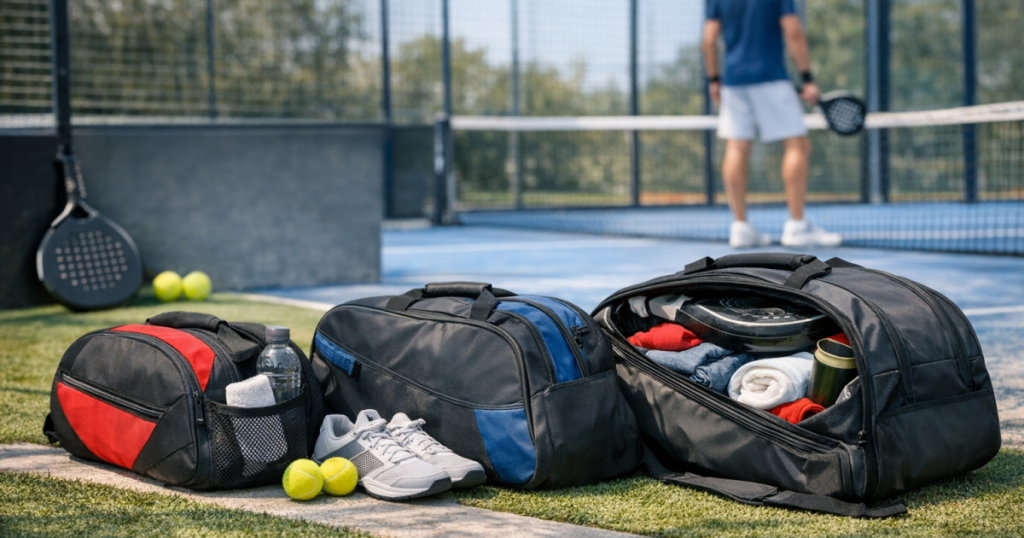
For most beginner and early club players, a medium padel bag is the safest everyday choice. It usually gives enough room for one or two rackets, shoes, balls, a water bottle, a towel, spare clothing and small accessories without feeling like a tournament holdall.
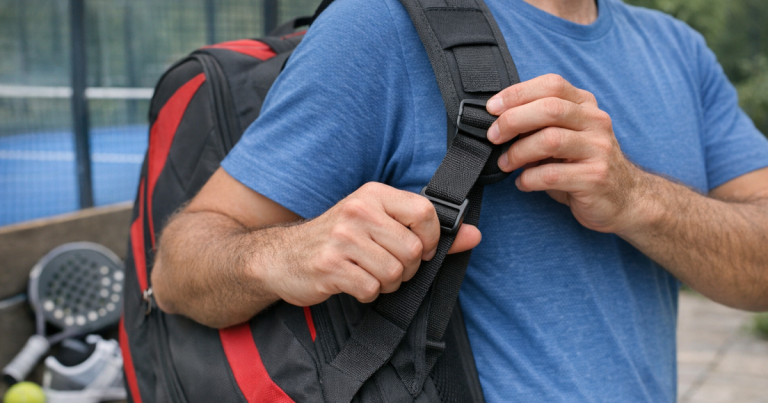
- Choose a compact bag or padel backpack if you arrive already changed, carry one racket and want something easy for public transport.
- Choose a medium bag if you play club nights, take shoes, bring a spare top and want your kit to stay organised.
- Choose a larger bag if you carry multiple rackets, shower kit, extra clothing, food, coaching gear or items for more than one session.
The goal is not to buy the biggest bag you can tolerate. It is to choose the smallest bag that comfortably fits your real routine, with a little spare space for wet kit, balls and the odd extra layer.
Step 1: lay out your normal club-night kit
Before looking at bag shapes or litre ratings, put your usual kit on the floor. This is the quickest way to avoid buying for an imaginary version of yourself who always travels light or always carries everything.
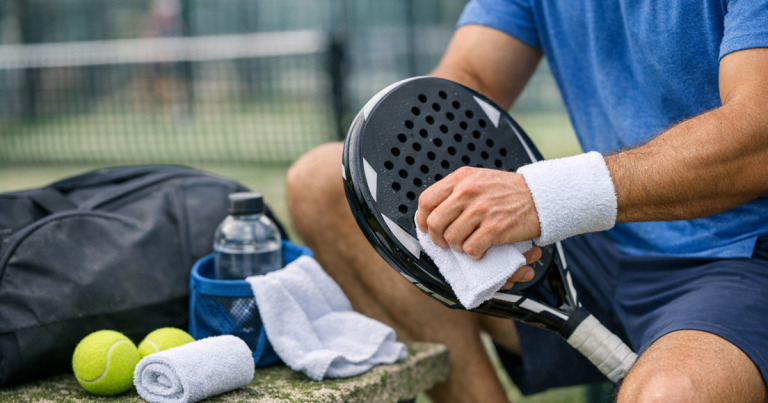
A realistic beginner club-night pile might include one racket, a tube of balls, padel shoes, a water bottle, a small towel, an overgrip, keys, phone, wallet, a light layer and maybe a clean top for afterwards. If you are not sure what belongs in that pile, use this guide on how to pack a padel bag for club night as a simple reference.
Once everything is in front of you, separate it into three groups: must carry every time, carry sometimes, and nice to have. Your bag should easily handle the first group, cope with the second group when needed, and not be chosen around the third group unless you genuinely use those items often.
Step 2: decide whether your shoes need their own space
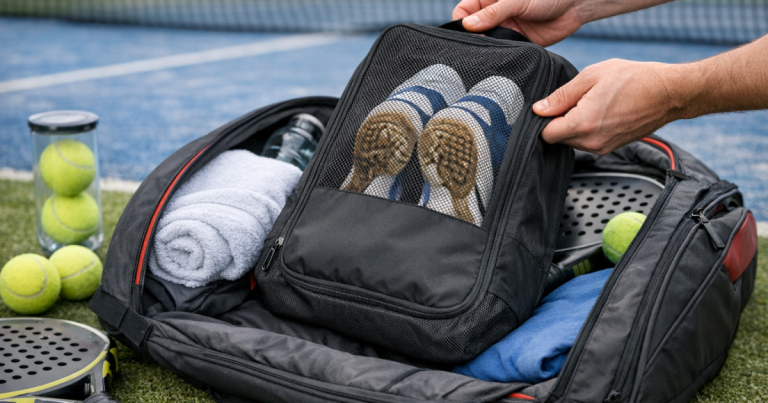
Shoes are often the item that changes the bag decision. A compact backpack can look roomy until you add padel shoes, then suddenly the towel, spare clothing and accessories have nowhere sensible to go.
If you drive to an outdoor or indoor venue already wearing your court shoes, a smaller bag can work well. If you commute, walk in normal trainers, or play after work, you will probably want a bag with a separate shoe area or at least enough room to keep shoes away from clothing and grips.
Do not judge this from the outside of the bag alone. Check whether the shoe pocket eats into the main compartment, whether your shoe size fits without forcing the zip, and whether you can still get a water bottle and towel in once the shoes are packed. If new shoes are part of your setup, it is also worth reading how to break in padel shoes without getting blisters before wearing them for a long club night.
Step 3: match the bag style to your travel routine
The right capacity depends on how you get to padel as much as what you take. A player who drives to one evening match has very different needs from someone going straight from work by train.
Compact bags and backpacks
A compact padel bag or backpack makes sense if you carry one racket, a tube of balls and a few small items. It is easier in changing rooms, on public transport and when you are only popping in for a quick game. The trade-off is that shoes, towels and extra clothing can make it tight very quickly.
Medium padel bags
Medium bags are the most forgiving choice for regular club play. They normally give you better separation between racket, clothing and accessories, while still being manageable in a car boot, locker area or busy reception space. If you are building a regular weekly habit, this size range usually leaves enough room to grow without becoming awkward.
Large padel bags
A large bag is useful if you carry two or more rackets, play more than one session in a day, bring shower kit, or regularly pack extra layers for colder evenings. It can also help if you coach, share kit with a partner, or travel to matches. For many beginners, though, a large bag is more space than they need and can encourage overpacking.
Step 4: check racket protection, not just capacity
Your racket should not be squeezed diagonally across a packed main compartment. It should slide in without bending the bag shape or pressing hard against shoes, bottles or keys. A dedicated racket section is useful because it keeps the frame and face away from heavier items.
If you carry one racket, make sure it fits cleanly and is easy to remove when the bag is full. If you expect to add a second racket later, check whether the racket section can take both without crushing the handles together. Beginners often start with one racket, then add a backup or different-feeling racket as they play more regularly, so a little extra racket space can be sensible.
Step 5: think about wet kit and British weather
For UK club players, the bag also has to cope with damp evenings, wet towels, muddy car parks and layers coming on and off between games. Even if you mainly play indoors, your journey to and from the venue can still leave kit damp.
A slightly roomier bag can help because you are not forcing wet clothing against grips, spare tops and your phone. Look for practical separation: one area for racket and dry kit, one area for shoes or used clothing, and a small pocket for valuables. You do not need a complicated layout, but you do need a layout you can use quickly when a court is waiting.
Step 6: leave room for small accessories
The smallest items are often the ones that make a bag feel messy. Overgrips, blister plasters, hair ties, spare contact lenses, a wristband, a small snack and keys all disappear into large compartments if there is no pocket system.
For beginners, the most useful accessory storage is simple: one secure pocket for valuables, one quick-access pocket for small padel items, and enough main space that you are not digging under shoes to find a grip. If you carry spare grips, this guide on changing a padel overgrip without wrinkles is a handy next step.
Practical checks before you choose
A simple way to confirm your padel bag size is to test the bag against your real kit, not the product photo. If you are shopping online, use these checks against the listed dimensions, pocket layout and return policy before deciding.
- Can your racket fit without being forced or bent against other items?
- Can your shoes go in without taking over the whole main compartment?
- Is there still space for a towel, water bottle and spare layer?
- Can you keep keys, phone and wallet away from damp kit?
- Will the bag still be comfortable when full, not just when empty?
- Does the shape suit your journey, whether that is walking, driving, cycling or taking the train?
- Can you open the main section easily at the side of the court without unpacking everything?
If you are between two sizes, choose based on your most common week rather than the occasional big session. A medium bag used three times a week is a better decision than a large bag that only makes sense once a month.
Common questions
Is a padel backpack enough for beginners?
Yes, if you carry one racket, a tube of balls, water and a few personal items. It becomes less convenient if you also need shoes, spare clothing and a towel for club nights.
Do I need space for two rackets?
Not at the very start, but it can be useful if you plan to play regularly. A second racket space gives you room for a backup later without replacing the bag.
Should I choose a bag with a shoe compartment?
Choose one if you travel in everyday shoes, play after work, or often have damp or dirty court shoes. If you always arrive wearing your padel shoes, it is less important.
Is a bigger bag better for club play?
Only if you genuinely fill it. Bigger bags hold more, but they are also bulkier in changing rooms, cars, lockers and busy club areas.
What if I play straight after work?
Lean towards a medium or larger bag with space for shoes, work clothes, a towel and small toiletries. Organisation matters more when you are carrying both daily items and padel kit.
The big picture
The right bag should make getting to padel easier, not turn packing into another job. For most early-stage players, that means enough space for a racket, shoes, balls, water, towel, spare layer and small accessories, with simple pockets that keep clean, damp and valuable items apart.
If your sessions are short and you travel light, a compact option is fine. If you are settling into regular club nights, a medium bag is usually the most practical balance. If padel is becoming part of your weekly routine alongside work, travel and multiple sessions, moving up a size can make sense.