A damp, gritty padel bag can make clean kit smell stale before you even reach the court. The safest way to clean a padel bag is to empty it fully, remove loose dirt, spot-clean the fabric with mild soapy water, rinse lightly, and let it air-dry completely away from direct heat. The important part is not scrubbing harder; it is using less water, protecting the racket compartment and giving every pocket time to dry.
Padel bags pick up sweat, ball fluff, court dust, leaking water bottles and damp towels very quickly, especially after winter sessions or matches where you head straight from court to car boot. A simple routine keeps the bag usable for longer and helps stop odours building up between club nights.
Quick cleaning plan
- Empty every pocket, including shoe tunnels, side sleeves and small valuables compartments.
- Shake out grit, ball fluff and dried clay or sand before adding any moisture.
- Use a soft cloth, lukewarm water and a small amount of mild detergent for marks and sweaty areas.
- Wipe rather than soak, particularly around racket padding, seams and zip tape.
- Air-dry the bag fully with pockets open before putting rackets, shoes or clothing back inside.
If you often arrive with too much kit, it is worth checking your usual setup against how to pack a padel bag for your first club session. A bag that is not overloaded is easier to clean, easier to dry and less likely to trap damp clothing against your racket.
Step 1: Empty the bag properly
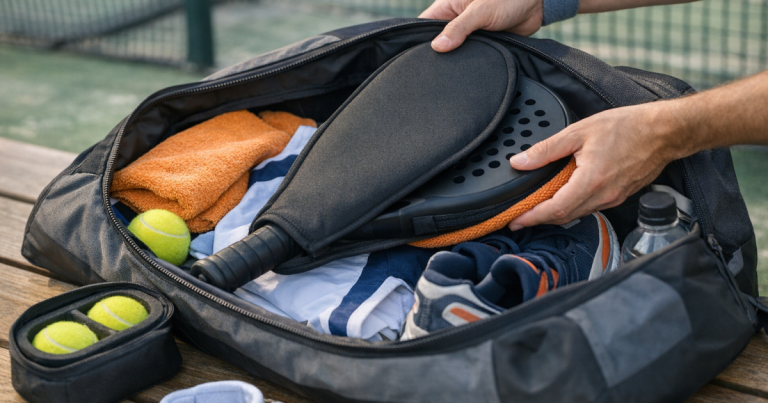
Start by taking everything out and placing it on a clean floor or table. Do not just remove the obvious items. Beginners often forget small pockets with overgrips, wristbands, used tissues, loose change, snacks, blister plasters or old ball tubes. These are exactly the places where smells and sticky marks tend to start.
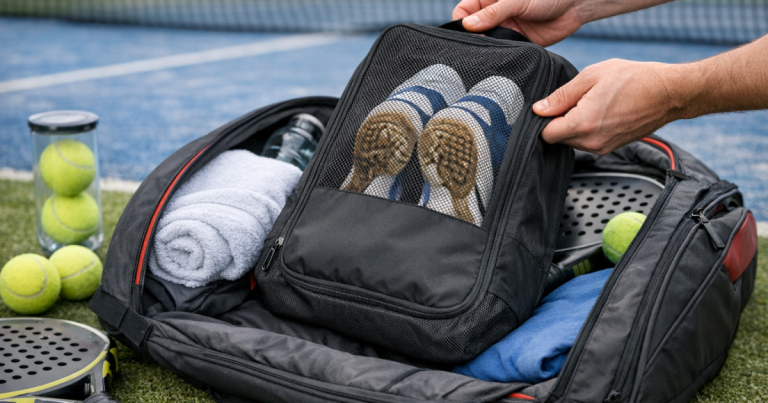
Open the racket compartment, main kit section, shoe pocket and accessory pockets. If the bag has removable dividers, take them out and set them aside. Remove towels and clothing immediately, even if they only feel slightly damp. Leaving them inside overnight is one of the quickest ways to make a padel bag smell stale.
Check the manufacturer care label if your bag has one. Some materials tolerate gentle wiping well, while others can mark if they are soaked or rubbed aggressively. Unless the label clearly says otherwise, avoid machine washing. The spinning, heat and water load can distort padding, damage coatings, weaken seams or make zip pulls catch.
Step 2: Get rid of dry dirt first
Before using water, turn the bag upside down over a bin or outside area and shake it gently. Court sand, grit and ball fluff behave like an abrasive paste if you wet them straight away, so dry removal matters. Use a soft brush, a clean dry cloth or the upholstery nozzle on a vacuum cleaner to lift debris from seams and corners.
Pay special attention to the base of the bag and the shoe compartment. These areas collect the most dirt because they sit on court-side benches, club floors, car boots and changing room surfaces. If dried mud or court debris is stuck to the outside, let it dry completely first, then brush it away rather than smearing it into the fabric.
Step 3: Mix a gentle cleaning solution
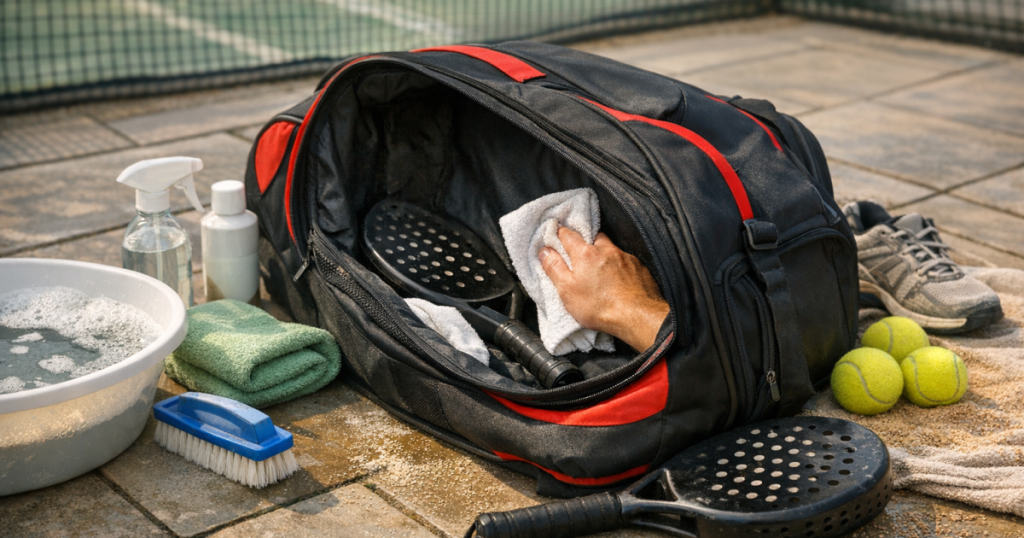
Use lukewarm water and a tiny amount of mild liquid detergent. You only need enough soap to lift sweat and surface grime; too much detergent leaves residue, attracts dirt and can make the lining feel tacky. A bowl of water with a few drops of detergent is usually enough for a normal club bag.
Avoid bleach, strong stain removers, fabric softener and harsh household sprays. These can affect colour, weaken coatings or leave a strong scent inside enclosed compartments. A clean microfibre cloth is better than a scouring sponge because it is less likely to scratch coated panels or pull at stitching.
If your bag has leather-look panels, printed logos or glossy sections, test the cloth on a small hidden area first. Wait a few minutes and check that the colour has not lifted and the surface has not become sticky. This is a simple check, but it can save you from turning a small mark into a permanent patch.
Step 4: Wipe the outside without soaking it
Dip the cloth into the soapy water, wring it out well, then wipe the outside panels in small sections. The cloth should be damp, not dripping. Work from cleaner areas to dirtier areas so you are not spreading grime across the bag.
For scuffs on the base, use repeated light passes rather than heavy scrubbing. Many padel bags have textured fabric, coated polyester or reinforced panels that can become fuzzy or shiny if rubbed too hard. If a mark does not lift after gentle cleaning, it is usually better to accept a faint court scuff than damage the surface trying to make it perfect.
Clean around the zip tape carefully. Dirt in the zip area can make the slider feel rough, but too much water can also carry grit deeper into the teeth. Wipe along the zip line, then run the zip open and closed a few times once the area is nearly dry.
Step 5: Clean the inside compartments
The inside of the bag needs a lighter touch than the outside. Wipe the lining with a barely damp cloth, focusing on areas that touch sweaty clothing, shoes or damp towels. Do not pour water inside the bag and do not soak padded racket sections.
Racket compartments are designed to hold shape and protect the frame from knocks. If the padding becomes waterlogged, it can take a long time to dry and may hold odour. Wipe the lining, then follow with a second cloth dampened with plain water to remove soap residue. Finish by patting the area with a dry towel.
If you use a compact carry option rather than a full-size bag, the same rule applies: keep moisture away from the racket sleeve and avoid compressing the racket while the fabric is drying. The guide on using a padel backpack without damaging your racket is a useful follow-up if you switch between a backpack and club bag.
Step 6: Deal with smells, not just stains
Most padel bag odours come from trapped moisture rather than visible dirt. Once the bag is wiped clean, leave every compartment open in a ventilated room. If the smell is mild, airflow is often enough. Do not hide odour with heavy fragrance sprays, because they can mix with sweat smells and make the bag less pleasant to use.
For stubborn smells, place a small open container of bicarbonate of soda near the bag, not loose inside it where it can spill into seams and pockets. You can also put clean, dry trainer deodorising sachets inside the shoe compartment between sessions, provided they do not leak powder or liquid. Remove them before packing for court.
Separate your dirtiest items after each session. Shoes, sweaty tops and damp towels should not sit against balls, grips or your racket handle. A simple drawstring laundry bag or spare carrier bag for damp kit can make a big difference, as long as you empty it when you get home.
Step 7: Dry it the right way
Drying is where many bags get ruined. Do not put a padel bag on a radiator, in a tumble dryer or directly in front of a heater. Strong heat can warp panels, shrink parts of the lining, affect glued sections and make coated materials crack over time.
Instead, open all compartments and stand the bag somewhere airy at room temperature. If possible, place it so air can reach the base as well as the top. A dry towel inside the main compartment can help absorb leftover moisture for the first hour, but remove it afterwards so it does not become damp and slow the process down.
In the UK, bags often dry slowly during wet months, so allow more time than you think. If the bag still feels cool or clammy inside, it is not ready. Putting your racket and spare clothing back too soon can trap moisture and undo most of the cleaning work.
Step 8: Check before repacking
Once the bag is dry, check the zips, seams, base and pockets before you reload it. Look for grit left in corners, soap residue on the lining and any areas that still smell damp. If a zip feels rough, wipe the teeth with a dry cloth and check for trapped fibres rather than forcing it.
Repack with clean, dry items only. If you store balls in the bag, keep them away from wet clothing. If you carry a water bottle, make sure the lid is closed firmly and store it upright where possible. Small habits like these reduce how often you need a deep clean.
How often should you clean it?
For most beginner club players, a quick empty and air-out after every session is more important than a full clean. Wipe obvious marks as they appear, then do a more thorough clean every few weeks if you play regularly. If you play several times a week, carry shoes in the same compartment or often leave kit in the car, you may need to freshen it more often.
The type of bag matters too. A larger padel bag gives damp kit more space, while a compact backpack can become musty faster if everything is packed tightly. If you are still deciding which setup fits your routine, padel bag or backpack for club sessions explains the practical differences for regular play.
Mistakes that can damage a padel bag
- Machine washing without checking the label: this can bend padding, stress seams and affect coated materials.
- Using too much detergent: leftover soap can attract dirt and leave the inside feeling sticky.
- Soaking racket compartments: padded sections can hold water and dry slowly.
- Drying on direct heat: radiators and heaters can distort fabric, panels and glued areas.
- Scrubbing printed logos: repeated friction can fade or lift branding.
- Repacking too soon: trapped moisture causes odour to return quickly.
Main points
To clean a padel bag well, keep the process gentle: empty it, remove dry grit, wipe with mild soapy water, rinse lightly with a damp cloth and air-dry every pocket fully. The aim is to remove sweat, dirt and smell without soaking the padding or stressing the materials.
Most bag problems are caused by damp kit being left inside rather than one missed clean. Build a simple post-session habit: take out clothing and towels, open the pockets at home and let the bag breathe. That routine will do more for long-term freshness than any strong cleaning product.
Common questions
Can I put a padel bag in the washing machine?
Usually, no. Unless the care label clearly says it is machine washable, hand cleaning is safer. Washing machines can damage padding, zips, seams and structured panels.
How do I remove a sweaty smell from the shoe pocket?
Empty it, brush out dry dirt, wipe with mild soapy water, then let it dry fully open. For lingering odour, use airflow and dry deodorising sachets rather than spraying strong fragrances inside.
Is it safe to use disinfectant wipes?
Use caution. Some wipes contain alcohol or strong cleaners that can affect colour, coatings or printed details. Test a hidden area first, or use a mild detergent solution instead.
What should I do if my bag gets soaked in rain?
Empty it immediately, pat away surface water with a towel and leave all pockets open in a warm, ventilated room. Do not use direct heat, and wait until the inside is completely dry before repacking.
Should I clean the racket compartment every time?
No. After most sessions, airing it is enough. Wipe it only when it is visibly dirty or smells damp, and use as little water as possible around padded sections.