Joining the wrong game can make padel feel harder than it really is. Understanding padel player levels helps you choose sessions where the rallies last, the pace feels manageable, and you leave wanting to play again rather than apologising all evening.
The tricky part is that level labels are not perfectly standard. One club’s “beginner plus” can feel like another club’s “improver”, and some social nights mix abilities on purpose. The aim is not to find a perfect badge for yourself. It is to recognise the kind of game you can enjoy now, the kind that will stretch you, and the kind that is probably too much for today.
In brief
- Complete beginners should look for starter sessions, coached socials, or clearly labelled beginner games.
- Early improvers usually suit games where players can serve consistently, sustain a rally, and understand basic positioning.
- Intermediate games often expect controlled lobs, better use of the glass, and sensible shot selection under pressure.
- Advanced games are faster, more tactical, and less forgiving of repeated positioning or consistency errors.
- If you are unsure, choose the lower level first and move up once other players or coaches say the pace looks comfortable.
Why level labels matter more in padel than beginners expect
Padel is social and doubles-based, so your level affects three other people every point. In a badly matched game, the strongest player may get bored, the newest player may feel targeted, and the pairings can become awkward. In a well-matched game, everyone gets more touches, rallies develop naturally, and mistakes feel like part of learning rather than a problem.
This is why clubs, coaches and booking groups use labels such as beginner, improver, intermediate and advanced. They are not meant to be status symbols. They are a practical way to create balanced games.
The most useful way to think about padel player levels is by game behaviour, not just time played. Someone who has played tennis for years may serve and volley confidently on day one, but still struggle with glass rebounds. Someone else may have played padel for six months but only in very casual games, so they may not yet be ready for a fast intermediate match.
The usual padel level bands, explained plainly
New player or complete beginner
You are in this group if you are still learning the basic rules, how the glass works, where to stand, and how to keep a simple rally going. You may be able to hit a few decent shots, but consistency comes and goes.
Good games to join at this stage include beginner coaching sessions, intro mornings, friendly starter socials, and games advertised as suitable for first-timers. If you have not played a club match before, it is worth reading a simple rules refresher such as the padel rules cheat sheet for your first club match so you are not trying to learn scoring, serving and positioning all at once.
Beginner plus
This is the level many new players reach after a few sessions. You can usually get your serve in, return easier serves, keep the ball in play for short rallies, and understand that padel is not just about hitting harder. You may still avoid the back glass, panic when the ball rebounds, or drift into your partner’s space.
Beginner plus games should still feel forgiving. Players will make unforced errors, but the ball comes back often enough for points to feel like padel rather than one-shot exchanges.
Improver
An improver can play a full match without needing the rules explained, can serve and return reliably, and is starting to think about court position. You may use the lob deliberately, defend from the back corners, and move forward when your pair has earned the net.
The big difference from beginner plus is intention. At improver level, players are not just trying to get the ball over. They are starting to use height, direction and patience to create easier next shots.
Intermediate
Intermediate games are usually faster and more tactical. Players expect rallies to continue after the first difficult ball. You should be comfortable with the glass, know when to play low and when to lob, and avoid giving away the net too easily.
You do not need spectacular smashes to be intermediate. In fact, many solid intermediate players win more points through positioning, patience and good decision-making than power. What matters is that you can contribute to the rhythm of the game and recover after pressure.
Advanced
Advanced players read the game quickly, move as a pair, defend awkward rebounds, and use attacking shots with purpose. The pace is higher, but so is the control. A player at this level can usually spot weak positioning, poor shot choice or a predictable return very quickly.
For most early-stage players, advanced games are not useful yet. You may touch the ball less, rush your decisions, and practise survival rather than learning. Watching an advanced game can be valuable, but joining one too soon rarely builds confidence.
How to judge your own level honestly
A simple self-check is more reliable than counting how many weeks you have played. Ask yourself how often you can do the following during a normal match, not just during warm-up:
- Serve in consistently without gifting easy returns.
- Return serve with enough control to start the point.
- Let the ball rebound off the glass when that is the better option.
- Hold a basic cross-court rally without rushing the winner.
- Use a lob to reset the point or move opponents away from the net.
- Move with your partner rather than standing in fixed positions.
- Recover from a mistake without changing your whole game.
If most of these are still new, beginner or beginner plus sessions are the right place. If several are becoming reliable, improver games should feel productive. If you can do them under pressure against different opponents, intermediate sessions may be realistic.
Why club labels can feel inconsistent
UK padel is growing quickly, and clubs often have players arriving from tennis, squash, badminton, football, gym classes and no racket-sport background at all. That mix makes level labels messy. A “beginner” who has played competitive tennis may strike the ball cleanly but misread the walls. A “social intermediate” may have good instincts but limited footwork. A fit new player may reach everything but choose the wrong shot.
Different clubs also use different session formats. Some socials are deliberately mixed to help newer players meet people. Others are level-filtered because the pace is too high for open entry. Before joining a new venue regularly, check how it organises sessions, whether the club uses ratings, and how welcoming it is to newer players. The guide on choosing your first padel club is a useful next step if you are still deciding where to play.
Signs a game is too easy, too hard, or about right
Too easy
A game may be too easy if you win points without needing to build them, rarely feel pressured, or avoid using the skills you are trying to develop. It can still be fun socially, but it may not move your padel forward much if every point follows the same pattern.
Too hard
A game is probably too hard if you are late to most balls, cannot return serve safely, avoid the glass because everything feels rushed, or notice that points regularly break down when the ball comes to you. One tough game is not a disaster, but repeated mismatches can make learning feel discouraging.
About right
The right level usually feels slightly uncomfortable in a good way. You make mistakes, but you also win points through your own choices. Rallies last long enough for you to practise positioning. Better players punish obvious errors, but not every ball feels like an emergency.
How to ask about level without feeling awkward
Most padel players would rather you ask than accidentally join a mismatched game. A clear, simple message works well: “I’m fairly new, can serve and rally, but still learning the glass. Would this session be suitable?” That gives the organiser something useful to work with.
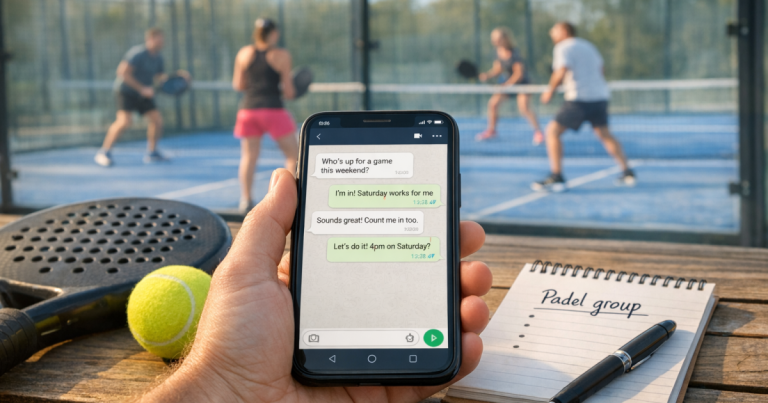
If you are joining a WhatsApp group, club night or open match, look at the wording. “All welcome” usually means the organiser expects mixed ability. “Improver upwards” suggests complete beginners may struggle. “Strong intermediate” or “competitive” normally means the group expects consistent match play.
After a game, ask one trusted player or coach where they think you fit. Avoid asking everyone, and do not treat one opinion as a permanent judgement. Your level can change quickly when you play regularly.
When coaching is the fastest way to level up
Games teach you timing, pressure and social rhythm, but they do not always fix habits. If you keep losing points in the same way, a coach can often spot the issue faster than another match can. Common examples include standing too close to the back glass, swinging too hard on volleys, rushing the lob, or turning the wrong way for rebounds.
Coaching also gives you a safer bridge between levels. Instead of jumping straight from beginner games into intermediate matches, you can practise the specific skills those matches require. If that sounds like where you are, read more on finding padel coaching that matches your level.
Simple route from first games to regular club play
For most beginners, the smoothest path is not complicated. Start with an intro session or beginner social. Add a few coached sessions to understand grip, positioning and the glass. Then play regular beginner plus or improver games until the pace feels comfortable. Once you are consistently contributing to rallies, try the next level up occasionally rather than switching completely overnight.
Keep one easier game in your week if you enjoy it. It lets you practise control, build confidence and meet newer players. Add one harder game when you want to test yourself. That mix is often better than chasing the highest label you can possibly enter.
Common questions
How do I know if I am ready for improver padel?
You are probably ready when you can serve, return and rally without needing rule reminders, and you are starting to use the lob and glass intentionally. You will still make mistakes, but points should not collapse every time the ball comes to you.
Should I join a game above my level to improve faster?
Occasionally, yes, if the group is welcoming and the gap is not huge. Doing it all the time can backfire because you get fewer constructive touches and may start rushing. A small stretch is useful; a big mismatch is usually frustrating.
What if a club rates me lower than I expected?
Treat it as useful information, not criticism. Club ratings are there to make games better balanced. Ask what skill would move you up, then work on that specific area for a few weeks.
Are mixed-level social games worth joining?
Yes, especially when you are building confidence and meeting players. Just do not rely on mixed socials alone if you want to progress technically. Combine them with levelled matches or coaching.
Can I be intermediate if I do not smash well?
Yes. Many intermediate players are effective without a big smash. Consistent defence, smart lobs, good positioning and reliable volleys matter more in most club games.
Why it matters
Finding the right padel games is not about proving your level. It is about getting enough challenge to improve and enough success to stay motivated. Choose sessions where rallies happen, feedback feels natural, and you can try the skills you are learning under real match pressure.
When in doubt, start slightly lower, be honest about your experience, and move up when your game shows it. The best level is the one where you can play freely, learn quickly and become the kind of partner people are happy to invite back.