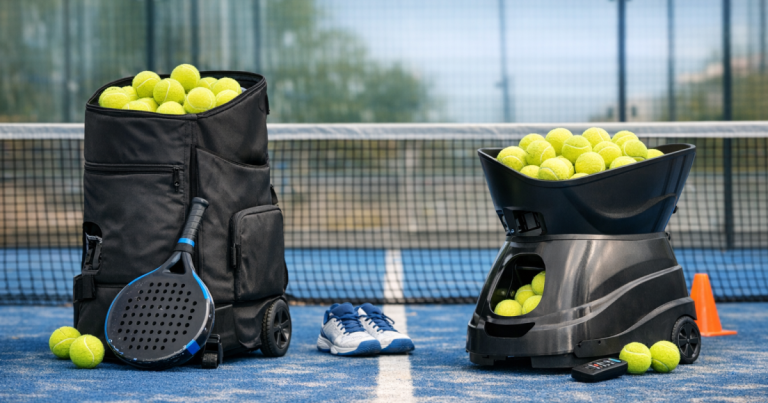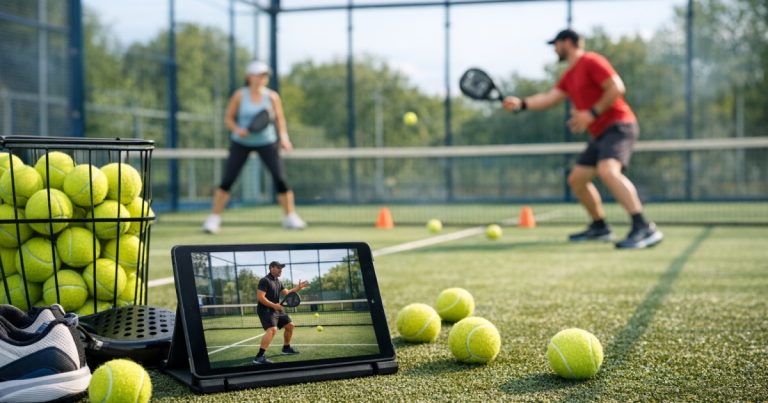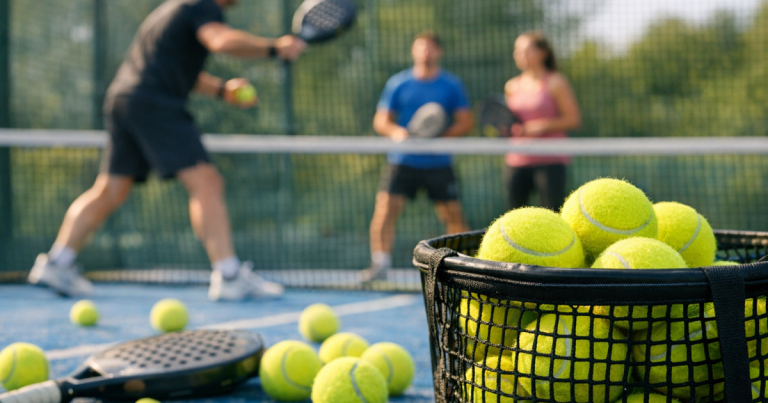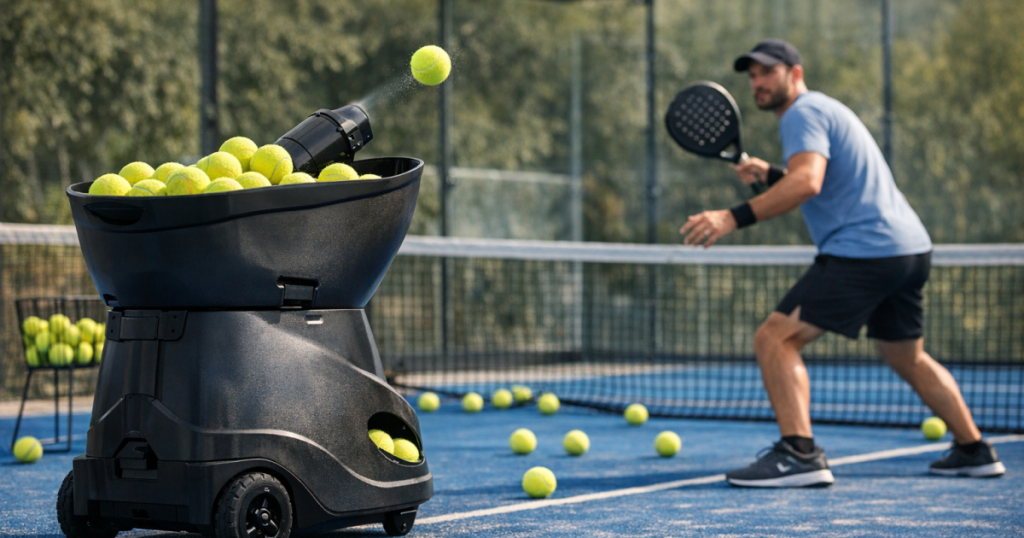
Solo padel practice usually means serves, wall work, or hoping a court mate can feed balls accurately for ten minutes. A Spinfire Pro 2 review matters because this is a serious purchase for players wondering whether a ball machine can turn quiet court time into useful repetition.
The big picture
The short verdict: the Spinfire Pro 2 can be a useful training tool for committed solo practice, but it is not a shortcut to becoming match-ready. It is best seen as a repeatable ball feeder for specific technical work rather than a padel coach in a box.
For a beginner or early club player, the biggest question is not whether the machine is clever. It is whether you have regular court access, enough balls, permission to use it at your venue, and a clear plan for the drills you want to practise. Without those, even an expensive machine can become awkward to transport and underused.
Product overview
The Spinfire Pro 2 is a portable ball machine widely associated with tennis training. For padel use, that distinction matters. Padel has different court dimensions, glass rebounds, shorter reaction windows and more tactical variety than straight baseline hitting, so the machine’s value depends on how realistically you set up each drill.
Used sensibly, it can help with repeatable volleys, overhead preparation, forehand and backhand contact points, footwork patterns and confidence under a steady feed. It is less convincing for decision-making, bandeja selection, wall judgement under pressure, and reading an opponent’s body shape.
Before buying, check the exact package from the retailer. Ball machines can vary by bundle, power set-up, included accessories and support terms. For UK players, it is also worth checking whether your local padel club allows ball machines on court, whether off-peak slots are easier to book, and how the machine must be positioned to avoid disturbing neighbouring courts.
Key specs
- Product type: portable ball machine designed for repeatable racket-sport training feeds.
- Primary use: commonly used for tennis drills; padel suitability should be checked with the retailer and your club before purchase.
- Ball compatibility: confirm whether it feeds the padel balls you intend to use consistently, as ball pressure, wear and fluff can affect feeding.
- Power set-up: verify the exact battery or mains package supplied by the seller, including charging arrangements and expected court-time practicality.
- Controls and feed options: check the current model details for speed, spin, height and oscillation settings rather than assuming all bundles are identical.
- Transport: assess whether you can comfortably move it from car to court, including steps, gates, reception areas and storage rules.
- Maintenance: expect routine cleaning and sensible storage; confirm service support and replacement-part availability before committing.
Pros and cons
Pros
- Excellent for high-repetition practice when you know exactly what you want to work on.
- Useful for grooving contact points on volleys, groundstrokes and controlled overheads.
- Can make a quiet court booking productive without needing a hitting partner.
- Helps beginners separate technique work from the pressure of a live rally.
- Potentially valuable for small group practice if everyone takes turns and keeps drills focused.
Cons
- It is a substantial purchase, so casual players may struggle to justify the cost.
- It cannot recreate a real opponent’s disguise, positioning or tactical choices.
- You need enough balls, court permission and time to set up properly.
- Transport and storage can be annoying if you do not drive or have easy club access.
- Some padel-specific shots require careful set-up and still may not feel fully match-like.
Performance in real use
Solo drill quality
The machine is at its best when the drill is narrow. For example, feeding ten controlled balls to your forehand volley position, resetting, then repeating the same pattern gives you clean feedback. You can watch whether your racket face is stable, whether you are stepping too close to the ball, and whether your recovery position is consistent.
Where beginners often go wrong is trying to make the session feel like a full match. A ball machine is better for focused repetition: one target, one movement pattern, one technical cue. If you try to practise every shot in the same booking, you will probably finish tired but not much clearer.
Padel realism
Padel is messy in a good way. The glass, fence, net player pressure and short court all change how a ball should be judged. The Spinfire Pro 2 can feed useful balls, but it will not tell you whether to block, lob, counter, let the ball pass to the back glass or move forwards. That is still learned through coaching, partner drills and matches.
For first club players, the most realistic uses are simple: volleys from a ready position, controlled groundstrokes after a bounce, smash preparation without overhitting, and footwork into recovery. If your technique breaks down because your hand slips, sort that first with a proper grip set-up; the padel grip guide is a good next read before blaming the machine or your racket.
Set-up and court manners
Practicality will decide whether you actually use it. A good solo session needs a basket of suitable balls, a safe machine position, a realistic target zone and enough time to collect balls between blocks. On a busy UK club evening, that may be less convenient than it sounds.
Be considerate with neighbouring courts. Do not place the machine where stray feeds can roll into another match, and avoid long trailing cables if your set-up uses mains power. If your venue has rules on training aids, follow them rather than assuming a booked court allows everything.
Value for improvement
For a player who books courts regularly and enjoys structured practice, the value can be strong. For someone playing once a fortnight, it is harder to recommend. The machine rewards consistency: five short, planned sessions are more useful than one exhausting session with no focus.
The best results come when you write down two or three drills before arriving. Try blocks such as cross-court forehand control, volley-to-target, overhead preparation without smashing, and recovery steps after each shot. Film a few minutes on your phone if club rules allow it, then check whether your body position matches what you thought you were doing.
Who it’s best for / who should skip it
The Spinfire Pro 2 makes most sense for committed improvers who can access courts regularly, prefer structured practice, and want repeatable feeds without relying on a partner. It can also suit small groups of friends who split court time into disciplined drill blocks, provided everyone understands how to use the machine safely and fairly.
It is less suitable for complete beginners who have not yet had a few coached sessions, players without reliable court access, or anyone mainly looking for match tactics. If you are still learning the basic rules, scoring and positioning, your money and time may go further with coaching and organised club play first.
Alternatives
The most sensible alternative is not always another machine. A coach-led basket session can give you targeted repetition plus immediate correction, which is valuable if you are still building the basic stroke shape. If you are deciding between a taster session and proper coaching, the guide to padel taster sessions vs full lessons explains where each option fits.
A second alternative is partner-fed practice. It is less precise than a machine, but it builds communication, movement and recovery in a more social way. For many beginners, one partner feeding from the opposite service box can be enough to practise volleys, lobs and simple patterns without spending heavily.
FAQ
Can the Spinfire Pro 2 be used on a padel court?
It may be usable for padel-style drills, but you should confirm ball compatibility with the retailer and check your club’s rules before taking it on court.
Is it worth buying for a beginner?
Only if you already practise regularly and know what you want to improve. Most brand-new players should prioritise lessons, social games and basic technique first.
How many balls do I need for a useful session?
You need enough balls to complete short drill blocks without constant collection. The right number depends on your drill length, court rules and how quickly you reset.
Will it improve my match play?
It can improve repeatable technique, timing and confidence. Match play still needs live opponents, tactical choices, communication and experience under pressure.
Verdict + score
The Spinfire Pro 2 is a strong solo-training option for organised padel players who can use it often, plan drills properly and accept that it will not replace coaching or match experience. For casual beginners, it is probably more machine than you need. For regular improvers with court access and a clear practice routine, it can be a genuinely useful tool. Score: 8.1/10.
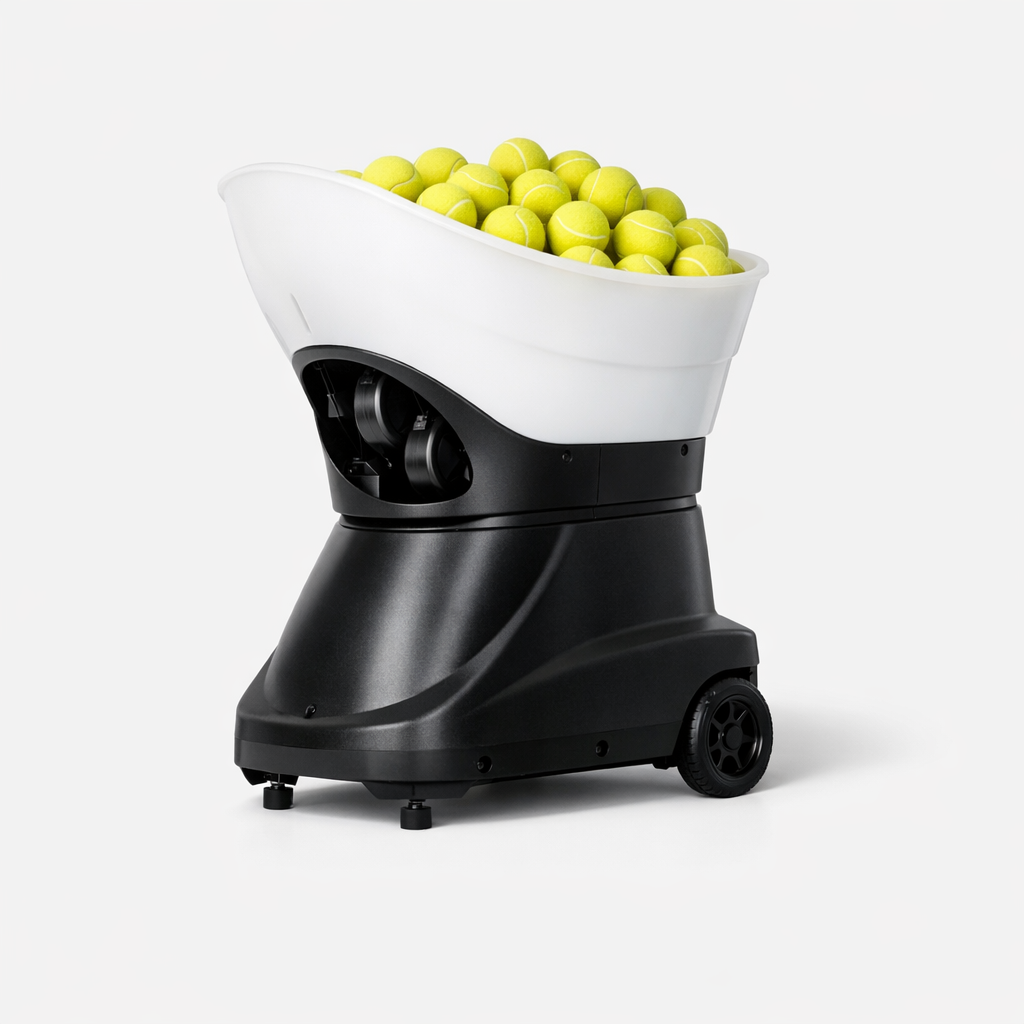
Spinfire Pro 2
Tr aining tool for committed solo practice, but it is not a shortcut to becoming match-ready.
You might also like: Babolat Viper Carbon Racket vs Wilson Padel Racket Bag: Which Upgrade Comes First?.