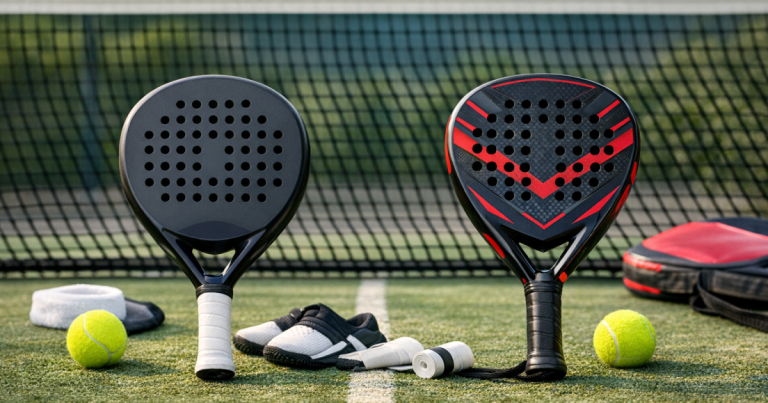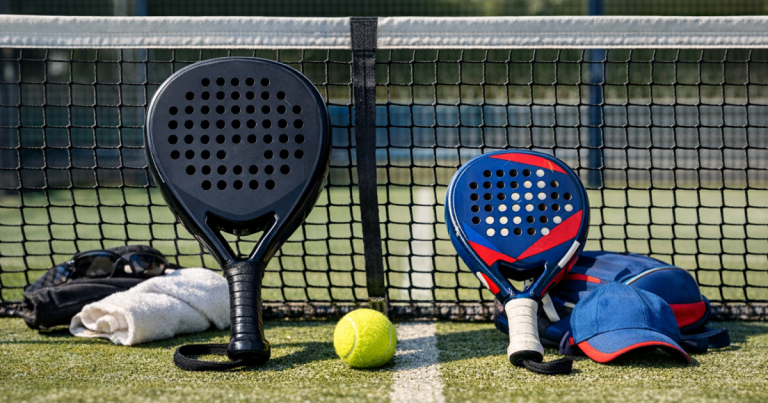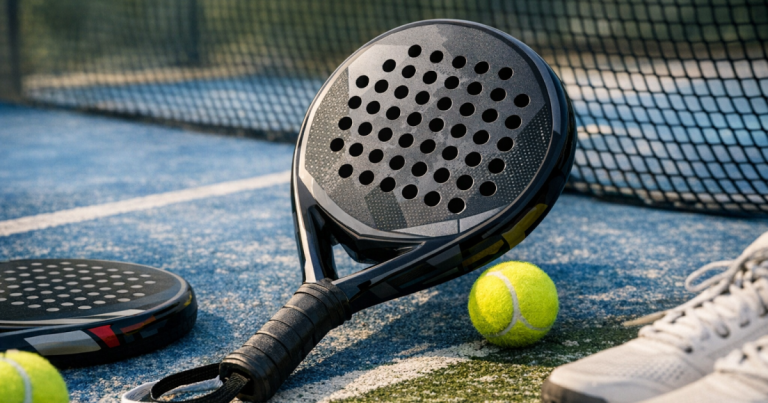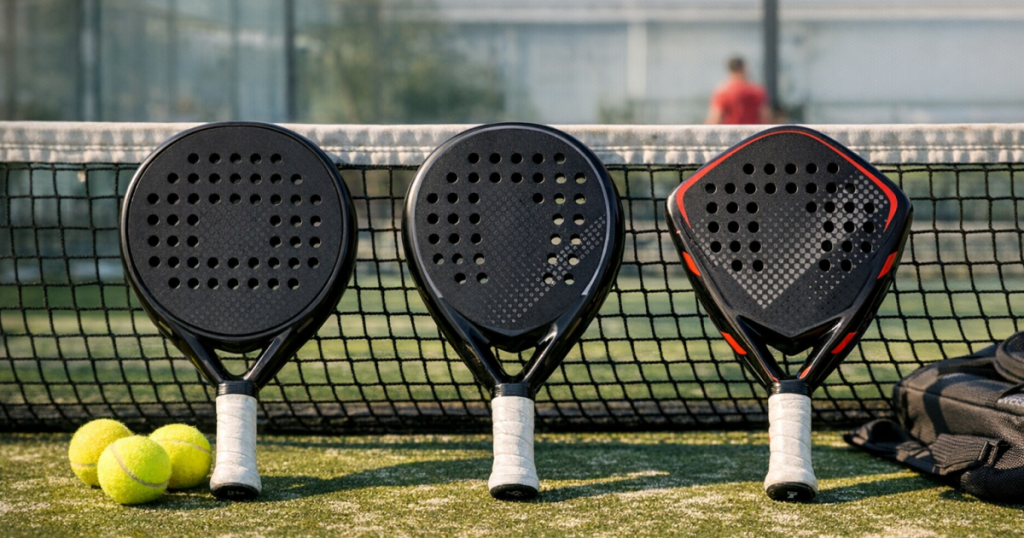
Choosing a first racket is easier when you understand round vs teardrop vs diamond padel rackets because shape affects where the sweet spot sits, how easy the racket feels to move, and how much help you get on defensive shots. For beginners, that usually matters more than chasing the most powerful-looking frame.
The short version: round rackets are usually the most forgiving, teardrop rackets sit in the middle, and diamond rackets tend to reward stronger timing and cleaner technique. None of those shapes is automatically “better”. The right shape is the one that helps you play more balls back, control the pace, and enjoy regular club games without fighting the racket.
The big picture
Padel rackets do not have strings, so the frame shape, balance and face construction do a lot of the work. Shape is one of the easiest things for a newer player to recognise, but it should not be judged in isolation. A soft-feeling round racket can feel very different from a stiffer round racket. A teardrop racket with a sensible balance can feel manageable, while a heavy-feeling diamond racket can feel demanding after one set.
Still, shape is a useful starting point because it gives clues about three things: control, power and manoeuvrability. Control means how easy it is to place the ball and keep mistakes down. Power means how much help the racket gives you when you hit through the ball. Manoeuvrability means how quickly you can get the racket into position, especially at the net or when defending off the glass.
- Round: usually easier to use, with a central sweet spot and a control-led feel.
- Teardrop: usually a balanced middle ground, with a slightly higher sweet spot and more help on attacking shots.
- Diamond: usually more power-focused, with a higher sweet spot and a feel that rewards confident timing.
Why the sweet spot matters so much
The sweet spot is the area of the racket face where contact feels cleanest. When you hit near it, the ball comes off more predictably. When you miss it, the racket can twist, the ball may float, or your shot may drop into the net. Beginners miss the sweet spot more often because padel asks for quick adjustments: low balls after the glass, awkward volleys, blocked returns and rushed lobs.
A round racket generally puts the sweet spot closer to the centre of the face. That is helpful when you are still learning contact height, grip pressure and how much backswing to use. A teardrop racket often shifts that sweet spot slightly upward, which can add punch on volleys and overheads without becoming too extreme. A diamond racket usually shifts it higher again, which can feel excellent when you hit cleanly but less forgiving when you are late or cramped.
This is why two players can try the same racket and disagree completely. A confident tennis player with strong overhead technique may enjoy a more attacking shape early on. A true first-timer may find the same racket harsh, hard to control, and tiring in defence.
Round rackets: the forgiving starting point
Round rackets are often the safest shape for early-stage players because they make ordinary club situations less punishing. If your volley contact is not always perfect, or you are still working out how the back glass changes the bounce, a round shape can give you a little more margin.
The main benefit is consistency. You do not need to swing hard to make a round racket useful. It can help with blocking returns, guiding volleys, lifting lobs and resetting the point when you are under pressure. That fits beginner padel well because many early points are won by keeping the ball in play rather than hitting spectacular winners.
The possible downside is that some round rackets can feel less explosive when you start attacking more. That does not mean they are weak; it means they are usually built around control rather than easy power. Many good club players still use round shapes because they value placement, comfort and reliability.
A recognised example often associated with this control-led style is the Nox ML10 Pro Cup Padel Racket. As with any named model, check the current manufacturer or retailer listing for the exact version, shape and feel before assuming it matches an older model you have seen at a club.
Teardrop rackets: the middle ground for developing players
Teardrop rackets are popular because they promise a bit of everything. They usually offer more attacking help than a typical round racket, without being as demanding as many diamond shapes. For players who have moved beyond their first few sessions and are starting to volley, lob and smash with more intention, that balance can make sense.
The sweet spot normally sits a little higher than on a round racket. That can help when you are taking volleys above net height or hitting bandejas and viboras with more purpose. It can also make the racket feel livelier when you are stepping into the ball.
The trade-off is that teardrop rackets can be less forgiving than a very easy round frame. If you are regularly late on returns, struggling to defend corners, or gripping too tightly, you may notice more mishits. The shape is not the problem by itself, but it may expose timing issues sooner.
A teardrop shape can be a sensible second racket for someone who already plays regular club sessions and wants a little more help going forward. If your main frustration is not power but slippery contact or grip tension, shape might not be the first thing to change. It is worth reading our padel grip guide before blaming the racket head.
Diamond rackets: power with a higher skill demand
Diamond rackets are the most power-oriented of the three common shapes. They typically place more of the playing area and sweet spot higher up the face, which can suit aggressive overheads, firm volleys and players who like to finish points. In the right hands, they can feel direct and exciting.
For beginners, the challenge is that diamond rackets often ask for better timing. If you make contact low on the face or swing late, the racket may feel less stable and less forgiving. Defensive shots can also feel harder if the racket is less manoeuvrable for you, especially when you are stretched near the side glass.
That does not mean beginners are banned from diamond shapes. A player coming from tennis, squash or badminton may adapt quickly and enjoy the extra attacking feel. But for most new padel players, a diamond racket is easier to appreciate once basic movement, glass defence and compact volleys are in place.
The Bullpadel Vertex 04 Padel Racket is an example from a well-known power-focused line, but it should be treated as a reference point rather than an automatic target. Always check the current model details, balance, face feel and suitability rather than judging by shape alone.
Shape is only one part of racket feel
Two rackets with the same head shape can play very differently. That is why it helps to think of shape as the first filter, not the full answer. Other details affect how manageable the racket feels during a full match.
- Balance: A head-heavy racket can feel more powerful but slower to move. A lower-balance racket can feel quicker in defence and at the net.
- Weight feel: The printed weight range matters, but balance changes how heavy the racket feels in your hand during play.
- Face feel: Softer-feeling rackets can feel more comfortable and helpful at lower swing speeds. Firmer-feeling rackets can feel more direct but less forgiving.
- Grip setup: Too small or too slippery a grip can make any shape feel unstable. Overgrips and wristbands can make a surprising difference.
- Your usual mistakes: If you miss by overhitting, you may need control. If you miss by leaving balls short, you may need timing work before more power.
This is also where demoing matters. Ten minutes of mini-tennis-style hitting is not enough. Try returns, volleys, lobs, defensive balls off the glass and overheads if you can. A racket that feels amazing on one clean smash may not be the one you want during a scrappy mixed-level match.
Real club scenarios: which shape helps?
You are brand new and borrowing club rackets
Start with a forgiving round racket if one is available. Your priority is learning the court, the glass and the pace of a doubles rally. A forgiving racket helps you focus on decisions rather than constantly correcting mishits.
You have played a few sessions and want more attack
A teardrop racket can be a sensible next step if your contact is improving and you are beginning to move forward with confidence. It can give you more support on volleys and overheads while still keeping some forgiveness.
You come from tennis and hit cleanly above shoulder height
You might enjoy a teardrop or a manageable diamond shape sooner than a complete beginner. The key question is not whether you can hit one big shot, but whether you can defend, block and reset points for a whole match.
You are losing control under pressure
Choose forgiveness over power. In beginner padel, the player who makes the extra ball often wins more points than the player with the biggest smash. A round racket can be a confidence builder while you build better habits.
Examples without treating them as shortcuts
Named models can help you understand the market, but they should not replace trying rackets in real padel situations. Product ranges change, and brands may release different versions under similar names. Treat any example as a starting point for research, not a guarantee of fit.
- Round control style: models commonly marketed around control and forgiveness are often easier for first-time players to live with.
- Balanced teardrop style: rackets in this area aim to blend control and attacking help, which can suit regular improvers.
- Power-focused diamond style: rackets such as the Adidas Metalbone Padel Racket are commonly discussed in more attack-minded conversations, but current model details should always be checked carefully.
If you are deciding whether to spend on a more advanced racket or improve the rest of your kit first, our piece on whether a racket upgrade should come before a bag may help you think through priorities without rushing into the flashiest option.
Common mistakes when judging racket shape
- Choosing what a stronger player uses: their timing, strength and match habits may be very different from yours.
- Assuming power fixes technique: a more powerful shape can make mistimed shots fly longer, not better.
- Ignoring defence: padel is not only about attacking. You need a racket that helps when you are late, low or stretched.
- Changing too soon: if you are still learning basic positioning, a new shape may not solve the real issue.
- Forgetting comfort: if the racket feels awkward after a full session, it is probably not helping your game.
The best test is simple: does the racket help you play more sensible balls under normal club pressure? If yes, it is doing its job. If it only feels good on the occasional clean winner, be careful.
Questions people ask
Is a round padel racket only for beginners?
No. Round rackets are beginner-friendly, but many experienced players like them because they offer control, comfort and consistency. Shape does not define your level.
When should I move from round to teardrop?
Consider it when you can defend reliably, keep volleys compact and want a little more help when attacking. If your main issue is basic consistency, stay with forgiveness for longer.
Are diamond rackets bad for new players?
Not always, but they are usually less forgiving. A new player with strong racket-sport experience may cope, while a true beginner will often progress faster with a round or gentle teardrop shape.
Does racket shape matter more than weight?
Both matter. Shape affects the sweet spot and playing style, while weight and balance affect how quick and comfortable the racket feels. Judge them together, not separately.
Can grip changes make a racket shape feel easier?
Yes. A better grip setup can improve comfort and stability, especially if the handle feels too thin or slippery. It will not turn a power racket into a control racket, but it can make any racket easier to manage.
What to remember
For most beginners, round is the calmest place to start. It gives the most forgiveness while you learn contact, positioning and glass defence. Teardrop becomes interesting when you are playing more regularly and want a balanced boost in attack. Diamond is best approached with honest expectations: it can be rewarding, but it asks more from your timing and decision-making.
Try to choose the shape that supports the padel you actually play, not the padel you hope to play in highlights. If you are still finding regular partners and settling into club games, consistency is a real advantage. Our guide to handling your first mixed-level padel match is a useful next read if you want your racket choice to translate into calmer match play.