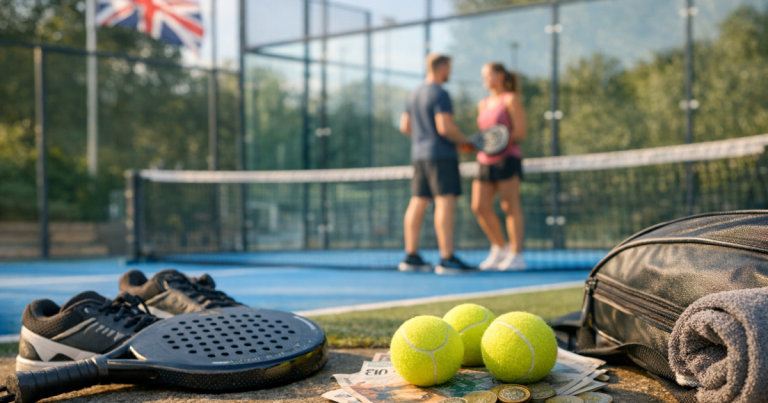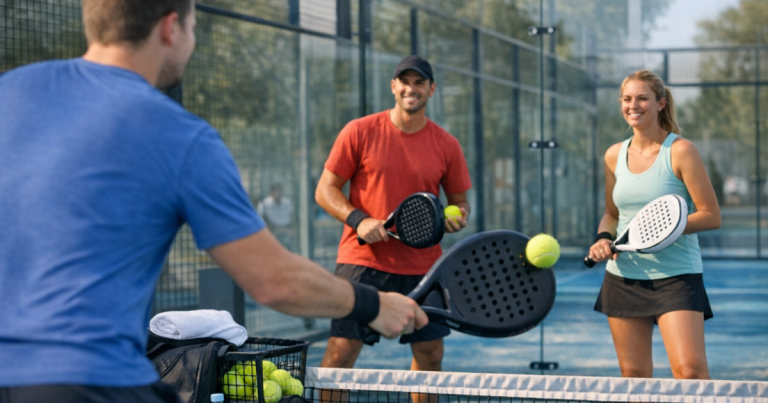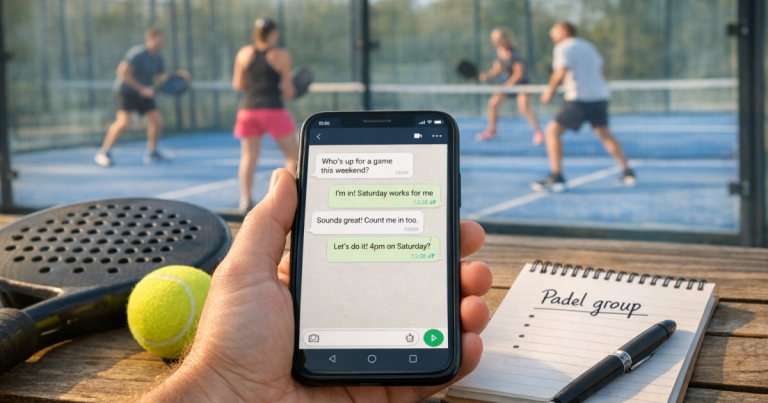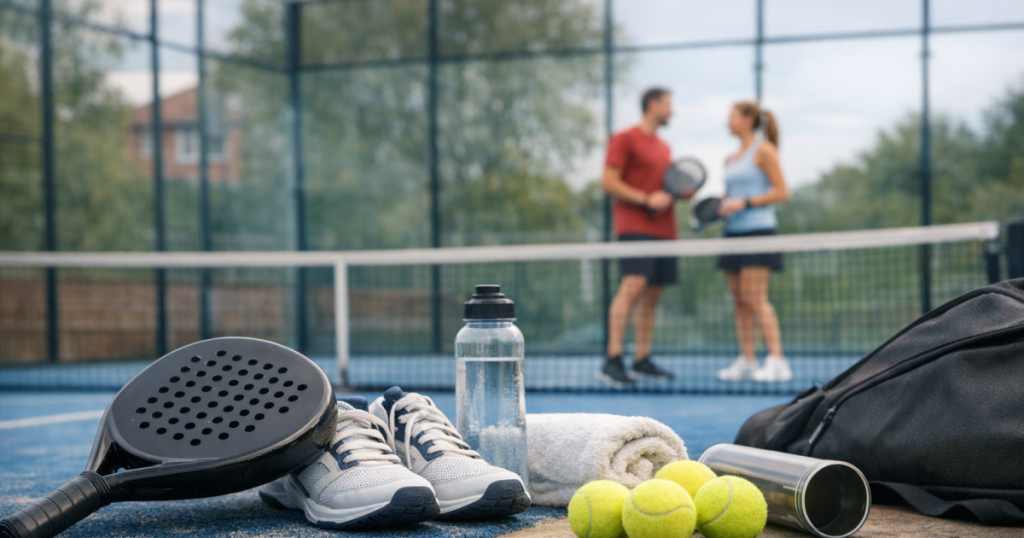
Turning up for your first padel game is much easier when you know what to bring, what to wear, and what will happen at the club. You do not need a full kit bag or an expensive racket; you need a few sensible basics, a calm plan, and enough confidence to enjoy the rallies.
Most beginner-friendly padel clubs are used to new players. If you arrive a little early, ask clear questions and keep the kit simple, you will be able to focus on learning the court, the walls and the rhythm of doubles play.
The short version
For a first session, keep things practical rather than perfect. You mainly need suitable footwear, comfortable sports clothing, water, a racket, balls if the club does not supply them, and a basic grasp of how scoring and serving work.
- Racket: Hire or borrow one if possible before buying your own.
- Shoes: Wear stable court shoes with decent grip; avoid running shoes if the surface feels slippery or unstable.
- Clothing: Choose breathable sportswear that lets you move, squat and rotate freely.
- Balls: Check whether your club provides them or whether your group needs to bring a tube.
- Water and towel: Indoor and covered courts can still get warm quickly.
- Rules basics: Know the underarm serve, the scoring format and that the walls are part of the game.
What to bring in your bag
For your first padel game, your bag can be much lighter than you might expect. A small sports bag is usually enough unless you are travelling straight from work or staying for several matches.
A racket, borrowed or hired
You do not need to buy a racket before your first match. Many UK padel clubs offer hire rackets, and some beginner sessions include one in the booking. Hiring gives you a feel for the sport before deciding what shape, weight and balance might suit you.
If a friend is lending you a racket, check that the grip is not falling apart and that the wrist strap is usable. You are not looking for a perfect setup; you just want something comfortable enough to swing safely and control simple shots.
Balls, only if your group needs them
Some organised sessions include balls, while casual court bookings may expect players to bring their own. Ask before you arrive so you do not end up with four people and no ball. Padel balls look similar to tennis balls but are designed for padel, so it is worth using the right type where possible.
If you are buying a tube for a social game, Head Padel Pro is a recognisable padel ball example, but you do not need to overthink brands at this stage. The more important check is that the balls are suitable for padel and still have a reasonable bounce.
Water, towel and a spare top
Padel rallies can be stop-start, but beginners often work harder than expected because of the short reactions, quick turns and repeated movement to the net. Bring a water bottle and take small drinks during changeovers. A small towel is useful for hands and face, especially if you are playing indoors or during a busy club night.
A spare top is optional, but handy if you are heading home by public transport, driving a long way, or going for a drink afterwards. You do not need specialist padel clothing for a first game; comfortable sportswear is enough.
What to wear on court
The main aim is to feel stable, cool and unrestricted. Padel involves sideways movement, split steps, short sprints and turns after the ball hits the glass. Clothing and shoes that work for straight-line running are not always ideal for a small court with lots of direction changes.
Footwear matters more than the outfit
If you already own tennis, squash or other court shoes, they are often a sensible starting point. They are generally designed for lateral movement in a way that running trainers are not. Running shoes can feel comfortable, but their higher cushioning and forward-motion design may feel less secure when you change direction quickly.
For beginners who decide to play regularly, padel-specific shoes become more worthwhile. A model such as Asics Gel-Padel Pro 3 is an example of a dedicated padel shoe, but fit, comfort and court-surface suitability should matter more than the name on the box. Always check the club’s court surface and footwear guidance before playing.
Simple sports clothing is fine
Wear a T-shirt or sports top, shorts, leggings or a skirt that lets you move freely. You will bend for low balls, turn for rebounds and reach overhead, so avoid anything too restrictive. Pockets can be useful for a spare ball if you are serving, but they are not essential for a first hit.
If you wear glasses, make sure they sit securely. If you use a fitness watch or jewellery, keep it comfortable and safe for movement. The goal is to remove distractions, not to look like a professional player on day one.
The rules you should know before you start
You do not need to memorise every detail before playing, but knowing the basics makes the first few games far less confusing. Padel is played as doubles most of the time, uses tennis-style scoring, and has an underarm serve. The ball can bounce off the glass walls after it has landed in the court, which is one of the biggest differences from tennis.
The serve must be hit underarm after a bounce and usually goes diagonally into the opponent’s service box. During rallies, the ball must land on the court before it hits the back or side glass on your opponent’s side. Once it has bounced, the walls can keep the rally alive.
If you want a clearer breakdown before you play, read the beginner-friendly guide to padel scoring, serves, walls and faults. It is worth spending a few minutes on the serve and wall rules in particular, because those are the areas that usually trip up new players first.
What happens when you arrive at the club
Arrive 10 to 15 minutes early if you can. That gives you time to check in, find the court, hire a racket if needed, use the changing rooms and meet the other players without feeling rushed. Padel bookings often run to a set court time, so arriving late can cut into everyone’s playing time.
At many UK clubs, you will either check in at reception, use a booking app, or meet the organiser by the courts. If you are joining a beginner mix-in, the organiser may rotate pairs or explain the format. If you have booked privately with friends, you can simply warm up and start when your slot begins.
A simple warm-up helps
Do a few minutes of light movement before hitting hard. Jog gently, move side to side, loosen your shoulders and take some easy mini-rallies. Start with controlled shots rather than trying to win the warm-up. This helps everyone adjust to the bounce, the glass and the court speed.
Beginner etiquette is straightforward
Most padel etiquette is just common sense. Close the court door behind you, avoid walking behind another court during a point, return stray balls safely, and call the score clearly before serving. If you are unsure whether a ball was in or out, be honest and replay the point if the group agrees.
Communication with your partner matters too. Simple calls like “mine”, “yours”, “leave” and “switch” prevent awkward collisions and missed balls. Do not worry about advanced tactics yet; getting used to sharing the court is enough at the start.
How much should you expect to spend?
Your first game does not have to be expensive. The main cost is usually the court booking or beginner session fee, which varies by club, time of day and whether you are playing indoors, outdoors or at a premium venue. Racket hire, ball purchase and parking can add a little more, depending on the club.
If you are trying padel once, avoid buying a full setup immediately. Borrow or hire first, then spend later if you enjoy it. Once you are playing weekly, shoes are often the first sensible upgrade because they affect comfort and stability every point. A racket can wait until you understand what feels comfortable in your hand.
For a fuller breakdown of typical starter expenses, including court time, equipment and the difference between casual and regular play, see how much it costs to start playing padel in the UK.
What not to worry about yet
New players often feel they need to understand tactics, buy the right racket and master the glass before joining a game. You do not. Your first target is to keep the ball in play, learn where to stand, and enjoy the social side of doubles.
- Do not worry about power. Controlled shots are more useful than hard hits at beginner level.
- Do not worry about perfect technique. A coach can tidy that up later if you keep playing.
- Do not worry about winning. Most first games are about learning the court and getting comfortable.
- Do not buy everything at once. Play a few times before deciding what kit you genuinely need.
- Do not avoid asking questions. Most players remember being new and are happy to explain.
One of the best signs from a first session is not whether you played brilliantly, but whether you left wanting another game. If that happens, you can start thinking about lessons, regular groups and small kit upgrades in a more informed way.
A simple first-game checklist
Use this quick checklist the day before you play. It keeps the preparation practical without turning it into a shopping list.
- Confirm the court time, club address and whether the booking is indoors or outdoors.
- Check whether racket hire is available or arrange to borrow one.
- Ask whether balls are supplied or whether someone in the group is bringing them.
- Pack court shoes or the most stable sports shoes you own.
- Wear comfortable sports clothing and bring a light layer for after the game.
- Bring water, a small towel and any personal items you need after exercise.
- Arrive 10 to 15 minutes early so you can find the court calmly.
- Read the basic serve and scoring rules if you have never played before.
When to book a coaching session
You can absolutely play a casual game before taking a lesson. In fact, one social hit often makes coaching more useful because you will understand what felt confusing: the glass, positioning, serving or choosing the right shot.
If you prefer structure, a beginner coaching session can also be a great first step. It gives you a safe place to learn the serve, practise controlled rallies and understand where to stand with a partner. Before you go, it is worth reading how to prepare for your first padel coaching session so you know what to expect and what to bring.
FAQ
Can I play padel without my own racket?
Yes. Many clubs offer racket hire, and friends often have a spare. For your first few games, hiring or borrowing is usually better than guessing which racket to buy.
Can I wear running trainers for padel?
You can for a very casual first try if the club allows them, but court shoes are better for sideways movement. If you keep playing, prioritise footwear before buying lots of other kit.
Do I need to be fit before trying padel?
No. Padel is accessible for many beginners because the court is smaller than a tennis court and doubles play shares the workload. Start steadily, take breaks and build up gradually.
How early should I arrive for my first booking?
Aim for 10 to 15 minutes early. That gives you time to check in, hire equipment, find the court and warm up without taking time out of the booking.
Should I learn the rules before playing?
Learn the basics: underarm serve, tennis-style scoring, one bounce before the wall, and what counts as a fault. You can pick up the finer details as you play.
Key takeaways
Your first padel session should feel simple: suitable shoes, comfortable clothing, water, a racket, balls if needed and a basic grasp of the rules. Do not let kit choices delay you from getting on court. Borrow, hire, ask questions and focus on keeping rallies going.
Once you have played, your next steps become clearer. You might want better shoes, a beginner-friendly racket, a coaching session or a regular club group. Until then, the best preparation is arriving organised, relaxed and ready to learn.