Some padel rackets make learning feel smoother straight away. Others punish every slightly late contact, off-centre volley or rushed bandeja. For beginners and early club players, forgiving padel rackets are usually the sensible starting point because they help you keep rallies alive while your timing, footwork and confidence catch up.
Forgiveness is not one single feature. It comes from the shape, balance, sweet spot, core feel, face material and overall weight working together. A racket can be comfortable without being weak, and controlled without feeling dull. The goal is to find something that gives you a clear response on normal shots without making every small mistake feel dramatic.
The short version
A forgiving racket is one that still gives you a usable shot when contact is not perfect. It tends to have a larger sweet spot, a more manageable balance, a comfortable core and a shape that helps with control rather than maximum smash power.
For most new players, a round or teardrop-shaped racket with a medium or soft-medium feel is easier to live with than a very stiff, head-heavy diamond racket. You still need decent technique, but the racket gives you a wider margin for error on blocks, volleys, lobs and defensive shots off the glass.
- Best starting shape: round for maximum control, or a forgiving teardrop for a little more attacking help.
- Sweet spot priority: bigger and more central is usually better for beginners.
- Comfort priority: avoid anything that feels harsh, unstable or hard to swing repeatedly.
- Common mistake: choosing a powerful advanced racket before you can consistently find the centre of the face.
What the sweet spot actually does
The sweet spot is the area of the racket face where contact feels cleanest and the ball responds most predictably. Hit there and the ball comes off with better direction, depth and comfort. Hit well outside it and the shot can twist the racket, lose pace, float short or feel jarring through the hand and arm.
In padel, this matters because beginners rarely hit every ball from a perfect position. You are reacting to glass rebounds, moving forwards for volleys, defending low balls and adjusting to balls that sit awkwardly near the side fence. A bigger sweet spot gives you more room to be slightly late, slightly low or slightly off-centre.
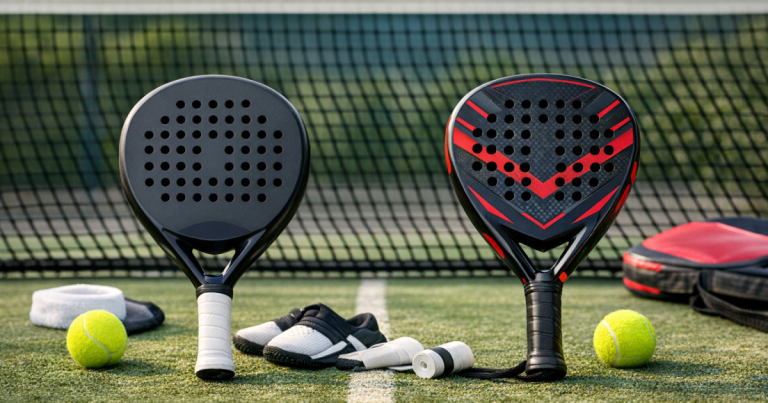
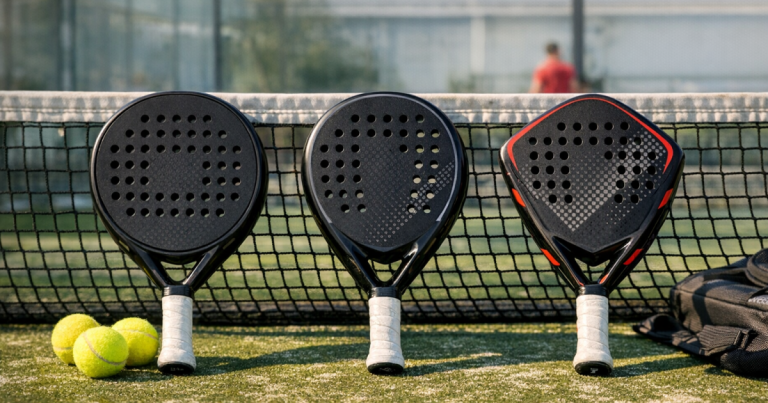
Round rackets usually place the sweet spot nearer the centre of the face, which helps when you are still building repeatable contact. Teardrop rackets often move the sweet spot a little higher, giving more help on attacking shots while still being manageable if the design is not too demanding. Diamond rackets typically place more emphasis higher up the face and are often less forgiving for early-stage players, especially when combined with a higher balance.
Where forgiving padel rackets help most
Forgiveness shows up most clearly in ordinary club situations, not highlight-reel smashes. If your racket helps you survive those awkward moments, you will usually enjoy matches more and improve faster.
Defending from the back glass
When you are learning wall rebounds, contact is often rushed. A forgiving racket helps you lift the ball back into play even when you do not strike the exact centre. That is especially useful for simple lobs, cross-court resets and low defensive blocks.
Volleying at the net
Beginner volleys are often a little close to the body or slightly late. A stable, comfortable racket can stop the face twisting too much on contact, making it easier to guide the ball deep rather than popping it up for an easy counter.
Controlling slower balls
Not every shot in padel is fast. Many beginner rallies involve slower balls, half-volleys and careful placements. A forgiving racket should help you feel the ball long enough to control direction, rather than springing it away unpredictably.
Building confidence under pressure
Confidence matters. If your racket feels harsh or erratic, you may start steering shots nervously. A more forgiving frame lets you swing calmly and focus on simple targets: deep cross-court, over the net, away from the opponent’s strongest volley.
Shape, balance and weight: the comfort triangle
Sweet spot is only part of the story. A racket can have a decent sweet spot but still feel uncomfortable if it is too head-heavy, too stiff or too heavy for your current level.
Round rackets
Round rackets are the most common beginner-friendly shape because they are usually easier to manoeuvre and more predictable. They suit players who want to learn control, defence and placement before chasing extra power. If you are in your first season, the guidance in choosing a padel racket for your first season is a useful next step alongside understanding forgiveness.
Teardrop rackets
Teardrop rackets sit between control and attack. Some are very accessible; others are aimed at stronger intermediate players. If you already make consistent contact and want a little more help when playing viboras, bandejas or higher volleys, a forgiving teardrop can make sense. The key is to check that it still feels manageable in defence and quick enough at the net.
Diamond rackets
Diamond rackets are often associated with attacking play and a higher sweet spot. They can be rewarding for players with strong timing, but they are less likely to feel comfortable if you are still learning basic positioning. A demanding diamond racket may make easy shots harder, which is the opposite of what most beginners need.
Balance and swing feel
Balance describes where the weight feels concentrated. A lower or even balance usually feels easier to move quickly. A higher balance can help generate power, but it may also feel tiring during long games or quick exchanges. In the shop or club, do not judge only by static weight in grams. Pick the racket up, shadow a few volleys, and notice whether it feels quick, steady or awkward.
Core and face materials affect feel
The core is the foam-like material inside the racket. The face is the hitting surface, often made with fibreglass, carbon fibre or a blend of materials. These details influence how soft, firm, lively or controlled the racket feels.
Beginners often get on well with a softer or medium-feel core because it gives comfort and easier depth at moderate swing speeds. Very firm rackets can feel precise in skilled hands, but they may be less helpful if you do not yet generate clean contact. Fibreglass faces are often associated with a more elastic, accessible feel, while carbon constructions can vary widely depending on lay-up, stiffness and overall design.
The important point is not to chase one material as automatically better. A comfortable racket is the full package: shape, balance, core, face and your own swing. If you want the background without getting lost in jargon, the explainer on padel racket materials and cores breaks down the main terms in beginner-friendly language.
Comfort is not just softness
Soft feel can help, but comfort also depends on stability and control. A racket that is too soft for your swing may feel vague when blocking fast balls. A racket that is too light for you may be easy to move but less stable on off-centre contact. A racket that is too heavy may feel solid for five minutes, then tiring during a full match.
Good comfort feels like this: you can swing without strain, the racket does not twist excessively on normal mishits, and the ball response is predictable enough that you can adjust from shot to shot. You should not feel as though you need perfect timing to make the racket work.
Grip size and overgrip condition also matter. A worn or slippery grip makes you squeeze harder, which can make the racket feel less comfortable even if the frame itself is suitable. Replacing an overgrip is a simple fix that can improve confidence immediately.
Simple checks before you commit to a racket
If you can test a racket before buying, even briefly, use real padel movements rather than just bouncing a ball on the face. A five-minute hit can reveal a lot.
- Try defensive lobs: Can you lift the ball comfortably from low contact without forcing the swing?
- Block a few volleys: Does the face stay stable when the ball arrives faster than expected?
- Play soft touches: Can you guide the ball short or angled, or does it spring away too quickly?
- Notice late contact: When you miss the centre slightly, does the shot remain playable?
- Check fatigue: After several quick exchanges, does the racket still feel manageable?
Do not be distracted by a single brilliant smash in a test hit. For early club play, the better question is whether the racket helps you play ten ordinary balls in a row with calm, repeatable contact.
Control versus power for newer players
Many players start by asking whether they need a control racket or a power racket. For a beginner, the more useful question is whether the racket helps you make good decisions under pressure. Control usually supports that better than raw power.
A forgiving control racket can still produce attacking shots when you use correct technique and good court position. A powerful racket, however, may not help much if you are late to the ball or often defending from the back. In club matches, consistency wins a lot of points because opponents make mistakes when asked to play one more ball.
If you are unsure where you sit, the guide to control or power padel rackets for beginners explains the trade-off in more detail. As a rule, choose the racket that improves your average shot, not the one that only rewards your best shot.
Common signs a racket is too demanding
A racket does not need to be labelled “advanced” to be too much for your current game. Watch for these signs during play:
- Your off-centre hits regularly die into the net.
- You struggle to manoeuvre the racket quickly at the net.
- You feel you have to swing hard just to reach decent depth.
- The racket feels harsh on routine blocks or defensive shots.
- Your timing gets worse as the session goes on because the swing feels tiring.
- You only enjoy the racket when the ball sits perfectly for an attacking shot.
One or two awkward shots are normal. But if the racket consistently makes simple padel harder, it is probably not forgiving enough for your current level.
Main points
A forgiving racket gives you margin. It will not replace lessons, footwork or better shot selection, but it can make the learning process less frustrating. For most beginners, the safest path is a round or accessible teardrop shape, a central or generous sweet spot, manageable balance and a comfortable medium or soft-medium feel.
As your timing improves, you may naturally want a firmer, heavier or more attacking racket. There is no rush. The right early racket is the one that helps you play more rallies, enjoy more sessions and build habits that still work when matches get faster.
Things readers ask
Are forgiving rackets only for complete beginners?
No. Plenty of improving club players prefer a forgiving racket because it helps in defence, long rallies and quick net exchanges. Forgiveness is useful whenever consistency matters.
Does a bigger sweet spot mean less power?
Not always, but the most forgiving designs often prioritise control and comfort over maximum smash power. For beginners, that trade-off is usually worthwhile.
Should I choose the softest racket I can find?
Not automatically. Very soft rackets can feel comfortable, but some players find them less precise. Aim for a feel that is comfortable, stable and predictable, not simply the softest option.
Can grip changes make a racket more comfortable?
Yes. A fresh overgrip can reduce slipping and help you hold the racket with less tension. It will not change the sweet spot, but it can improve comfort and control.
When should I move to a less forgiving racket?
Consider it when you consistently hit the centre, defend well under pressure and want a specific performance change, such as more attacking weight or a firmer response.