Knowing what to wear for padel makes your first few sessions feel much easier. You do not need a full specialist outfit, but you do need clothing that lets you move, turn, lunge and recover without getting distracted. For most UK beginners, the right answer is simple: wear comfortable sports kit, choose court-appropriate shoes, and add layers if you are playing outdoors.
Padel is social and welcoming, so do not worry about looking like a tournament player. Your clothing should help you enjoy the session, learn the basics and move safely around the court. If you are still planning your first booking, it is worth reading what to expect at your first padel session so your clothing, arrival time and court basics all line up.
The short answer: dress for movement, not fashion
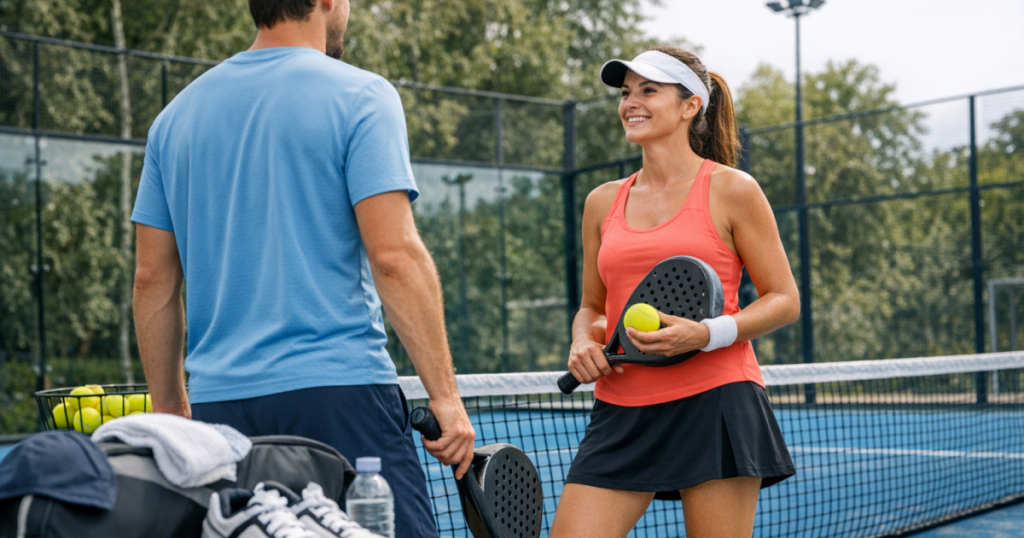
A good beginner padel outfit is very close to what you might wear for tennis, badminton, squash or a gym class. A breathable sports top, shorts or leggings, supportive court shoes and decent socks will cover most sessions. The key difference from casual gym wear is that padel involves lots of sideways movement, quick stops and short bursts, so your clothes and shoes need to stay comfortable when you change direction.
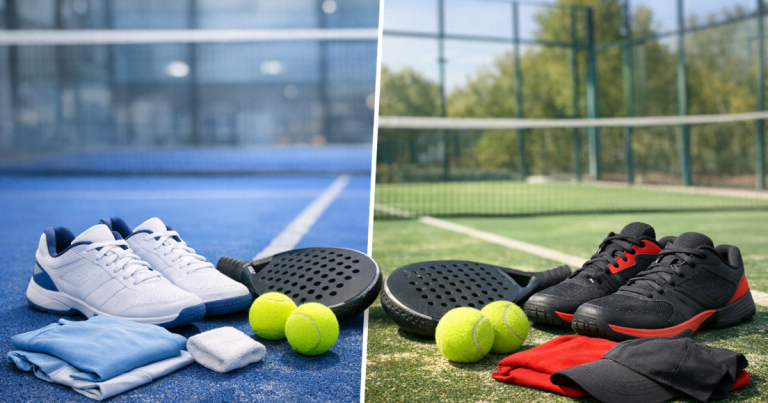
A sensible approach to what to wear for padel is to think in layers: base clothing for movement, footwear for grip and support, and optional extras for weather, sweat and comfort. If something rubs, restricts your shoulder movement, slips down, overheats you or makes your feet slide inside your shoes, it is likely to distract you once rallies get going.
Tops: light, breathable and easy to move in
For your top half, choose a sports T-shirt, polo or vest made from a lightweight performance fabric. It does not have to be padel-specific. The main aim is to avoid heavy cotton that gets damp, clings to the body and can feel cold during pauses between games.
Padel shots use plenty of shoulder rotation, especially overheads, volleys and defensive lobs. Before you leave home, lift both arms above your head and make a few slow swinging movements. If the sleeves pull tightly under your arms or the fabric rides up awkwardly, choose something with a looser shoulder fit.
Standard training tops such as the Adidas Club 3-Stripes Tee or Under Armour Tech 2.0 T-Shirt are useful examples of the type of simple, breathable sports top many beginners can use. The exact brand matters less than the fit, fabric and comfort when you move.
Bottoms: shorts, skorts, leggings and pockets
For your lower half, wear whatever sports bottoms let you lunge, bend and turn comfortably. Shorts are common, but leggings, skorts and lightweight tracksuit bottoms can all work well. The best choice depends on your comfort, the court temperature and how much movement you expect to do.
Pockets are helpful because padel is usually played with spare balls nearby, and some players like to keep one ball in a pocket before serving. If your shorts or leggings do not have pockets, it is not a disaster for a beginner session, but it can be mildly annoying once you start playing points regularly.
Avoid very loose jogging bottoms that flap around your feet or restrict your stride. Also be careful with thick seams, stiff waistbands or clothing that needs constant adjusting. Beginners already have enough to think about with positioning, scoring and using the glass; your kit should not add another problem.
Footwear matters more than the outfit
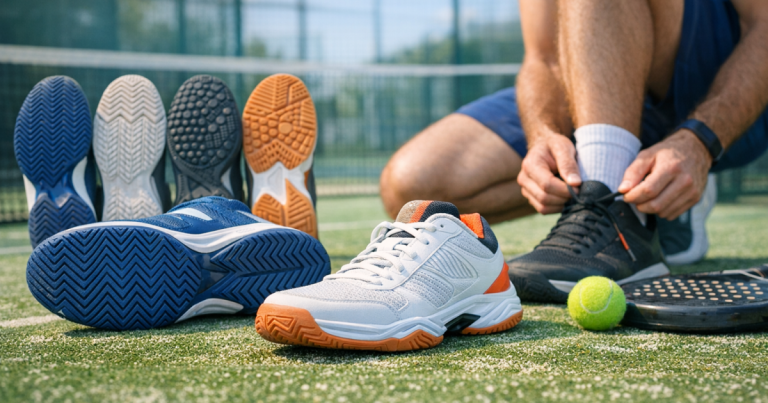
If there is one clothing decision to take seriously, it is shoes. Padel involves repeated sideways movement on an artificial turf-style court surface, so general running shoes are not ideal. Running shoes are designed mainly for forward motion, while padel needs grip, stability and controlled sliding or stopping depending on the court surface.
For a first casual taster session, many venues will accept clean sports trainers, but if you plan to keep playing, choose padel, tennis or suitable court shoes rather than road-running trainers. Look for a stable feel, good lateral support and a sole pattern suited to the surfaces at the clubs where you play. If you are unsure, ask the venue what they recommend for their courts before buying.
Because shoe choice affects comfort and confidence so much, it deserves more attention than a quick mention in a clothing guide. For a deeper beginner-friendly breakdown, read our guide on choosing your first padel shoes.
Layers for UK indoor and outdoor courts
UK padel can feel very different depending on whether you are playing indoors, under a canopy, or on an exposed outdoor court. A summer evening at a sheltered club may only need a T-shirt and shorts, while an early morning outdoor session can start chilly and warm up quickly once rallies begin.
Bring a lightweight mid-layer, zip top or training jacket that you can remove after the warm-up. A zip top is often more convenient than a pullover because you can take it off without disturbing your hair, cap or glasses. For outdoor play, a thin water-resistant layer can help before and after the session, but avoid anything bulky during play because it can restrict your swing.
In colder weather, full-length leggings or slim training bottoms are fine as long as they let you bend and push off comfortably. Gloves are rarely needed once you are active, but cold hands can be an issue at the start of outdoor sessions, so warm up properly and keep your racket grip dry.
Small details that make a big difference
Beginner padel clothing is not just about the main outfit. A few small choices can make the session more comfortable, especially as rallies get longer and you start playing more often.
- Socks: Choose proper sports socks with enough cushioning to reduce rubbing. Very thin casual socks can slip or bunch inside your shoes.
- Sports bra: If you wear one, choose a supportive style suitable for multi-directional movement rather than only low-impact activity.
- Cap or visor: Useful for outdoor courts, low sun and light rain, but make sure it stays secure when you move quickly.
- Wristbands: Helpful if sweat runs onto your hand or racket grip, particularly during warmer indoor sessions.
- Hair ties or headbands: Keep hair clear of your eyes so you can track the ball off the glass and react at the net.
- Jewellery and watches: Keep accessories minimal. Anything loose, sharp or distracting is better left off court.
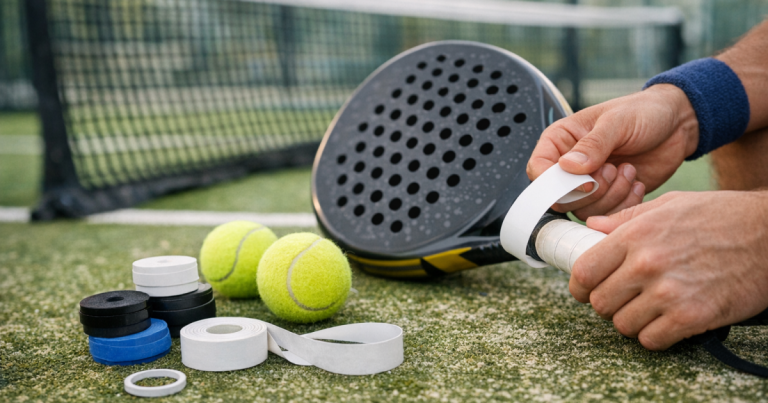
If you are building a small kit bag around your clothing, the most useful extras are usually simple rather than expensive. A water bottle, small towel, spare socks and an overgrip can be more valuable than extra clothing you never use. For more detail, see the beginner padel accessories guide for UK club players.
Three real-world outfit examples
First indoor club session
Wear a breathable sports top, shorts or leggings, clean court-friendly trainers, sports socks and a light layer for arriving and warming up. This is the simplest setup and works well if you are trying padel before committing to more kit. Keep the outfit familiar and comfortable so you can focus on the game rather than your clothing.
Outdoor evening after work
Start with a sports T-shirt or polo, add a zip mid-layer, and wear shorts or slim training bottoms depending on the temperature. Bring a light jacket for before and after play. If the court is exposed, a cap can help with low sun, and a spare dry top is useful if you are travelling home afterwards.
Regular weekly beginner session
Once you are playing regularly, it helps to have two or three reliable outfits that you know work. That might mean breathable tops, bottoms with pockets, good socks and proper court shoes. You do not need a large padel wardrobe; you need repeatable kit that washes well, fits properly and feels comfortable across a full session.
Checks before you step on court
Before heading to the club, run through a quick comfort check. Can you lift your arms freely for overheads? Can you squat slightly and push sideways without your waistband digging in? Do your socks stay smooth inside your shoes? Are your shoes clean and suitable for the court surface? Have you packed a layer for before and after play?
Also check the venue’s clothing expectations. Most UK padel clubs are relaxed, but some leisure centres or private clubs may have rules about non-marking soles, clean footwear, or clothing standards. If you are joining a group session, avoid anything that could be distracting or impractical, such as jeans, heavy hoodies, fashion trainers with poor grip, or clothing that leaves you constantly adjusting between points.
Think about pockets and ball carrying once you begin serving in games. If you are wearing leggings without pockets, you may need to leave spare balls by the back glass or rely on your partner holding one. That is fine in casual play, but pockets become more convenient as you move into structured games and club nights.
Common mistakes beginners can avoid
The most common mistake is wearing running shoes because they feel sporty. They may be comfortable in a straight line, but padel asks for quick lateral movement, and that is where proper court footwear feels more secure. The second mistake is overdressing for the warm-up. You might feel cold when you arrive, but after ten minutes of rallies you can overheat quickly, especially indoors.
Another mistake is choosing clothing that looks good standing still but does not work when moving. Tight shoulders, slippery socks, low waistbands and heavy cotton tops can all become irritating during play. Try your outfit with a few lunges, side steps and overhead movements at home. If it feels awkward there, it will feel worse during a match.
The big picture
You do not need specialist clothing to start playing padel, but you do need kit that supports the way the game is played. Prioritise breathable fabrics, free shoulder movement, comfortable bottoms, proper socks and shoes that suit side-to-side court movement. Add layers for UK weather, keep accessories simple, and check any venue rules before you arrive.
The best beginner outfit is the one that disappears once you start playing. If you can move freely, stay comfortable and stop thinking about your clothes, you have chosen well.