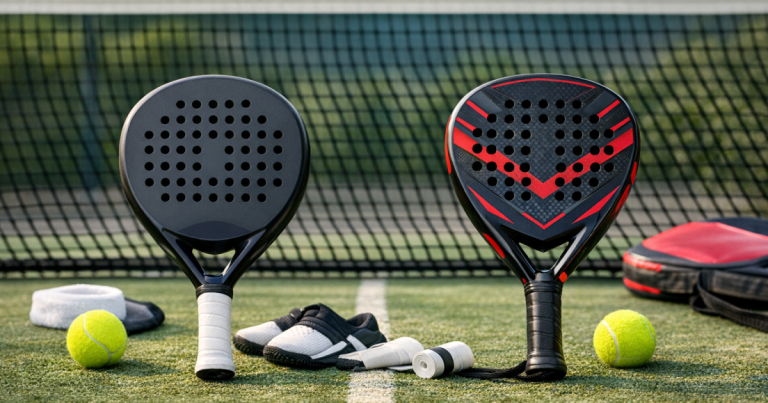
A short hit can tell you far more than a product description, but only if you know what to notice. The aim is not to test a padel racket like a pro reviewer; it is to find out whether it helps you keep the ball in play, defend calmly and enjoy your first club matches. A good trial should feel simple, repeatable and honest.
For beginners, the right racket is usually the one that makes ordinary shots easier, not the one that produces the biggest smash in a warm-up. Give yourself enough time to hit volleys, lobs, returns and wall rebounds before making a judgement.
Main points
- Try the racket on court if possible, not just in your hand in a shop.
- Focus on control, comfort and recovery after off-centre hits.
- Use the same balls and similar drills when comparing two rackets.
- Avoid judging the racket only by power, branding or how it feels during one clean shot.
- If your wrist, elbow or shoulder feels irritated during a short trial, do not ignore it.
Start with the problem you want the racket to solve
Before you pick up a demo racket, be clear about what your current racket or hire racket is making difficult. Are your volleys flying long? Do lobs feel unpredictable? Do defensive shots off the back glass feel heavy and rushed? A racket test is much more useful when you are checking against real problems from your matches.
Most new players benefit from a forgiving racket with a comfortable feel and a sweet spot that does not punish every slight mishit. That does not automatically mean choosing the cheapest option or avoiding premium models, but it does mean being realistic about your level. If you are still working out the basics of serves, positioning and shot selection, it is worth reading our guide to what new players actually need from a racket before getting pulled towards advanced-looking designs.
What to check before you step on court
A racket can feel comfortable in your hand for 30 seconds and still feel wrong after ten minutes of play. Before the hitting starts, do a few quick checks so you know what you are actually testing.
Grip feel
The handle should feel secure without you squeezing hard. If the grip feels too small, the racket can twist on off-centre contact. If it feels too bulky, you may struggle to adjust quickly at the net. Demo rackets often have worn grips, so ask whether you can add or remove an overgrip to get a fairer feel.
Balance and manoeuvrability
Hold the racket in front of you and make a few slow volley movements. If the head feels difficult to control before a ball is even coming at you, it may feel tiring in a match. A racket that feels lively but manageable is usually more useful to a beginner than one that feels powerful but slow to move.
Condition of the demo racket
Small cosmetic marks are normal, especially on club demo rackets, but cracks, soft spots, loose grips or obvious damage can make the test misleading. If the racket feels strange, check whether the issue is the model or simply that particular demo.
A simple court test that tells you a lot
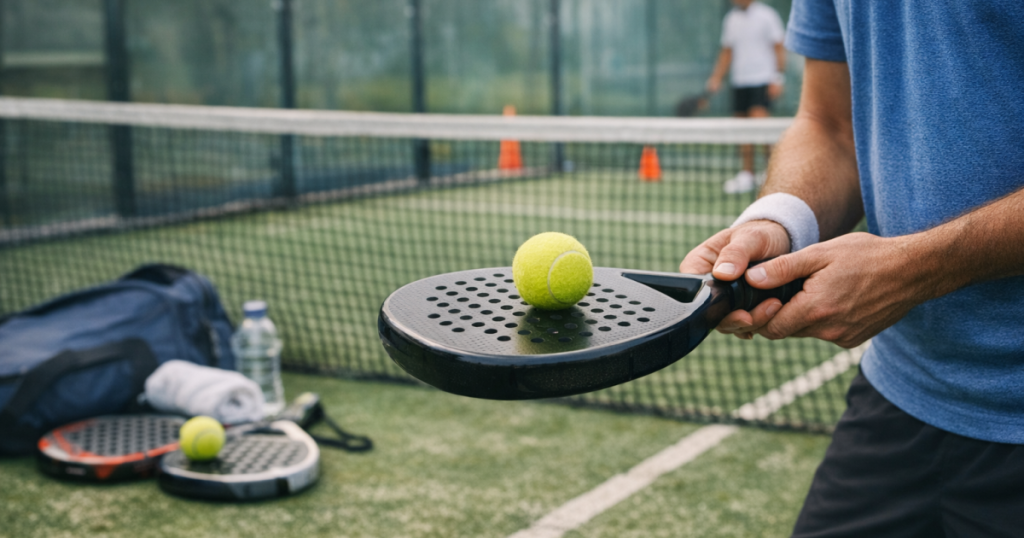
Use a short, organised routine rather than just rallying randomly. Ten to fifteen minutes of focused hitting can reveal how the racket behaves under the shots beginners use most.
- Mini-rally from the service line: Start gently and aim for control. Notice whether the ball leaves the racket face predictably.
- Baseline rally: Hit steady forehands and backhands at medium pace. The racket should help you keep depth without forcing your swing.
- Volleys: Stand at the net and block balls back with compact movements. This is where a heavy-feeling or unstable racket often shows up.
- Lobs: Try ten controlled lobs rather than one huge lift. A good beginner-friendly racket should make height and direction feel repeatable.
- Defensive wall shots: Let the ball come off the back glass and play a calm recovery ball. If you are still learning this part of the game, our guide to using the glass walls in early matches can help you test the racket in a more realistic way.
During each drill, pay attention to your errors. A racket is not wrong just because you miss, but patterns matter. If every slightly late contact flies high, if volleys keep dropping short, or if the racket twists whenever you are under pressure, those are useful signals.
Do not be fooled by the first powerful shot
Many players hit one clean forehand or overhead and immediately think they have found the right racket. Power is enjoyable, but beginners usually lose more points through rushed defence, missed volleys and poor control than through not hitting hard enough.
When trying a more powerful racket, ask yourself whether it still behaves well at half speed. Can you block a fast ball? Can you guide a return low over the net? Can you play a safe lob when you are stretched? If the racket only feels good when you swing perfectly, it may be less helpful in real club play.
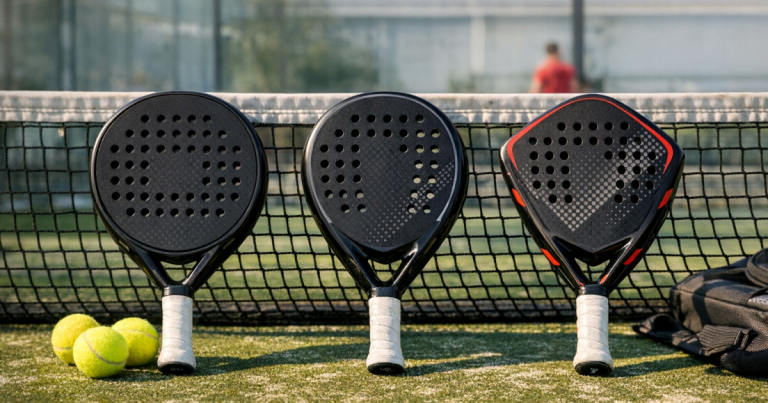
This is where familiar, widely available models can be useful reference points. For example, trying an accessible racket such as the Head Evo Speed Padel Racket alongside another beginner-friendly option like the Nox X-One Evo Padel Racket can help you feel differences in balance, touch and forgiveness. The point is not that either one is automatically right; it is that comparing real rackets side by side gives you a clearer sense of what suits your game.
Test it in a realistic match situation
If you can, use the racket for a short set or a club mix-in rather than only a feed drill. Match pressure changes everything. You may discover that a racket that felt exciting in warm-up becomes harder to manage when you are defending, serving under pressure or reacting at the net.
Pay special attention to serve returns, volleys after moving forwards, and balls played after the back wall. These are common beginner pressure points. If you are still unsure how a point should restart after faults or lets, brushing up on the beginner padel rules will also make your test more realistic because you will know which situations actually happen in play.
How to compare two rackets fairly
Trying two rackets on different days, with different balls and different partners, can lead to a false impression. If possible, compare them in the same session and repeat the same drills.
- Use the same balls: Different ball condition can change bounce, speed and feel.
- Hit the same shots: Do not smash with one racket and only rally with the other.
- Swap back and forth: Alternate every few minutes so the differences stay fresh.
- Ignore looks for the first ten minutes: A racket you like visually is not always the one you control best.
- Score each racket simply: Give it a mark out of five for comfort, control, volleys, lobs and confidence under pressure.
One useful test is the “bad contact” test. Nobody hits the sweet spot every time, especially early on. A forgiving racket should still send the ball somewhere playable when contact is slightly late, low or off-centre. If mishits feel harsh or unpredictable, take that seriously.
Common mistakes beginners make during a racket trial
- Choosing the racket that feels heaviest and most solid: Solid can be good, but not if it slows your reactions at the net.
- Copying a stronger player: Their timing, strength and shot selection may be completely different from yours.
- Testing only attacking shots: Defence and control usually matter more in early matches.
- Ignoring comfort: A racket that feels harsh after a few minutes is unlikely to become more enjoyable during a full session.
- Rushing the decision: If you are unsure, try to get a second session rather than buying on one exciting rally.
Fast answers
How long should I test a padel racket before buying?
Aim for at least 15 minutes of focused hitting, and ideally one short match or structured set. Five minutes in a shop hitting bay is better than nothing, but it may not reveal how the racket behaves under pressure.
Should beginners choose a light racket?
Not always. A racket should feel easy to move and comfortable through repeated shots. Very light rackets can be manoeuvrable, but the best choice is the one you can control without gripping too tightly or rushing your swing.
Is a more expensive racket easier to play with?
Not automatically. Some premium rackets are designed for advanced players who generate their own control and timing. Beginners should prioritise forgiveness, comfort and consistency over price or prestige.
Can I buy a racket without trying it first?
Yes, but it is a compromise. If you cannot demo it, read carefully about shape, balance, feel and intended level, then choose from a retailer with clear return conditions for unused items.
What is the clearest sign a racket suits me?
You stop thinking about the racket. If volleys, lobs and defensive shots feel natural, and your mistakes are manageable rather than wild, it is probably a good fit for your current level.
Key takeaways
The best way to judge a padel racket is to use it for the shots you actually play: controlled rallies, volleys, lobs, returns and defensive balls off the glass. Power matters, but only after the racket has passed the comfort and control test.
For most beginners, a successful trial is not about finding the most advanced racket. It is about finding one that gives you confidence, helps you recover from imperfect contact and makes regular club play feel a little easier.