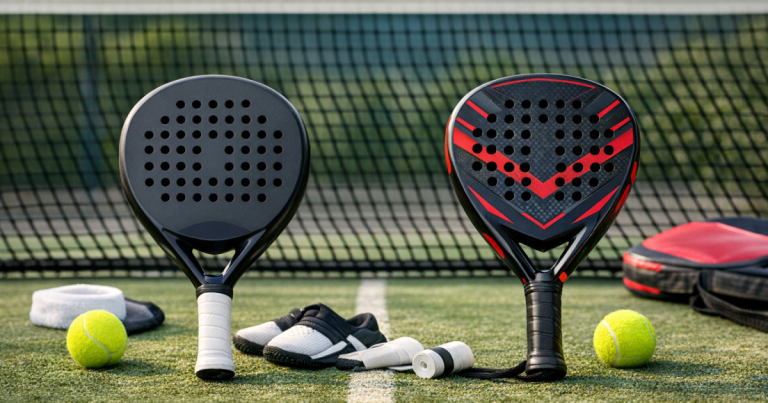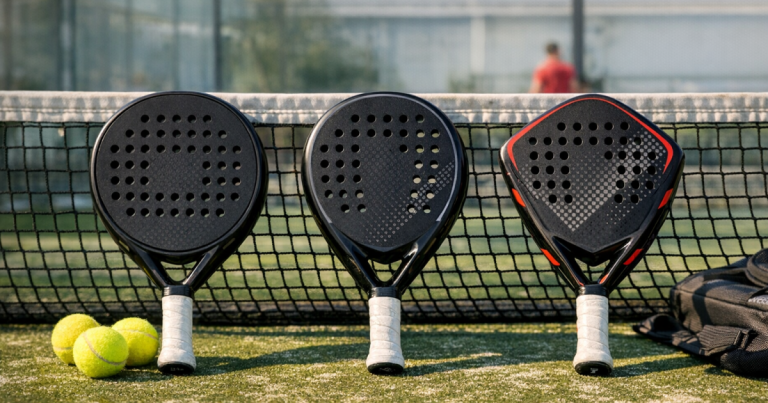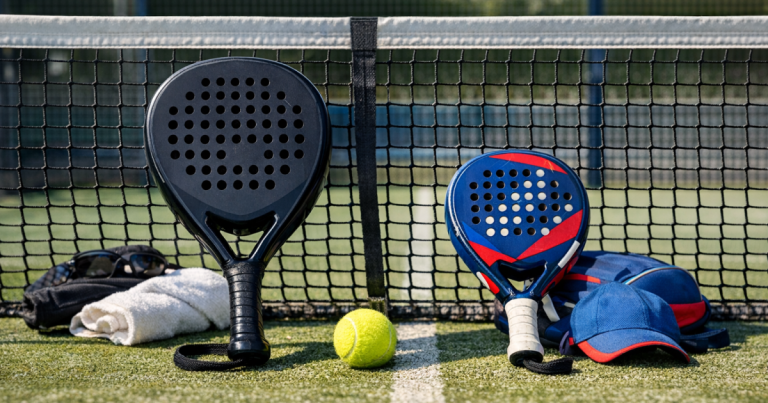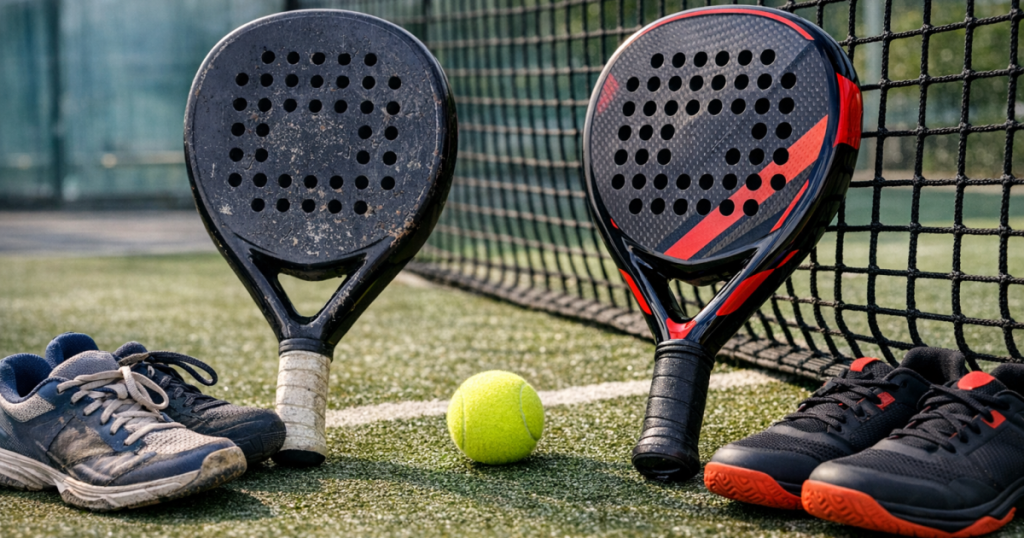
Your first racket should make padel feel easier, not more technical. The debate around cheap vs expensive padel rackets is really about forgiveness, comfort and how quickly you can build reliable habits. A higher price can bring better materials, a more polished feel and longer-term performance, but it does not automatically make volleys, lobs or wall rebounds easier. For most new players, the sensible starting point is a racket that keeps the ball in play, protects the arm from unnecessary strain and gives enough control for club rallies.
The big picture
New players usually benefit more from a forgiving racket than from the most powerful or premium-looking one on the wall. Padel is full of short reactions, controlled volleys, defensive blocks and shots played after the ball has touched the glass. If your racket is too demanding, you may feel late on contact, overhit simple balls, or struggle to recover when opponents speed up the rally.
Price can matter, but only when it buys features that match your stage. A very low-cost racket can feel basic, lose its lively response sooner, or offer less comfort on off-centre hits. A high-end racket can feel wonderful in the right hands, but some are built for players who already create clean contact and want extra attacking feedback. That is not the same as being helpful for a first season.
If you are still learning where to stand and how the glass changes a rally, it is worth pairing racket choice with court understanding. A clearer grasp of court lines, walls and player positions will often improve your play more quickly than jumping to a stiffer, more advanced racket.
What a cheaper racket usually gives you
A cheaper racket can be a perfectly sensible first step, especially if you are playing casually, testing whether padel will become a weekly habit, or using club hire rackets while you learn. Many entry-level rackets are designed to be straightforward rather than explosive. That can be useful: you want a racket that lets you guide the ball, defend under pressure and practise repeatable strokes.
Typical strengths of a lower-cost beginner racket include:
- Less pressure to be perfect: you can learn without worrying about scuffs, wall touches or early mistakes.
- Often softer, more forgiving feel: many beginner models are made to help with comfort and easier ball release, though this varies by model.
- Better value for occasional play: if you are only booking the odd court, a modest racket may be enough.
- Clearer learning feedback: a simple racket can help you notice whether the error came from timing, footwork or shot choice.
The trade-off is that the cheapest rackets may feel less stable when the pace rises. They may also use simpler materials and finishes, so you should check build quality, edge protection, grip comfort and whether the racket feels solid when you hit off-centre. Do not assume a low price means poor quality, but do inspect it rather than buying purely on looks.
What a more expensive racket can add
More expensive rackets often focus on a refined feel, stronger materials, extra stability, more responsive contact or a specific playing style. They may use carbon fibre constructions, textured hitting surfaces, different foam densities or balance choices aimed at more confident players. Those details can matter once your technique is consistent enough to benefit from them.
For a newer player, the main question is not whether the racket is impressive. It is whether you can swing it comfortably for a full match and still control routine balls when tired. A premium racket that feels sharp for five minutes in a shop can become hard work after an hour of defensive lobs, blocks and bandejas.
More expensive rackets can make sense when you:
- play at least weekly and know padel is becoming a regular sport for you;
- have tried hire rackets and can describe what you dislike about them;
- want a racket that will last beyond the first learning phase;
- have enough control to notice differences in balance, firmness and response;
- can test the racket on court, not just hold it in your hand.
The mistake is buying an advanced racket because it is used by a professional or because it promises more power. Power is only useful if the ball still lands where you intended. For many beginners, a controlled return, safe lob and tidy volley win more points than a hard smash attempted too early.
The details that matter more than price
Shape
Round rackets are commonly associated with a larger, easier sweet spot and a more controlled feel. Teardrop rackets sit between control and attacking play. Diamond-shaped rackets are often more demanding and power-focused. These are general tendencies, not guarantees, so always check how the specific model feels in your hand.
Weight and balance
Padel rackets are usually discussed in grams, but the number alone does not tell the whole story. Balance changes how heavy a racket feels when you swing. A head-heavy racket can feel powerful but slower to manoeuvre. A more evenly balanced racket can be easier in quick exchanges at the net. New players should be cautious with anything that feels sluggish during short, fast movements.
Firmness
A softer-feeling racket can help with comfort and easier depth on slower swings. A firmer racket can feel precise and direct, but it may be less forgiving if your timing is inconsistent. If you regularly mishit the ball or feel discomfort after play, chasing a firmer premium model is rarely the obvious solution.
Grip comfort
Do not overlook the handle. If the grip feels too small, too slippery or awkwardly shaped, you may squeeze too hard and tire your hand and forearm. Overgrips are inexpensive compared with rackets and can change comfort noticeably. The right grip set-up can make a modest racket feel far more usable.
Real examples without getting distracted by labels
It helps to look at real product names, but treat them as reference points rather than automatic answers. Racket ranges change, and brands often release several versions with similar names, so verify the exact model, year, weight range and feel before buying.
- Head Evo Speed Padel Racket is an example of a recognisable beginner-friendly racket line that many new players may come across when browsing mainstream padel gear. The useful question is whether the specific version feels easy to control for your swing, not whether the name is familiar.
- Bullpadel Hack 02 2022 Padel Racket is an example of a more advanced-sounding, performance-led racket name. That does not mean a new player cannot use it, but it does mean you should be honest about whether you are ready for a more demanding feel.
- Nox AT10 Genius 18K Padel Racket is another well-known premium-style example. Before assuming it will improve your game, check whether its balance, firmness and handling suit your current level.
The point is simple: a racket’s reputation is less important than whether it helps you play the next ball well. If a cheaper racket lets you defend calmly and place the ball deep, it is doing its job. If an expensive racket makes you rush, grip too tightly or miss routine returns, it is not the right tool yet.
Where new players should spend and where they can save
Spend on comfort, control and durability. Save on features you cannot yet use. A first racket does not need to be the most aggressive model in a brand’s range. It does need to be comfortable enough for regular sessions, sturdy enough for learning, and predictable enough that your technique can settle.
Good places to spend a little more include:
- a racket that feels stable on off-centre contact;
- a comfortable grip set-up with room for an overgrip;
- a model that does not feel too head-heavy during quick reactions;
- basic protection if you often catch the frame near the glass or floor;
- a racket you can test or return according to the shop’s policy.
Places where beginners can usually save include:
- pro-level endorsements that do not reflect your current game;
- very aggressive shapes designed mainly for advanced attacking play;
- surface textures if you are not yet controlling spin consistently;
- buying the newest version when an older suitable version feels just as good;
- carrying multiple rackets before you know your preferred feel.
Also remember that the racket is only one part of how the ball behaves. Old or unsuitable balls can make a good racket feel flat, lively or inconsistent. If club drills suddenly feel strange, check how padel balls change speed and bounce before blaming your equipment.
Different views you will hear at the club
You will hear one group say beginners should buy the cheapest racket possible until they improve. That can work if the racket is comfortable, safe to swing and not so poor that it makes learning harder. It is a sensible approach for players who are still deciding how often they will play.
You will hear another group say it is cheaper in the long run to buy a quality racket early. That can also be true if you are already booking weekly games, taking coaching and know the type of feel you like. A well-chosen mid-range racket can save you from replacing an ultra-basic one after a few months.
The weakest argument is that expensive automatically means better for beginners. Padel skill is built through positioning, patience, soft hands, smart shot selection and repetition. Equipment can support that process, but it cannot skip it.
A simple decision route for your first racket
If you are still unsure, use this route rather than guessing from price alone:
- Playing once a month: use hire rackets or choose a modest beginner racket until you know you will continue.
- Playing weekly: consider a reliable beginner or lower mid-range racket that feels comfortable over a full session.
- Taking coaching: ask what your coach notices about your swing speed, contact point and control before changing racket type.
- Feeling arm fatigue: prioritise comfort, manageable weight and grip set-up over stiffness or extra power.
- Improving quickly: test a few shapes and balances before spending more, because your preferences may change once rallies get faster.
Once you own a racket, look after the frame. New players often scrape the edge during low defensive shots or when turning near the glass. Learning how to fit racket protector tape neatly is a small step that can help keep the racket in better condition, especially during the first few months.
Things readers ask
Are cheap vs expensive padel rackets really different?
Yes, but the difference is not always helpful for a beginner. Expensive rackets may feel more refined or powerful, while cheaper rackets can be easier, softer and less stressful to learn with.
Should my first racket be round?
For many new players, a round racket is a sensible starting point because it usually supports control and forgiveness. Still, test the specific racket if you can, because shape alone does not tell the whole story.
Is a heavy racket better for power?
Not necessarily for beginners. A heavier or head-heavy racket may feel stronger through the ball, but it can slow your reactions and make long matches more tiring.
How long should I keep my first racket?
Keep it while it feels comfortable and predictable. Consider changing when you play regularly, understand your preferred balance and can explain what your current racket is limiting.
Can I start with a second-hand racket?
Yes, if it is in good condition. Check for cracks, soft spots, loose parts, worn grip and signs of heavy frame damage before relying on it for regular play.
Why it matters
The right first racket is not the one with the highest price or the boldest design. It is the one that lets you learn calmly, play more rallies and leave the court wanting to book again. For most new players, that means prioritising control, comfort and forgiveness, then spending more only when you can feel a clear reason for doing so.
If a modest racket helps you keep the ball low, defend the glass and place lobs with confidence, it is a good choice. If a premium racket genuinely feels comfortable and controllable after a proper test, it may be worth the investment. Let your game lead the decision, not the price tag.