Seeing yourself play can be a bit uncomfortable at first, but it is often the quickest way to understand what is really happening on court. For new padel players, video analysis coaching can turn vague advice like “move earlier” or “use the glass” into something visible, specific and easier to fix.
The catch is that filming alone does not make you better. The value comes from having a coach translate the footage into one or two practical changes you can actually use in your next session.
The short answer
Yes, it can be worth it for beginners, but not as a replacement for normal on-court coaching. It works best when you already understand the basic rules, have played enough points to show repeatable habits, and are ready to work on a small number of improvements rather than every mistake at once.
If you are still unsure how scoring, walls, serving and court positioning work, start with the fundamentals first. A clear primer such as how padel works for new players will give you the base knowledge that makes filmed feedback easier to understand.
Think of filmed coaching as a magnifying glass. It will not magically create better technique, but it can help you and your coach find the biggest leak in your game more quickly.
How filmed feedback helps beginners
Padel feels fast when you are new. During a rally you are trying to watch the ball, remember where to stand, avoid crowding your partner, and choose a sensible shot. That makes it hard to notice your own habits in real time.
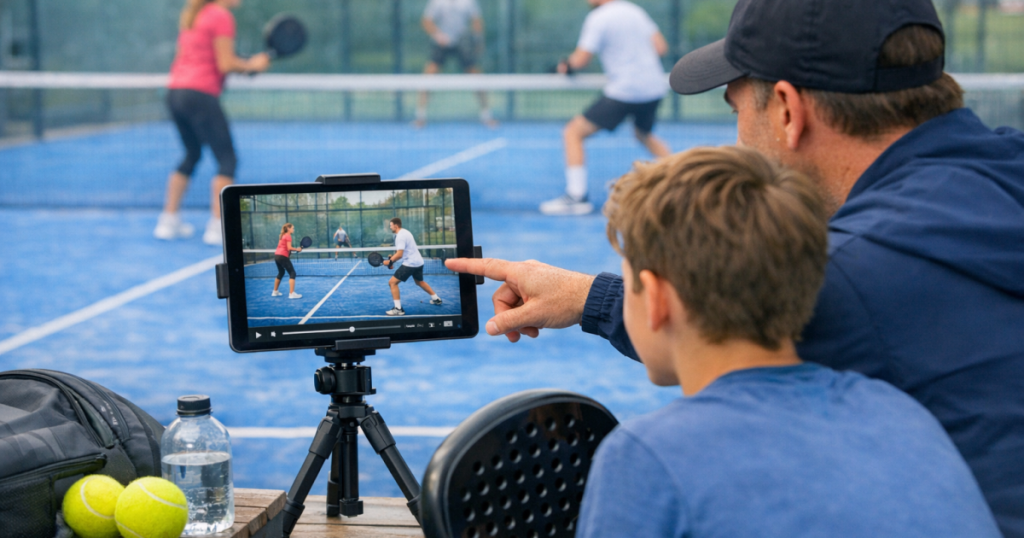
Video slows the learning process down. A coach can pause a point and show you, for example, that you are moving backwards after a lob instead of turning early, standing too close to the side glass, or hitting low balls with a rushed swing. Those details are much easier to grasp when you can see them rather than imagine them.
Good video analysis coaching is not about criticising every shot. For a beginner, the most useful review usually focuses on patterns:
- whether you recover to a sensible position after playing the ball
- how early you prepare your racket
- whether you move with your partner or leave gaps
- how often you try low-percentage winners from awkward positions
- whether your serve and return are starting the point calmly
- how you react when the ball comes off the back glass
Those patterns matter because they repeat across a whole match. Fixing one of them can improve many points, even before your shots become more powerful or polished.
When it is worth paying attention to video
Filmed coaching is most useful once you have moved past your very first hit. You do not need to be good, but you do need enough basic play for the footage to show real habits rather than complete novelty.
You have played a few sessions already
If you have only just picked up a racket, your first lesson is usually better spent on grip, contact point, serving, simple volleys and how to let the ball rebound from the glass. At that stage, a coach can spot most issues live without needing a recording.
After a handful of games or beginner classes, video becomes more useful because your movement and decision-making start to repeat. That is when a clip can reveal whether a problem is technical, tactical or simply positional.
You keep hearing the same advice
If different partners keep saying “come forward”, “leave that one”, or “watch the glass”, footage can show what they mean. Many beginners believe they are in the right place until they see the court from a wider angle.
This is especially helpful in doubles because padel is not only about your own shot. Your spacing with your partner, your recovery after lobs and your decisions at the net can all look very different from outside the court.
You want clearer practice goals
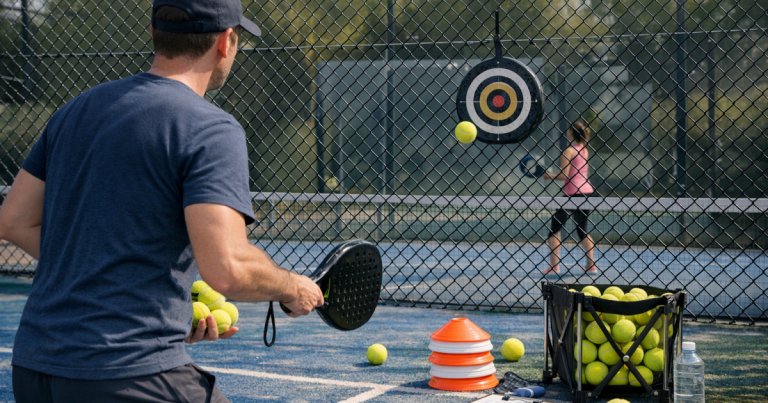
A good coach should turn the review into a short practice plan. For example, instead of saying “improve your bandeja”, they might suggest working on shoulder turn, contact height and recovery position over the next two sessions. If accuracy is part of that plan, structured aids such as padel training targets for drills can help make the follow-up practice more focused.
When it may be too soon
There are times when video is not the best next step. That does not mean it is useless; it simply means your time and money may be better spent elsewhere first.
- You are still learning the rules: If you are unsure when the ball is in, how the serve works, or when to use the glass, focus on basic play and simple coaching first.
- You rarely play points: Technical clips of isolated shots can help, but match footage is usually more revealing. If you only rally casually, there may not be enough tactical context.
- You find feedback overwhelming: Some players freeze when they see too many corrections. In that case, ask for one priority only.
- The coach gives you a long list but no plan: A useful review should end with practical next steps, not a catalogue of flaws.
- The footage is too narrow: If the camera only shows the hitter and not the court shape, movement and partner positioning, important information is missing.
Beginners often improve fastest by simplifying. One well-chosen correction is more valuable than twenty interesting observations that never make it onto the court.
What a useful session should include
The best format is usually simple: a short amount of match or drill footage, a focused review, and a follow-up plan. You do not need studio-quality filming. You need a clear enough view of the court for a coach to see your movement, choices and timing.
Before the session
Ask what the coach wants recorded. Some may prefer points from behind the court, while others may want a side angle for technique. For doubles, a wide view is normally more useful than a close-up because padel positioning depends so much on court shape.
It also helps to bring one question. For example: “Why do I lose so many points after defending the back glass?” or “Why do I feel late at the net?” A specific question keeps the review useful and stops it turning into a general commentary.
During the review
A coach should explain what is happening, why it matters, and what to do next. The “why” is important. If you simply hear that your preparation is late, you may not change much. If you see that late preparation forces a rushed swing and leaves you out of position, the fix becomes more convincing.
For new players, the most useful clips are often ordinary points rather than spectacular mistakes. A routine return, a simple volley or a slow ball off the glass can reveal more than a chaotic rally where everyone is scrambling.
Afterwards
Leave with two or three clear actions at most. A good beginner plan might look like this:
- pause briefly after serving and recover to the correct side rather than watching the ball
- turn the shoulders earlier when defending from the back glass
- aim cross-court on pressured balls instead of trying to finish the point
- move forward with your partner after a good lob
Those are simple enough to practise in a club session, box league match or beginner coaching group.
How to judge whether it was worth it
The clearest sign of value is not whether the footage looked professional. It is whether you understood your game better and left with a realistic way to improve.
Use these checks after a session:
- Could you explain your main issue in one sentence? If not, the feedback may have been too broad.
- Did the coach connect the issue to points lost or pressure created? Beginners need practical relevance, not abstract technique talk.
- Did you get a drill, cue or match habit to practise? Analysis without follow-up is interesting but limited.
- Did the advice match your level? A new player does not need advanced tactical detail before basic spacing and consistency.
- Can you measure progress informally? For example, fewer rushed returns, better recovery after lobs, or more comfortable use of the back glass.
If the answer to most of those is yes, the session probably delivered value. If you came away with a long list of technical terms and no clear next step, a simpler on-court lesson may be a better use of your next coaching slot.
Common beginner examples
Here are typical problems that show up clearly on video and are worth addressing early.
Standing too flat at the back
Many new players wait facing the net with little body turn. On video, you can see how this makes the ball feel faster and reduces time to react, especially after the back glass. A coach may work on earlier shoulder turn and smaller adjustment steps.
Following the ball instead of the shape of the court
Beginners often drift towards the ball and leave open spaces. From inside the point, that movement feels natural. From a wider camera angle, it becomes obvious that the pair has lost its shape.
Trying to win too soon
Video can show how often a player attacks from a poor position. The fix may be tactical rather than technical: play a safer cross-court ball, reset the rally, or use a lob to recover. This is one of the biggest mindset shifts for players coming from tennis, squash or casual racket sports.
Not recognising the same mistake
A player may think they are making different errors, but the footage might reveal one repeated cause: late preparation, poor spacing, or rushing after a good shot. That is where video is especially powerful for beginners because it turns confusion into a pattern.
Private lesson, group session or club review?
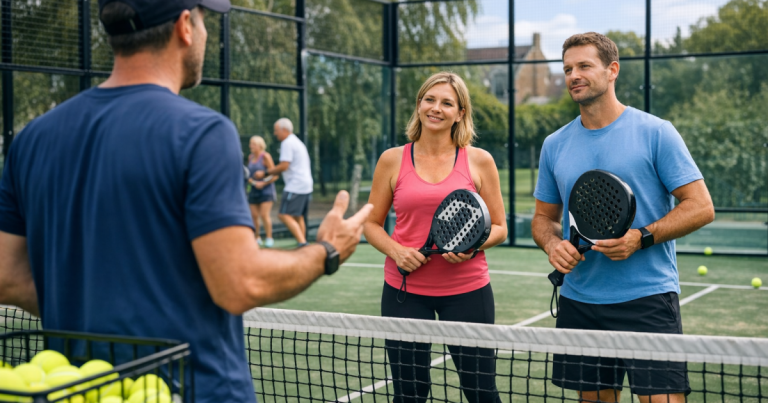
There is no single right format. A private session gives the most individual attention, but a group review can be useful if the coach keeps the feedback level-appropriate and avoids overloading each player.
For many UK club players, the most sensible route is to mix normal coaching with the occasional filmed review. You might take regular beginner lessons, then use video once you have played enough matches to spot recurring issues. If you are weighing up different coaching formats, the breakdown in the David Lloyd padel coaching review is a useful reference point for thinking about lessons, costs and alternatives.
Ask before booking whether video review is included, optional or charged separately. Also ask how long the analysis will be and what you will receive afterwards. You do not need a complex report, but a short list of priorities can make the session far easier to act on.
How to make filmed coaching more useful
A little preparation makes a big difference. Before you film, agree the purpose. Are you checking movement, technique, shot choice or doubles positioning? Trying to analyse everything at once usually leads to muddled feedback.
During play, record normal points rather than only the moments you want the coach to see. It is tempting to save clips of big errors, but ordinary rallies often show the habits that matter most.
After the review, test the advice in your next match. Do not expect instant perfection. Instead, look for small signs: you feel less rushed, you recover earlier, you make simpler decisions, or your partner has fewer gaps to cover.
One practical rule is to give each change at least a couple of sessions before judging it. New movement habits can feel awkward at first, even when they are correct.
Helpful questions
Do I need expensive camera equipment?
No. For beginner coaching, clarity and angle matter more than expensive equipment. The coach needs to see the court, your movement and the point pattern. Always follow the club’s rules on filming and get permission from the people being recorded.
Can I analyse my own padel videos?
You can spot obvious habits, such as standing too close to the glass or not recovering after a shot. However, beginners often misread the cause of mistakes. A coach can separate symptoms from root problems and stop you chasing the wrong fix.
How often should a new player use video?
Occasionally is usually enough. Use it when you have a recurring issue, when your progress feels stuck, or when your coach wants to check whether a change is working. Weekly analysis is rarely necessary for a beginner unless it is part of a structured coaching programme.
The big picture
Video analysis can be a smart tool for new padel players when it is focused, level-appropriate and tied to practice. It is less useful when it becomes a long critique or when the player has not yet built enough basic understanding of the game.
The sweet spot is simple: play enough points to reveal patterns, film from an angle that shows the court, ask one clear question, and leave with a small number of actions. Used that way, it can make coaching feel less vague and help beginners progress into more confident club play.