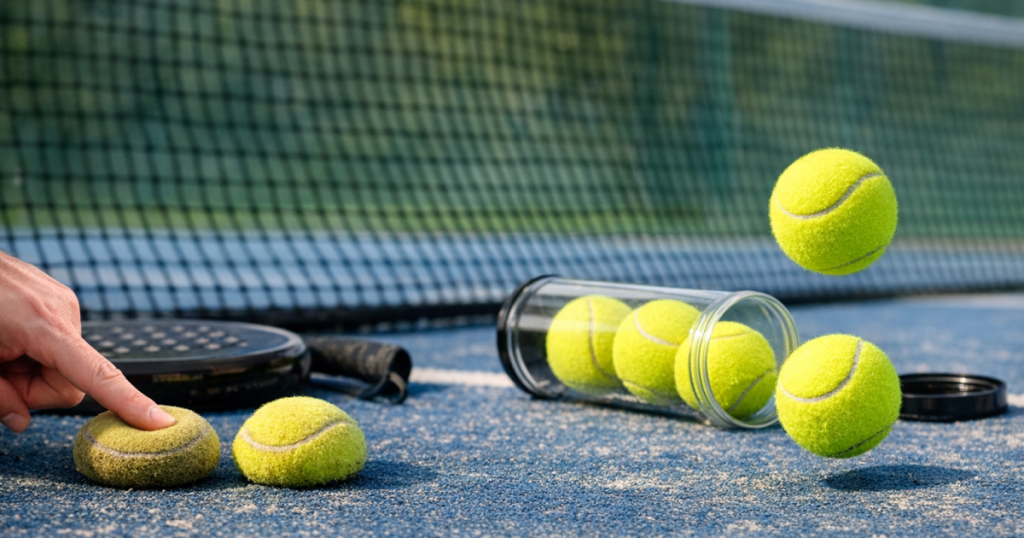
A fresh tube can make beginner rallies feel cleaner, while tired balls can turn the same court into a scrappy guessing game. This padel balls guide explains the main types, how bounce changes, and the simple signs that tell you when a ball is past its best.
Padel balls are small, easy to overlook, and often blamed too late. If the ball is dying, your volleys feel heavy, lobs come up short, and wall rebounds become less predictable. For new players, that can look like a technique problem when the equipment is really doing part of the damage.
The short version
- Use proper padel balls, not tennis balls, for normal club play and matches.
- Newer balls bounce more consistently, come off the glass more cleanly, and make scoring feel fairer.
- Beginner rallies usually feel better with a standard padel ball rather than an especially fast-feeling option.
- Replace balls when they feel soft, sound dull, lose height, or produce noticeably inconsistent rebounds.
- Old balls can still be useful for gentle drills, but they should not decide close points in a proper match.
If you are still getting comfortable with court zones, service boxes and the back glass, it is worth pairing this with the basics of padel court layout and beginner tactics. Good ball choice will not fix everything, but it makes learning much easier.
Padel balls are not just tennis balls with a different label
Padel balls look very similar to tennis balls: yellow felt, pressurised core, familiar size in the hand. The important difference is how they are intended to behave on a smaller enclosed court. Padel uses the glass, the side mesh, shorter reaction distances and more controlled overheads, so the ball needs to offer bounce without making every rally unmanageable.
Official competition rules set limits for ball size, weight and rebound. Most beginners do not need to measure any of this, but the principle matters: a proper padel ball is designed to sit within padel’s playing conditions. A tennis ball may feel too lively, too firm, or simply different enough to distort your timing.
For casual knockabouts, someone may occasionally produce a tube of tennis balls because they are available. That is fine for a very informal hit, but it is not the best way to learn. Once you are playing at a club, joining mix-ins, or starting box league matches, use padel balls so everyone is practising the same game.
The main types you will see
Most beginner players do not need a complicated ball collection. The useful distinction is between standard padel balls, faster-feeling balls, training balls, and tired balls that are being kept alive longer than they should be.
Standard pressurised padel balls
This is the everyday option for most club play. A standard pressurised padel ball should feel lively enough to reward clean contact but controlled enough for beginners to defend, lob and play off the glass. If you are unsure what to use, this is usually the safest starting point.
Recognisable examples include Head Padel Pro and Bullpadel Premium Pro. Treat those as examples of common padel ball products rather than a guarantee that either will suit every court or every group. Availability, packaging and feel can vary, so check the tube label and use what your club commonly accepts.
Faster-feeling balls
Some balls feel livelier off the racket and glass. They can be enjoyable for stronger players who want more speed through the court, but beginners may find them harder to control, particularly on overheads, blocks and defensive shots near the back wall.
A faster ball is not automatically better. It can shorten rallies, make lobs fly long, and punish late preparation. If your group is new to padel, consistency usually matters more than extra pace.
Training or practice balls
Some coaching sessions use older balls or training-focused balls for repetition work. That can be completely sensible when the aim is contact quality, footwork or basic rhythm rather than match realism. The key is to know what you are practising.
If you are learning a bandeja, a soft block volley or a controlled lob, a slightly older ball may still be useful. If you are practising match points, serve returns or glass rebounds, you want a ball that behaves close to a normal match ball.
Old balls kept for warm-ups
There is nothing wrong with keeping opened balls for warm-ups, basket drills or gentle rallies. The problem starts when old balls become the default for everything. Beginners can end up adjusting their technique around a flat ball, then struggle when a new ball jumps off the glass more sharply.
What affects bounce on court?
Bounce is not only about the ball. The court, weather and playing style all change how lively the game feels. This is especially noticeable in Great Britain, where many players move between indoor courts, covered courts and outdoor courts in cooler or damp conditions.
- Ball pressure: pressurised balls gradually lose pressure after opening, so they bounce lower and feel heavier over time.
- Temperature: colder conditions usually make balls feel less lively, while warmer indoor conditions can make them feel more responsive.
- Damp: wet or damp felt can make a ball heavier and slower, particularly on outdoor courts after rain or condensation.
- Court surface: sand distribution, wear and general court speed affect how the ball grips, skids or sits up.
- Glass rebounds: a fresh ball tends to come off the back wall more predictably than a dead one, which matters when learning defence.
If a ball is behaving strangely off the walls, do not always assume the rule is unusual. First check whether the ball itself is flat or damp, then check whether the rebound was legal. The guide to legal shots, rebounds and point loss is useful once you start playing more points from the glass.
Simple checks before you start a match
You do not need lab tests to judge padel balls. A few quick checks before the first game can prevent arguments and keep the match fair.
- Listen to the contact: a fresh ball usually gives a sharper, cleaner sound. A flat ball often sounds dull or thuddy.
- Compare bounce height: drop two balls from the same height on the same part of the court. If one consistently sits much lower, avoid using it for serious points.
- Squeeze gently: a very soft ball is usually past match standard. Do not overdo this, as repeated hard squeezing is not helpful.
- Look at the felt: badly worn, fluffy, bald or damp felt can change flight and bounce.
- Check consistency across the tube: one odd ball can disrupt rallies even if the other two are fine.
For a friendly match, the fairest approach is simple: agree the balls before you start. If one pair brings a new tube and the other pair prefers an older set, have the conversation during the warm-up, not at 4-4.
When should beginners replace padel balls?
There is no perfect session count because courts, weather, storage and hitting level all matter. Heavy-hitting players on abrasive courts will wear balls faster than a gentle beginner group indoors. Instead of working from a fixed number, judge the ball by how it plays.
Replace the balls for match play when rallies are being changed by the ball rather than the players. That usually means the ball is dropping short from normal shots, failing to come off the glass cleanly, or forcing everyone to hit harder just to keep the rally alive.
For casual beginner sessions, you can stretch balls a little further if everyone is comfortable with that. For club matches, box leagues, coaching assessments or competitive sets, opening a fresh tube is usually the cleaner choice. It removes one variable and lets players focus on positioning, shot selection and scoring.
Old balls do not have to go straight in the bin. Keep them separate for warm-ups, hand-fed drills or serve rhythm practice. Just do not mix one tired ball into a match set with two newer ones, because the inconsistent bounce is more frustrating than using three equally worn balls.
How ball condition changes beginner shots
Beginners often think of ball condition only as a bounce issue, but it affects several common shots.
- Serves: a flat ball can make the serve sit up less, while a very fresh lively ball can carry further than expected.
- Lobs: tired balls often need more lift and cleaner timing; fresh balls may travel deeper with the same swing.
- Volleys: dead balls can feel heavy on the racket face, encouraging players to poke rather than guide the ball.
- Defensive glass shots: inconsistent bounce makes it harder to learn when to wait, turn and play after the wall.
- Overheads: faster balls may reward clean technique but can also make beginner smashes and bandejas harder to control.
If a shot suddenly feels much harder than usual, check the ball before rebuilding your whole technique. One flat ball in a tube can make a decent contact feel poor.
Storage habits that help balls last longer
Padel balls begin losing their best feel once the tube is opened. You cannot stop that completely, but you can avoid making it worse.
- Put balls back in the tube after play rather than leaving them loose in a damp bag.
- Store them somewhere dry and at a steady room temperature.
- Avoid leaving opened tubes in a car boot for long periods, especially in cold or damp weather.
- Keep match balls and drill balls separate so you know what condition each set is in.
- Do not rely on a pressure-saving container to rescue balls that are already dead; at best, it helps slow the decline of usable balls.
Good storage is not about being fussy. It simply means the balls you bring next week will behave more like the balls you used this week.
Club etiquette around balls
At many UK clubs, players take turns bringing balls or agree to split the cost informally. The important thing is not the exact arrangement; it is avoiding awkwardness. If you invite people to a match, bring a playable tube. If someone else brings the balls, do not criticise them mid-match unless there is a genuine issue with bounce or dampness.
For competitive play, new or nearly new balls are a small courtesy that improves the match for everyone. For social mix-ins, clubs may use whatever is normal for that session. If you are unsure, ask before you arrive rather than assuming.
This sits alongside wider court habits such as warm-up length, calling the score clearly and respecting other players’ rhythm. If you are building confidence at a club, the guide to padel etiquette and club culture covers those small details that make sessions run smoothly.
FAQ
Can I use tennis balls for padel?
For proper padel, use padel balls. Tennis balls look similar but can feel livelier or behave differently, which affects rallies, rebounds and timing.
How many balls do I need for a match?
A standard tube of three padel balls is normal for a match or club session. Bring a spare tube if the court is damp or you are playing a longer session.
Do padel balls bounce less in cold weather?
They often feel less lively in colder conditions. On outdoor or unheated courts, expect a lower, heavier bounce than on a warm indoor court.
Should serves be replayed if the ball feels wrong?
Not just because someone dislikes the feel. If the ball breaks, becomes unplayable, or there is a genuine interruption, check the situation against the match rules. The explanation of how padel let rules work is a useful next step.
Are expensive balls worth it for beginners?
You do not need the most premium tube to start. A recognised padel ball in good condition matters more than paying extra for a faster or more specialised feel.
What stands out
Ball choice is one of the easiest parts of beginner padel to get right. Use proper padel balls, keep them dry, replace them when the bounce becomes inconsistent, and save the tired ones for warm-ups or drills.
The best test is not the label on the tube. It is whether the ball lets both pairs play normal rallies, learn realistic rebounds and trust the outcome of points. When the ball stops doing that, it is time for a fresh set.