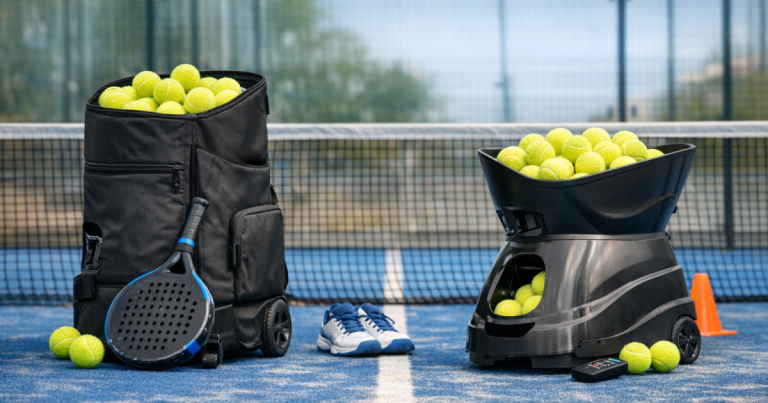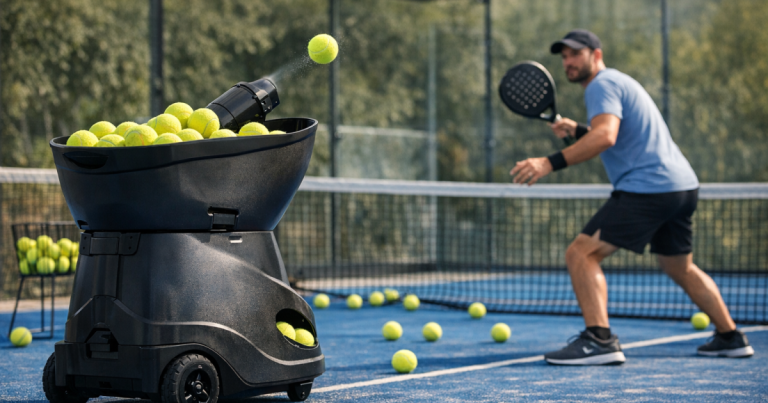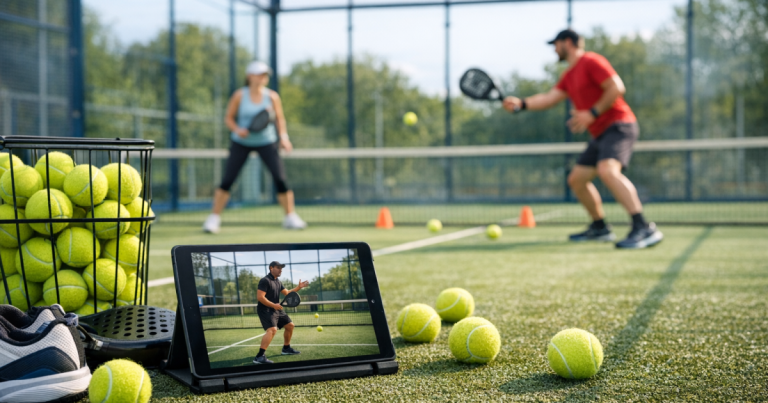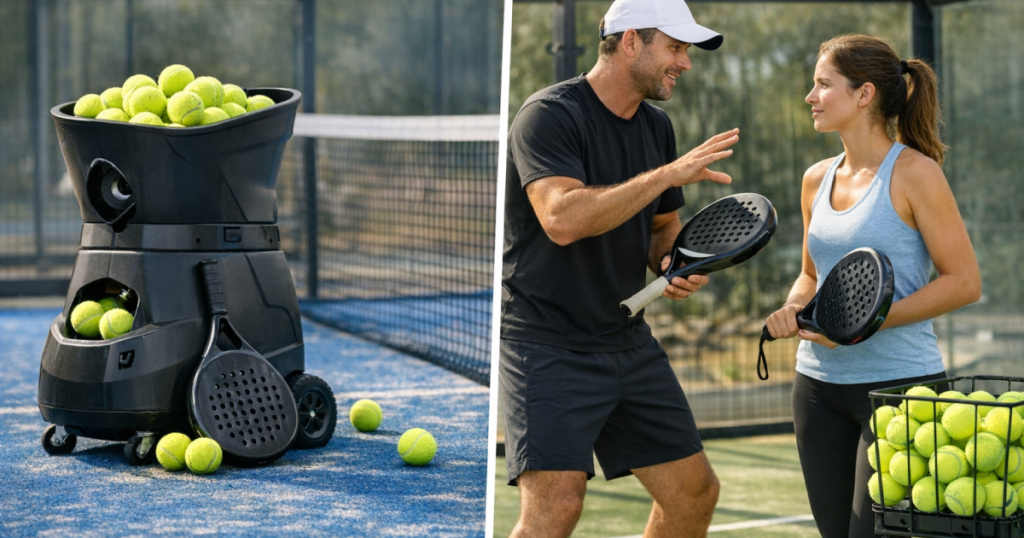
For most new players, the fastest route is not simply choosing padel ball machine vs coaching; it is knowing what each one fixes. A coach helps you understand why the ball is going wrong. A machine gives you the repeated feeds needed to make a better movement feel normal. Beginners usually improve quickest when coaching sets the direction and machine practice reinforces one clear habit at a time.
What to know first
If you are still learning the basic strokes, positioning and scoring rhythm, coaching usually gives faster early improvement. The reason is simple: beginners often cannot see their own mistakes clearly. You might think your forehand is the problem when the real issue is late preparation, poor court position, or choosing the wrong shot for the situation.
A ball machine becomes more useful once you already know the change you are trying to make. It can help you repeat a bandeja preparation, get comfortable volleying at the net, or practise moving back for balls off the glass. Without a clear target, though, it can turn into a lot of hitting without much learning.
- Choose coaching first if you are unsure what you are doing wrong.
- Use a ball machine when you have one specific technical habit to repeat.
- Combine both if you can: lesson for feedback, machine session for repetition, match play for decision-making.
- Avoid doing everything at once. Beginners improve faster with one focused drill than with 60 minutes of random balls.
Why coaching usually wins early on
Padel looks simple from the outside, but beginner mistakes are often linked together. A weak return might come from standing too close to the glass. A rushed volley might happen because you are not split-stepping. A missed lob might be caused by trying to hit too hard rather than lifting with control.
A good coach does more than feed balls. They can adjust your grip, show you where to stand, explain when to let the ball hit the glass, and stop you building awkward habits. That matters because early padel progress is not just about cleaner contact; it is about understanding the game’s patterns.
For first lessons, the best coaching is usually simple and practical. You do not need advanced tactics straight away. You need repeatable basics: serve and return, controlled forehands and backhands, using the glass calmly, moving as a pair, and learning when a lob is safer than a hard drive. If you are choosing lessons, this guide to finding padel coaching that matches your level is a useful next step.
Where a ball machine can help a beginner
A ball machine is best at one thing: predictable repetition. That can be valuable because beginners often do not get enough repeated practice in normal games. At club nights, balls arrive at different speeds, from different angles, and with the pressure of keeping the rally going. That is useful experience, but it is not always the best environment for rebuilding a stroke.
Machine practice can help when you already have a clear drill. For example, if a coach has shown you how to prepare earlier on your forehand, a steady feed can give you 80 similar chances to rehearse it. If you keep panicking near the back glass, a slower repeated feed can help you learn to wait, turn, and play the ball with more control.
The limitation is that machines do not read your body language, pause the drill, or explain why a shot failed. They also do not recreate the full decision-making of padel. In a real point, you must judge opponents, partner position, glass rebound, court space and shot choice. A machine can support that learning, but it does not replace it.
Padel ball machine vs coaching for common beginner problems
The right choice depends on the problem you are trying to solve. Use these examples to decide what is likely to move you forward fastest.
You keep missing the return
Start with coaching. Returns involve positioning, timing, racket preparation and shot selection. Many beginners try to do too much with the return instead of getting the ball low and controlled. Once a coach has corrected your starting position and target, a machine or feeding drill can help you repeat the movement.
You panic when the ball hits the glass
Coaching is usually the better first step because using the glass is partly technical and partly mental. You need to learn when to turn, when to let the ball come through, and how much time you really have. After that, machine practice can be useful if it can create consistent back-court feeds at a manageable pace.
Your volleys are inconsistent
This can go either way. If your grip, contact point or footwork is unclear, get feedback first. If you already know the correct volley shape and simply need more repetitions, a ball machine can be very useful. Keep the feed slow enough that you can prepare properly rather than stabbing at the ball.
You do not know where to stand with your partner
Choose coaching or coached match play. A machine will not teach pair movement properly. Beginners often improve quickly once someone explains simple court habits, such as moving up together, avoiding big gaps through the middle, and recovering after a lob.
A sensible four-week improvement plan
If you want a practical route, avoid thinking of this as a single decision. Use each type of practice for the job it does best.
- Week 1: Take a lesson or beginner clinic. Ask for one or two priority fixes only. Too much feedback at once makes practice messy.
- Week 2: Repeat one habit. Use a ball machine, basket feed, or cooperative rally to practise the exact change from the lesson. Keep score by quality of movement, not by winners.
- Week 3: Try it in a low-pressure game. Play a friendly set or club night and use the new habit in real points. Expect it to feel less tidy than in drills.
- Week 4: Review and adjust. Book another lesson, send a short video to your coach if they accept clips, or ask for feedback in your next session. Then pick the next habit.
This loop works because it joins feedback, repetition and match testing. Beginners often stall when they only do one of those things. Lessons without practice fade quickly. Machine sessions without feedback can repeat the wrong movement. Matches without a focus can hide the same mistakes for months.
Cost and access checks before you decide
In the UK, access varies a lot by club. Some venues offer machine hire, some include drills in group sessions, and others focus mainly on coaching, leagues and social play. Rates and availability change by location and time of day, so check current details with your own club rather than assuming one route is always cheaper.
Think in terms of useful practice, not just time on court. A one-hour coaching session that fixes your return position could be better value than several unfocused hitting sessions. Equally, a short machine session after a lesson can be excellent if it gives you the repetitions you need. For broader budgeting around the sport, the guide to padel equipment costs and what to skip can help you keep spending sensible.
- Check court rules. Some clubs restrict when machines can be used.
- Check whether balls are included. Machine sessions may require suitable balls supplied by the venue.
- Check whether you need a partner. Some drills are easier with someone collecting or rotating.
- Check your goal before booking. Write down the one shot or situation you want to improve.
How to make either option work harder
Whether you choose a coach, a machine, or both, the improvement comes from focus. Beginners often want to practise everything: serve, return, lob, smash, glass, volleys and tactics. That feels productive, but it usually creates shallow learning.
Use a narrow target. For example: “I want to return cross-court with control,” “I want to wait longer before playing off the back glass,” or “I want to volley without swinging.” A clear target makes feedback easier and stops practice becoming a hitting session with no purpose.
It also helps to connect drills with match situations. If you practise lobs, know when you will use them: under pressure, from the back of the court, when opponents are close to the net. If you practise volleys, know the aim: keeping opponents deep, not finishing every ball. For new players preparing for organised games, the padel rules cheat sheet for a first club match is a handy companion to technical practice.
Questions people ask
Is a ball machine worth it for complete beginners?
Usually not as the first step. Complete beginners tend to benefit more from coaching, because they need feedback on grip, movement, contact point and basic court position before repeating lots of balls.
Can I improve with coaching only?
Yes, but you will improve faster if you practise between lessons. Even 20 minutes of focused repetition or a friendly game with one clear goal can help the lesson stick.
Can a ball machine make bad habits worse?
Yes. If you repeat the wrong swing, poor footwork or rushed timing, the machine can make that habit feel more natural. Use it after you know what you are trying to change.
How often should a beginner use a ball machine?
Occasionally and with a clear purpose. One focused session every week or two can help, especially when linked to a recent lesson. Random machine practice is less useful.
What is the best combination for faster progress?
The strongest beginner routine is coaching for diagnosis, machine or fed drills for repetition, and friendly matches for decision-making. That balance builds technique and game sense together.
What stands out
For beginners, coaching normally improves performance faster because it identifies the real problem and prevents poor habits from becoming automatic. A ball machine is still useful, but mainly after you have a clear technical goal and need controlled repetition.
If you are choosing one for your next step, start with the question that matters most: do you know exactly what you need to practise? If not, book coaching or a structured beginner session. If you do, a machine session can be a smart way to turn that advice into a repeatable skill.
Quick Buying Links
Padel Ball Machine
For most new players, the fastest route is not simply choosing padel ball machine vs coaching; it is knowing what each one fixes.
Coaching: Which Improves Beginners Faster?
Worth considering if its strengths better match your needs.