Padel balls lose their lively bounce faster when they are left hot, damp, crushed or half-forgotten in a kit bag. Getting padel ball storage right helps you keep a more consistent bounce between games, saves waste, and makes practice sessions feel less frustrating.
The good news is that you do not need a complicated routine. A few simple habits after each match will make a bigger difference than buying a fresh tube every time your balls feel slightly tired.
The short version
Store opened padel balls in their tube with the lid firmly closed, keep them at normal indoor temperature, and make sure they are dry before they go back in your bag. Avoid leaving them in a car boot, beside a radiator, in direct sun, or loose next to wet towels and sweaty clothing.
If you are still working out what to take to social matches, it is worth reading our guide to which padel balls to bring to club games. Storage helps, but starting with the right tube for your session matters too.
Why padel balls go flat
Most padel balls are pressurised. When the tube is sealed, the balls are kept in a controlled environment. Once you open the tube, pressure slowly escapes from the ball over time. Play also softens the felt, compresses the core, and adds dirt or moisture from the court surface.
That does not mean a ball is ruined after one match. For beginner and early club play, a tube can often remain useful for drills, warm-ups and casual rallies after it is no longer at its best for a proper match. The aim is not to make balls last forever; it is to slow down the avoidable things that make them feel dead too soon.
Step 1: Put balls back in the tube straight after play
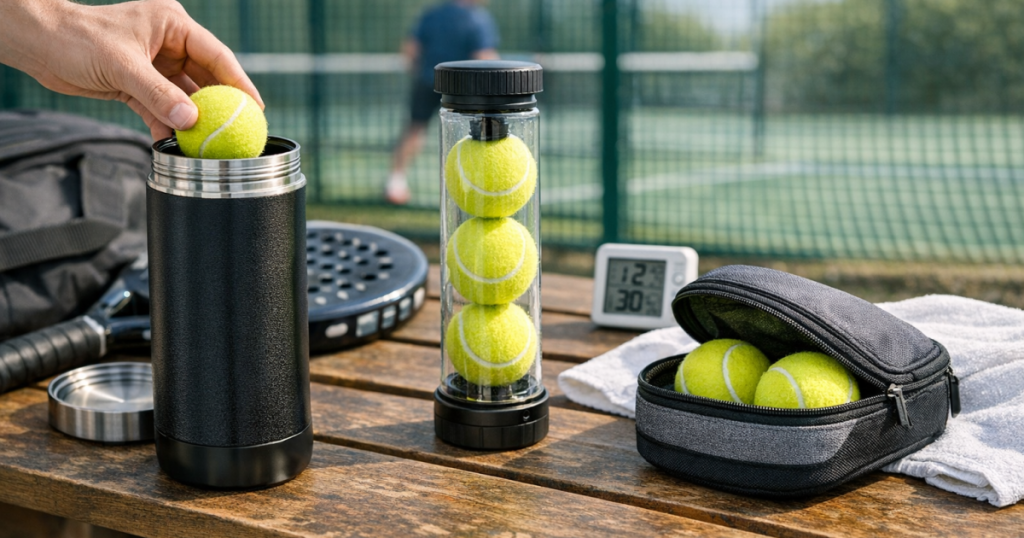
The original tube is the easiest storage container because it keeps the balls together, protects the felt from dirt in your bag, and stops them being squeezed under shoes, rackets or water bottles. As soon as your game ends, count the balls, check they are not wet, and put them back in the tube before you pack the rest of your kit.
Do not leave balls loose in the bottom of a padel bag. Loose balls pick up grit, get flattened under heavier items, and are easy to mix with older balls from previous sessions. If the lid on the tube no longer fits securely, use a clean ball pocket or a small pouch as a temporary option, then replace the tube when you can.
Step 2: Keep them dry before you close the lid
Moisture is one of the quickest ways to make padel balls feel heavy. In GB, this is especially relevant for winter evenings, covered courts with damp edges, and bags stored in cold hallways after a match. If the balls are visibly damp, do not seal them into an airtight tube immediately.
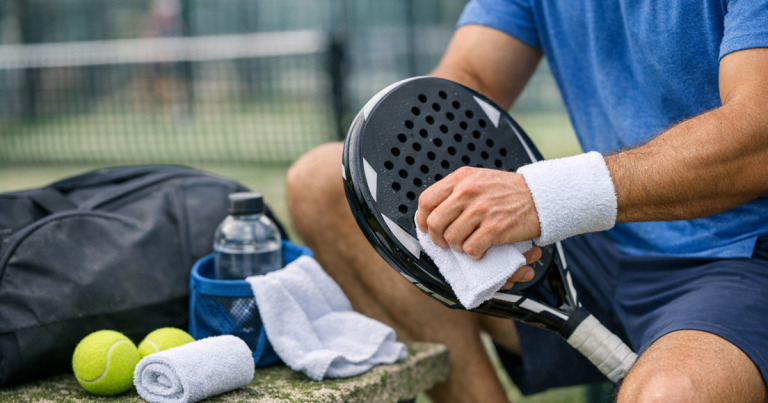
Instead, wipe them with a clean towel and let them air for a short while at home before putting the lid back on. You are not trying to dry them with heat; you are simply removing surface moisture so the felt does not stay clammy. Avoid hairdryers, radiators and direct heat, because heat can affect the rubber and make the ball feel worse.
Step 3: Store at steady room temperature
Padel balls are happiest in a cool, dry indoor place where the temperature is fairly steady. A cupboard, shelf or kit area inside the house is usually better than a shed, garage or car boot. Extreme heat can speed up pressure loss and affect the feel of the rubber. Cold, damp storage can make the balls feel heavier and less responsive when you next play.
A simple rule helps: if you would not store your racket there, do not store your balls there either. Leaving a tube in the car for convenience is tempting, but it is rarely kind to your gear. Take the tube indoors when you get home, even if your next game is only a few days away.
Step 4: Separate match balls from practice balls
Beginner players often end up with several half-used tubes. That is fine, as long as you know what each set is for. Keep your freshest balls for games where bounce matters, and use older balls for feeding drills, wall practice, serve rhythm, or warm-up rallies.
A simple labelling habit works well. Write the opening date on the tube with a marker, or add a small note such as “match”, “drills” or “old”. You do not need to be obsessive. The point is to stop one flat ball being mixed with two good ones, which can make rallies feel inconsistent and make beginners question their technique unnecessarily.
Old but usable balls can still help with repetition work. For example, if you are practising returns, less lively balls may be useful for controlled feeds, while a fresher tube gives a more realistic bounce for match play. If low serves are giving you trouble, pair decent balls with these padel return drills for handling low serves so the practice feel matches club conditions more closely.
Step 5: Pack your bag so balls do not get damaged
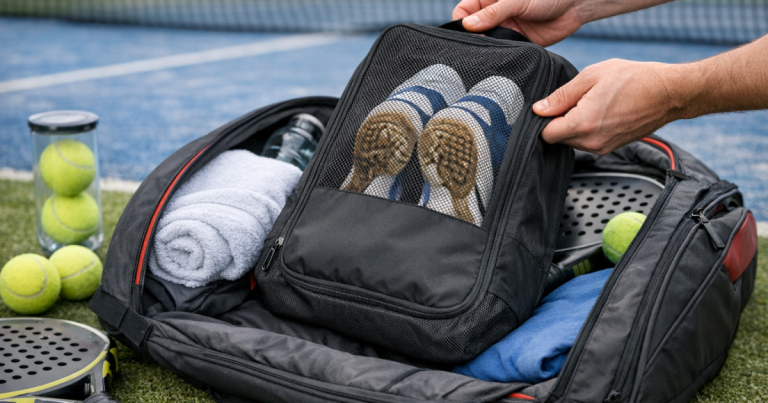
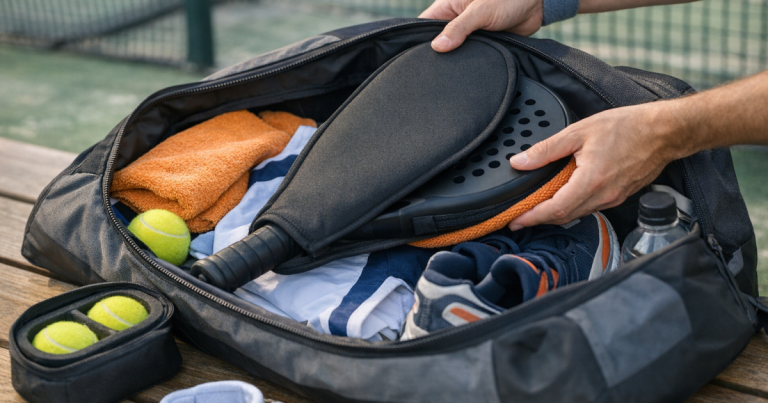
Your padel bag does more than carry a racket. It also protects small accessories from the mess and pressure of the rest of your kit. Keep ball tubes upright where possible, away from leaky bottles, bananas, wet towels and muddy shoes. If your bag has side pockets, use one for balls and another for smaller items such as wristbands, grip tape and keys.
Try not to cram the tube into a pocket that bends it out of shape. A cracked tube or loose lid will not protect the balls properly. If you carry spare clothing, put damp items in a separate bag after play so they do not sit against your ball tube on the journey home.
This same approach helps other accessories last longer too. Sweaty grips, damp towels and crushed tubes all create small problems that show up mid-match. If your handle often feels slick after a few games, our guide on how to stop your overgrip slipping mid-match covers simple fixes that fit neatly into the same kit-care routine.
Should you use a pressure-saving container?
Pressure-maintenance containers are popular with some regular players because they are designed to reduce pressure loss after a tube has been opened. They can be useful if you play often, use the same balls across several sessions, or dislike throwing away balls that still look clean but feel soft.
For most first-time and early-stage players, they are optional rather than essential. Before buying one, check how many balls it holds, how easy the lid is to seal, whether it fits in your bag, and whether you will actually use it after every session. A pressure container cannot undo heavy wear, soaked felt or a damaged ball. It is a storage aid, not a reset button.
If you play once a month, a basic routine with the original tube may be enough. If you play weekly and often practise between matches, a pressure-saving container may make more sense as part of your accessories kit.
Quick checks before your next game
Before taking an old tube to club play, do three quick checks. First, press the ball gently in your hand. If it feels noticeably soft compared with a fresher ball, keep it for drills. Second, look at the felt. If it is bald, dirty, matted or damp, expect a duller bounce. Third, bounce it on a hard, safe surface and compare it with another ball from the same tube.
You do not need laboratory accuracy. You are simply checking whether all three balls feel similar. A consistent slightly older tube is often better for practice than a mixed set where one ball flies and another dies off the back wall.
Common storage mistakes to avoid
- Leaving balls in the car boot: convenient, but poor for temperature control and damp exposure.
- Sealing wet balls immediately: this traps moisture in the felt and can make the balls feel heavy.
- Mixing tubes without checking bounce: this creates inconsistent rallies and awkward feeds.
- Keeping balls loose in a bag: they pick up grit and get crushed under heavier kit.
- Using heat to dry them: gentle air drying is better than radiators or direct sun.
When to retire a padel ball
A ball is ready to leave match use when it no longer gives a reliable bounce, feels soft, or makes rallies noticeably harder to control. For beginners, the danger is not just poor performance; it is learning timing from a ball that behaves unpredictably. That can make volleys, lobs and wall rebounds feel more difficult than they really are.
You can still keep retired match balls for certain drills, as long as you know what they are. Once they are too flat even for controlled practice, take them out of your bag so they do not get mixed back into your playable tubes.
Things readers ask
Can I store padel balls in the fridge?
No. A fridge is damp and too cold for routine storage. Keep balls in a dry indoor cupboard at steady room temperature instead.
Should I open a new tube before arriving at the court?
It is better to keep a new tube sealed until you need it. Once opened, pressure loss begins, so open fresh balls close to the start of play.
Is it bad to leave balls in my padel bag all week?
It depends where the bag is kept. Indoors in a dry place is usually fine; a cold garage, shed or car boot is not ideal.
Can wet padel balls be saved?
Sometimes, if they are only lightly damp. Wipe them, let them air dry naturally, then test the bounce. If they feel heavy or uneven, use them only for casual drills.
How do I know which tube is freshest?
Write the opening date on each tube and keep fresher balls separate from drill balls. This small habit prevents most mix-ups.
In brief
Good padel ball storage is mostly about routine: dry the balls, return them to a closed tube, keep them indoors, and separate fresh match balls from older practice balls. Do that consistently and your sessions will feel more predictable, your bag will stay better organised, and you will waste fewer playable balls.