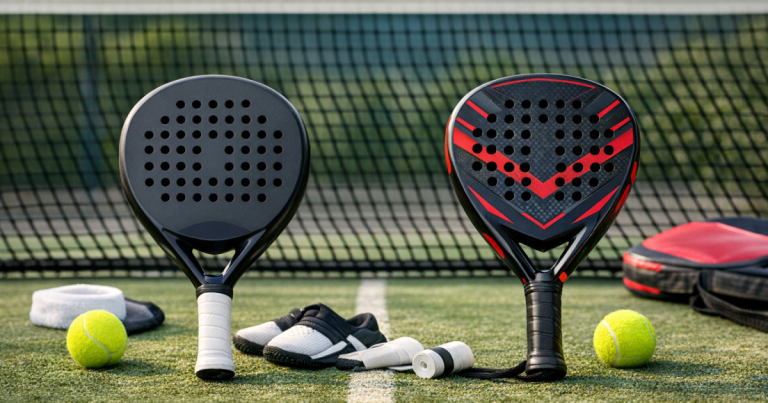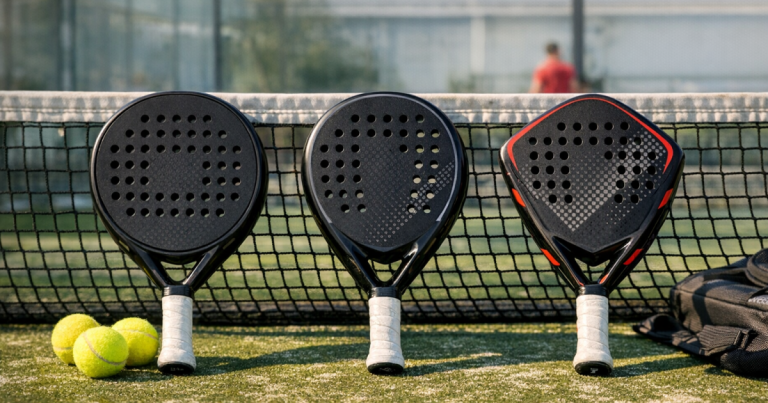
A racket can look simple from the outside, but padel racket materials have a big influence on how it feels in your hand, how forgiving it is when you miss the centre and how much effort you need to put into the ball. For beginners, the aim is not to memorise every construction term. It is to understand enough to avoid choosing something too harsh, too lively or too demanding for regular club play.
What to know first
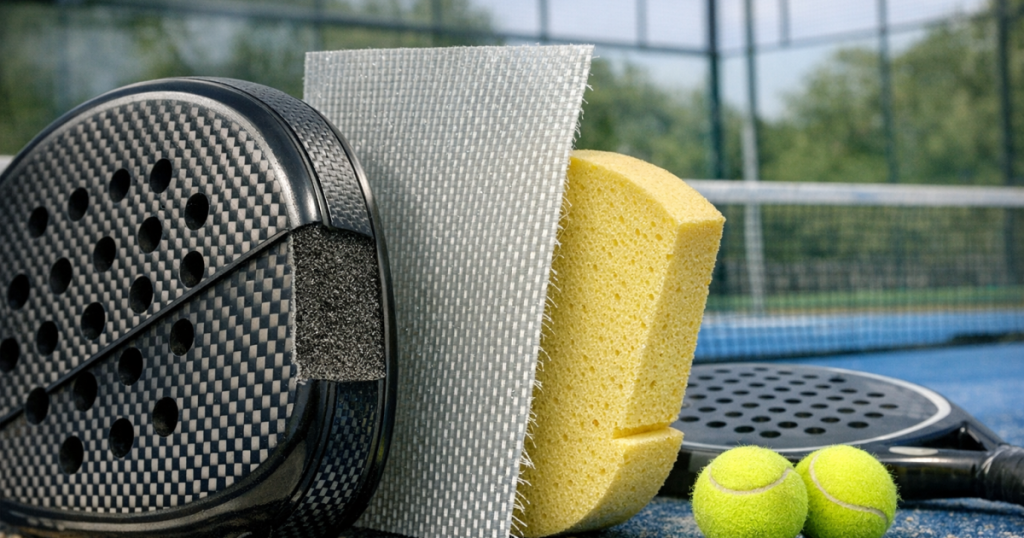
Most padel rackets are built around three main areas: the frame, the hitting face and the internal core. Brands may highlight carbon, fibreglass, EVA, foam, hybrid faces or textured finishes, but the headline material rarely tells the whole story. Shape, balance, weight, thickness, hole pattern and construction quality all matter too.
As a simple starting point, carbon tends to feel firmer and more direct, fibreglass tends to feel softer and more flexible, and the core material affects rebound, comfort and control. That does not mean carbon is always advanced or fibreglass is always basic. A well-made fibreglass racket can be easier and more enjoyable for an early-stage player than a stiff carbon model that punishes off-centre hits.
If you are still choosing your first racket, material should sit alongside comfort, weight and shape rather than replacing them. For a broader beginner buying framework, see how to choose your first padel racket without overspending.
The frame: the racket’s outer structure
The frame is the rigid outer part of the racket. Its job is to keep the shape stable, protect the racket during normal play and support the hitting face. Many modern frames use carbon or carbon-based construction because it can provide strength and stiffness without making the racket feel bulky.
A stiffer frame can make the racket feel more precise, particularly on volleys, blocks and firm shots near the net. The trade-off is that a very rigid frame may feel less forgiving if the rest of the racket is also stiff. Players who are still learning clean contact can sometimes interpret that firmness as a lack of comfort or a smaller sweet spot.
Do not judge the whole racket from the frame material alone. A carbon frame with a softer face and forgiving core can still be manageable. Likewise, a racket advertised as beginner-friendly can feel awkward if the balance is high or the weight is uncomfortable.
The face: where carbon and fibreglass matter most
The hitting face is the part that most directly affects the feel of contact. This is where you will often see carbon, fibreglass or a blend of both mentioned in product descriptions.
Carbon faces
Carbon faces are usually associated with a firmer, more responsive feel. When you strike the ball cleanly, the racket can feel stable and accurate. This can help players who already generate their own pace and want the ball to leave the racket in a controlled, predictable way.
The catch is that firmer faces can be less forgiving. If you contact the ball away from the centre, you may feel more vibration or lose depth more quickly. For newer players, that can make defensive shots, low volleys and hurried lobs feel harder than they need to be.
You may also see references to different carbon weaves or numbers in product listings. Treat these as useful clues, not automatic proof of performance. The same listed material can feel different depending on the lay-up, core, shape and overall design.
Fibreglass faces
Fibreglass faces generally flex a little more on contact. That softer response can help the ball come off the racket more easily, especially at slower swing speeds. For many beginners, this makes the racket feel more comfortable during rallies and more forgiving when timing is not perfect.
Fibreglass is often linked with accessible, control-focused or comfort-focused rackets, but it is not only for complete beginners. Plenty of improving club players enjoy the extra help on defence, lobs and controlled placement. The possible downside is that some players find very flexible faces less crisp when they start hitting harder.
Hybrid faces
Some rackets combine carbon and fibreglass in the face. The idea is usually to balance firmness with comfort. A hybrid construction may feel more solid than a soft fibreglass face but less demanding than a very stiff carbon face.
Again, the exact feel depends on the whole racket. If a product description says “carbon and fibreglass”, check whether it explains the intended feel: softer control, extra stability, easy power or a more direct response. If it does not, try to find independent reviews or test the racket before relying on the wording.
The core: EVA, soft foam and rebound
The core is the material inside the racket face. It is usually a foam-like material, commonly EVA or a softer polyethylene-style foam. This is where a lot of comfort and rebound comes from.
A harder core usually feels more solid and controlled on faster swings. It can reward clean technique but may feel less helpful when you are blocking hard shots or trying to lift the ball from the back glass. A softer core tends to absorb more impact and can give an easier rebound, which many beginners appreciate during longer rallies.
There is a balance to strike. If the core is very soft, the racket may feel comfortable but a little springy when you want precision. If it is very hard, it may feel accurate but demanding. Early-stage players usually benefit from a middle ground: enough softness for comfort, enough stability that the racket does not feel vague.
Brands use different terms for core firmness, and there is no single universal scale across the market. When reading descriptions, look for plain-language clues such as soft feel, medium feel, comfort, control, advanced power or firm response. Those phrases are often more useful than the material label by itself.
How padel racket materials affect real shots
The value of understanding materials is that it helps you connect the product description to what happens on court. Here is how the main materials often show up in beginner and club-level play:
- Serve returns: softer faces and cores can make it easier to block the ball back when you are rushed.
- Lobs: a forgiving face helps when you are lifting the ball from low contact, especially from the back of the court.
- Volleys: firmer constructions can feel crisp and stable, but only if the racket is not too demanding for your timing.
- Defensive glass shots: comfort matters because contact is often late, low or slightly off-centre.
- Smashes and attacking shots: carbon and firmer cores can reward stronger swings, but technique and positioning still matter more than the label.
This is why two players can try the same racket and disagree. One may love the firm response because they hit cleanly and play aggressively. Another may find it unforgiving because they are still building consistency.
Why beginners should not chase the stiffest racket
It is tempting to assume that a carbon-heavy racket is automatically the better long-term choice. For most beginners, that is not the safest assumption. A racket that is too stiff can make learning harder because mishits feel harsher and softer touch shots become less natural.
Comfort is not a luxury feature. If your racket helps you relax your grip, swing smoothly and keep the ball in play, you will develop faster. A slightly softer racket can also make lessons and club sessions more enjoyable because you are not fighting the equipment every time the ball arrives awkwardly.
That does not mean every beginner needs the softest racket available. Players with good racket-sport background from tennis, squash or badminton may prefer a firmer feel sooner. The key is to match the material feel to your current contact quality, not to the level you hope to reach in six months.
Material also interacts with racket shape. A round racket with a forgiving face can feel calm and easy to place. A diamond-shaped racket with a firm face may feel powerful but harder to manage. If you are weighing up playing style as well as construction, read control vs power padel rackets before making the jump to a more aggressive design.
Different views you will hear at the club
Club players often give confident advice about materials, but it can be based on their own preferences rather than your needs. You may hear that carbon is “proper”, fibreglass is “for beginners” or soft foam is “too bouncy”. Each of those statements is too simple.
Carbon can be excellent, but only when the racket suits your swing and contact point. Fibreglass can be beginner-friendly, but it can also remain useful for players who value feel, defence and comfort. Softer cores can help your control when you are learning because they make it easier to manage pace, not because they magically aim the ball for you.
The more helpful question is: does this racket make your normal shots easier or harder? If a racket helps you keep depth on lobs, block volleys cleanly and avoid gripping too tightly, the material is working for you. If it makes you tense, late or inconsistent, the label on the face is not helping.
Material is only one part of comfort
Racket weight and balance can completely change how a material feels. A soft-faced racket that is too head-heavy may still tire your arm. A firmer racket that is light and well balanced may feel easier than expected. That is why material, weight and shape need to be considered together.
For many beginners, a comfortable total weight and manageable balance will matter more than whether the face has a premium-sounding material. If you are unsure how weight changes the playing feel, the guide to light vs heavy padel rackets is a useful next step.
Grip size, overgrips and technique also affect perceived comfort. A racket can feel harsh if you are gripping too tightly, contacting the ball late or using a worn grip that makes you squeeze harder. Before blaming the material, check whether the racket is set up comfortably and whether the discomfort only appears on certain shots.
Common questions
Is carbon better than fibreglass for padel?
Not automatically. Carbon usually feels firmer and more direct, while fibreglass usually feels softer and more forgiving. The better choice depends on your timing, comfort needs and playing style.
What core should a beginner look for?
Many beginners do well with a medium-soft core because it gives comfort without feeling too vague. Avoid choosing only by the material name; look for descriptions that mention control, comfort and easy handling.
Does a softer racket mean less control?
Not always. A softer racket can improve practical control for newer players because it helps them absorb pace and keep rallies going. Very soft rackets may feel less precise for harder hitters, though.
Why do two carbon rackets feel completely different?
Because the face material is only one part of the build. Core firmness, racket shape, balance, weight, thickness and lay-up all change the final feel.
Can racket materials help prevent arm discomfort?
A more forgiving face and core can reduce harsh impact feel, but comfort also depends on weight, balance, grip set-up and technique. Persistent pain during or after play should not be ignored.
Main lessons
Carbon, fibreglass and foam are useful terms, but they are not shortcuts to the perfect racket. Carbon often brings firmness and stability. Fibreglass often brings comfort and forgiveness. The core shapes rebound, touch and impact feel. For beginners, the best material choice is usually the one that supports relaxed swings, cleaner contact and longer rallies.
When reading racket descriptions, ask what the construction is meant to do on court. If the answer is comfort, control and manageable feel, it is likely to suit more early-stage players than a racket built mainly around stiffness and attacking power. The right materials should make padel feel easier to learn, not harder to enjoy.